Cardamom for cafés is the practice of sourcing, grading, and storing green cardamom specifically for high-volume chai, filter coffee, and dessert menus rather than home kitchen use. A café's needs differ from a home cook's on three counts: volume (kilograms a month, not grams a week), consistency (every cup of chai must taste the same), and cost control (waste from stale or mis-graded pods hits margin fast).
- Cardamom for cafés in 2026 means buying by pod grade (8 mm+, Bold, Green) and volume, not by retail pack size.
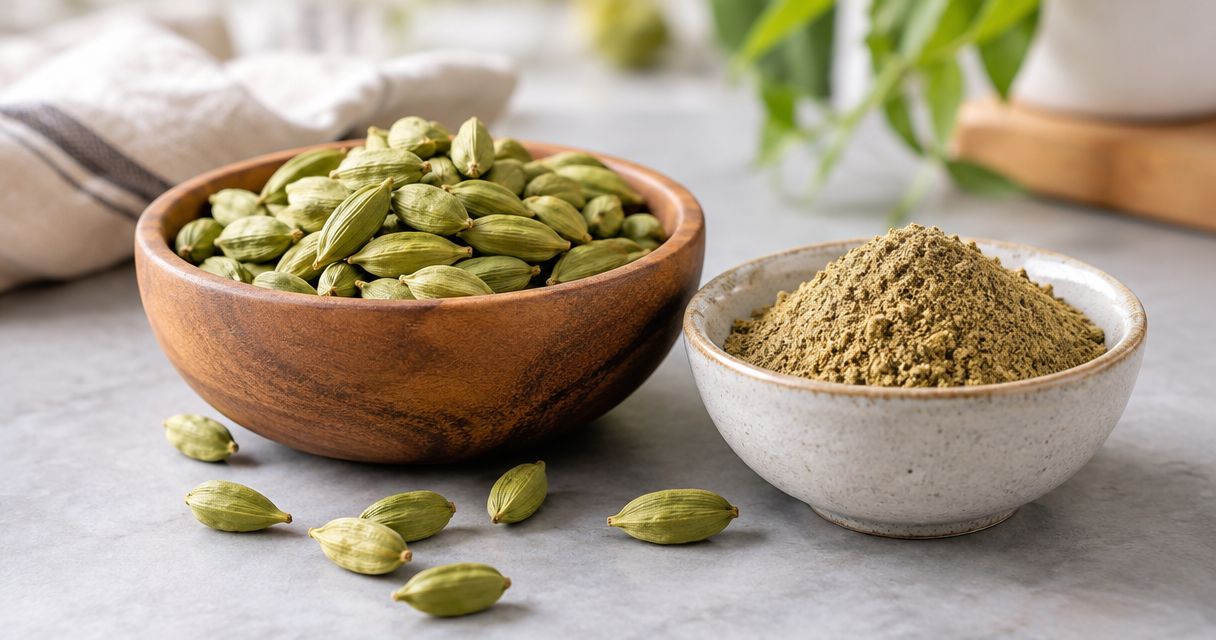
- Whole pods ground fresh at the counter beat pre-ground cardamom on aroma retention for chai and biryani stations.
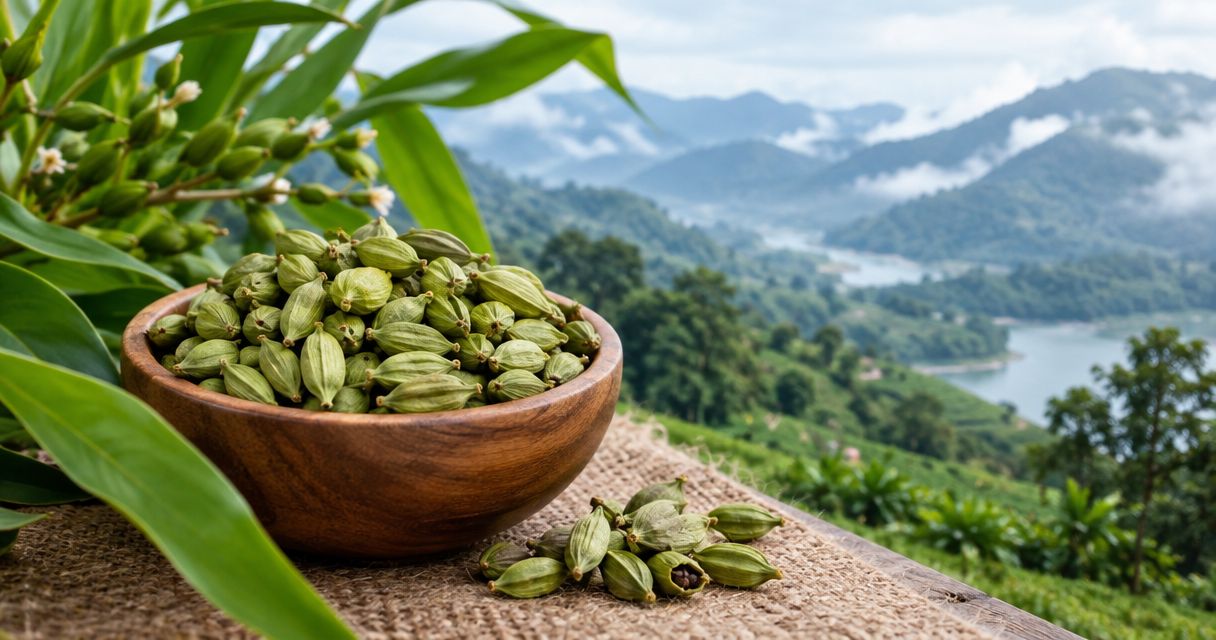
- Single-origin Kerala sourcing gives cafés traceable, consistent-grade stock instead of blended lots that vary batch to batch.
- Set a reorder trigger before you run out — cardamom shortages during festival season are common and predictable.
Why cardamom matters for cafés
Cardamom is the single ingredient most likely to make or break a chai recipe's consistency. Get the grade or the quantity wrong across shifts and regular customers notice within a cup or two — chai is a repeat-order drink, and repeat orders are where cafés make money.
Cafés also buy differently from home cooks: bulk quantities, recurring orders, and a need for a supplier who can answer questions about grade, harvest, and storage rather than just ship a retail pack. Muzri sources green cardamom directly from Kerala growers and can speak to pod size and processing on request — worth checking before you commit to a monthly order.
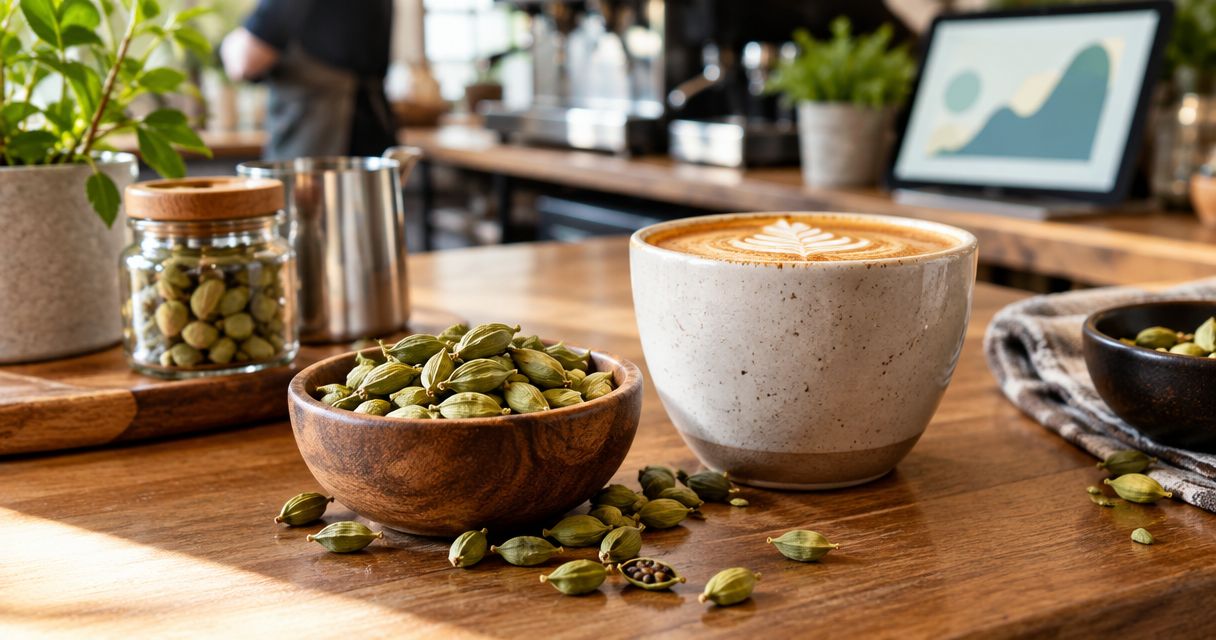
Menus that lean on cardamom — masala chai, filter coffee blends, kheer, biryani, and increasingly cardamom-forward desserts and lattes — all depend on pod freshness. A dull, papery pod with faded green colour has already lost much of its essential oil, and no amount of extra dosage fixes that in the cup.
Audit your current cardamom usage
Before switching suppliers or grades, know what you're actually using and where it's going.
- List every menu item that uses cardamom — chai, coffee blends, desserts, biryani, spice mixes
- Check current stock for colour: pods should be green, not yellowed or brown
- Note whether you're buying whole pods, crushed pods, or ground powder
- Track how much you discard as stale versus what's actually used
- Confirm storage location — near a tandoor or espresso machine heat is a common problem
Set a grade standard for your menu
Cardamom grading runs on pod size and colour, and cafés benefit from picking one grade and sticking to it rather than accepting whatever a supplier sends that week.
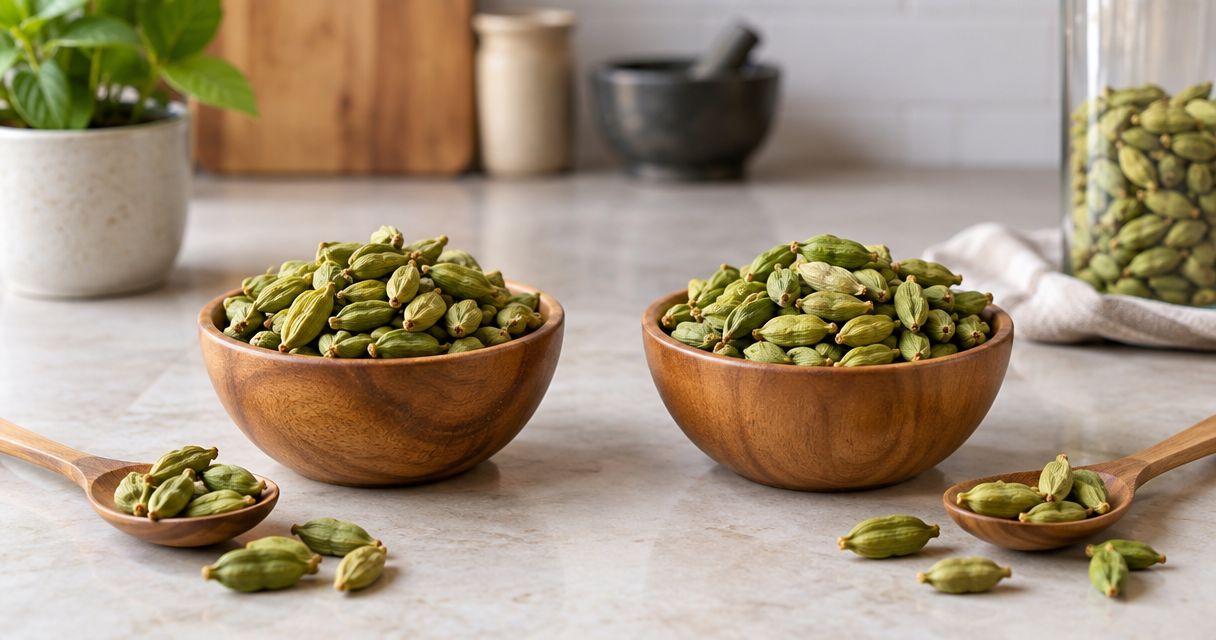
- 8 mm and above (often called Bold) — larger pods, higher oil content, suited to chai and coffee where aroma carries the drink
- Standard green grade — smaller pods, fine for bulk cooking like biryani and dal where cardamom is one of several spices
- Split or broken pods — cheaper, but oil loss is faster; only worth it for high-turnover kitchen use, not front-of-house chai
- Decide grade per use case, not one grade for the whole kitchen
- Write the grade into your recipe cards so new staff don't substitute on their own
Calculate your monthly volume need
Underordering means running out mid-shift; overordering means paying for aroma that fades before it's used.
- Estimate grams of cardamom per cup or dish from your actual recipe, not a rough guess
- Multiply by average daily covers to get a weekly baseline
- Add 15-20% buffer for weekend and festival spikes
- Track wastage from stale stock separately from usage — it tells you if you're overbuying
- Review the number monthly for the first quarter of 2026, then quarterly once it stabilises
Source from a single-origin supplier
Blended retail cardamom can mix pods from different harvests and regions, which means the batch in your kitchen this month may not match last month's — a problem for a café trying to hold a recipe steady across 2026.
- Ask any supplier where the cardamom is grown and whether it's single-origin or blended
- Single-origin Kerala cardamom, like what Muzri sells, ties each batch to a known growing region rather than an anonymous pool
- Confirm whether the pods are organic-certified if that matters to your menu positioning
- Request a sample batch before switching your full order over
- Ask about direct farmer sourcing — it affects both traceability and consistency of grade
Standardize storage protocol
Cardamom loses aroma faster from bad storage than from age alone. Heat, light, and air are the three things that strip essential oil out of a pod.
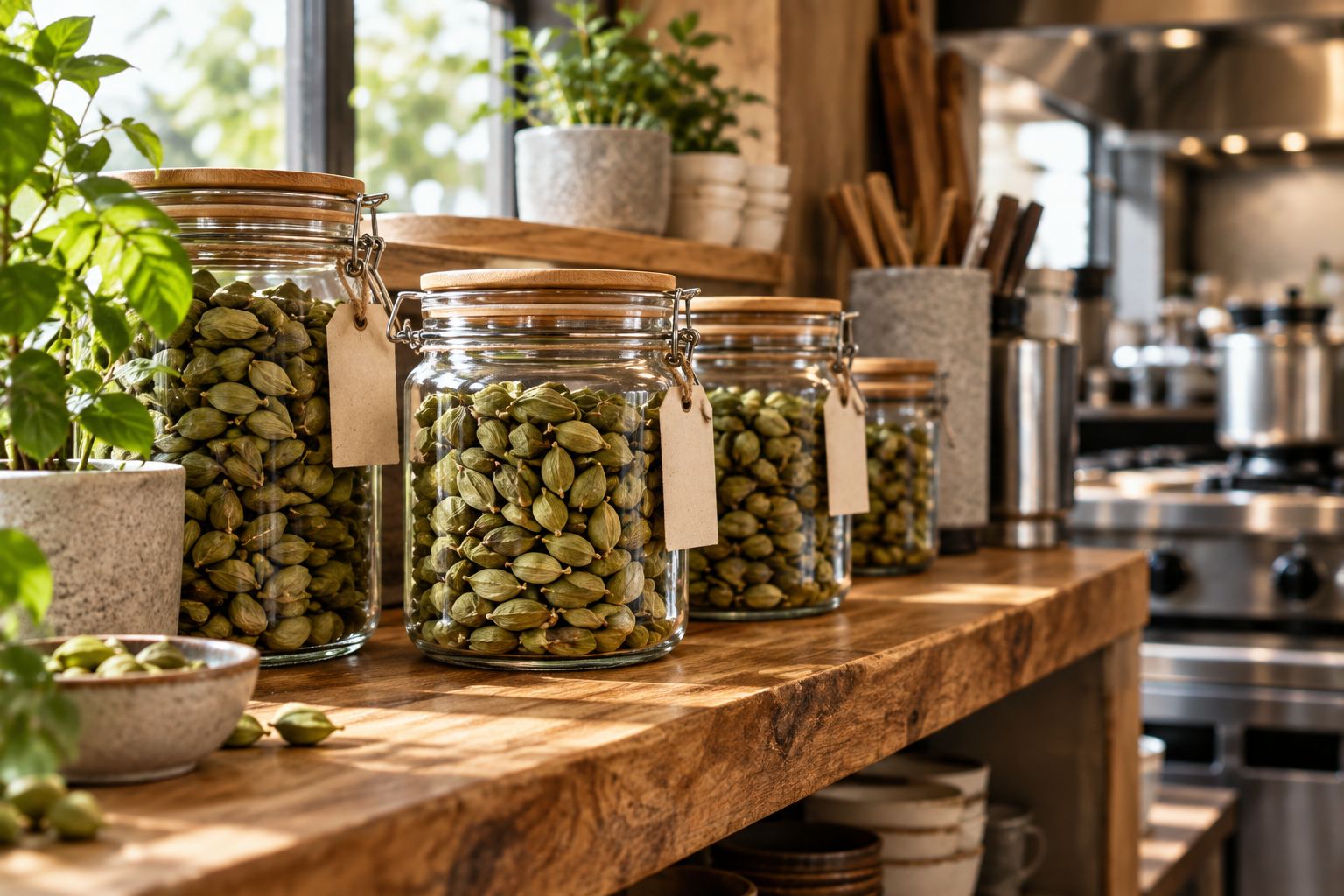
- Store whole pods in airtight, opaque containers, never in open bins near the kitchen line
- Keep stock away from ovens, tandoors, and espresso machine heat
- Grind only what you'll use within a day or two — pre-ground cardamom loses aroma far faster than whole pods
- Rotate stock on a first-in-first-out basis and label received dates
- Do a monthly stock check for colour fade as an early warning sign
Train staff on dosage and grinding
Inconsistent chai across shifts is usually a staff training problem, not a supplier problem.
- Write exact pod counts or gram weights into recipe cards, not "a pinch" or "a few pods"
- Standardize whether staff crush pods by hand or use a grinder, and to what coarseness
- Assign one person per shift to check cardamom stock and freshness
- Retrain whenever a new grade or batch enters the kitchen — texture and aroma can shift
- Taste-test chai across shifts periodically to catch drift early
Compare suppliers before switching
Switching your cardamom source mid-year disrupts recipes, so compare options properly before committing a café's monthly order to a new supplier.
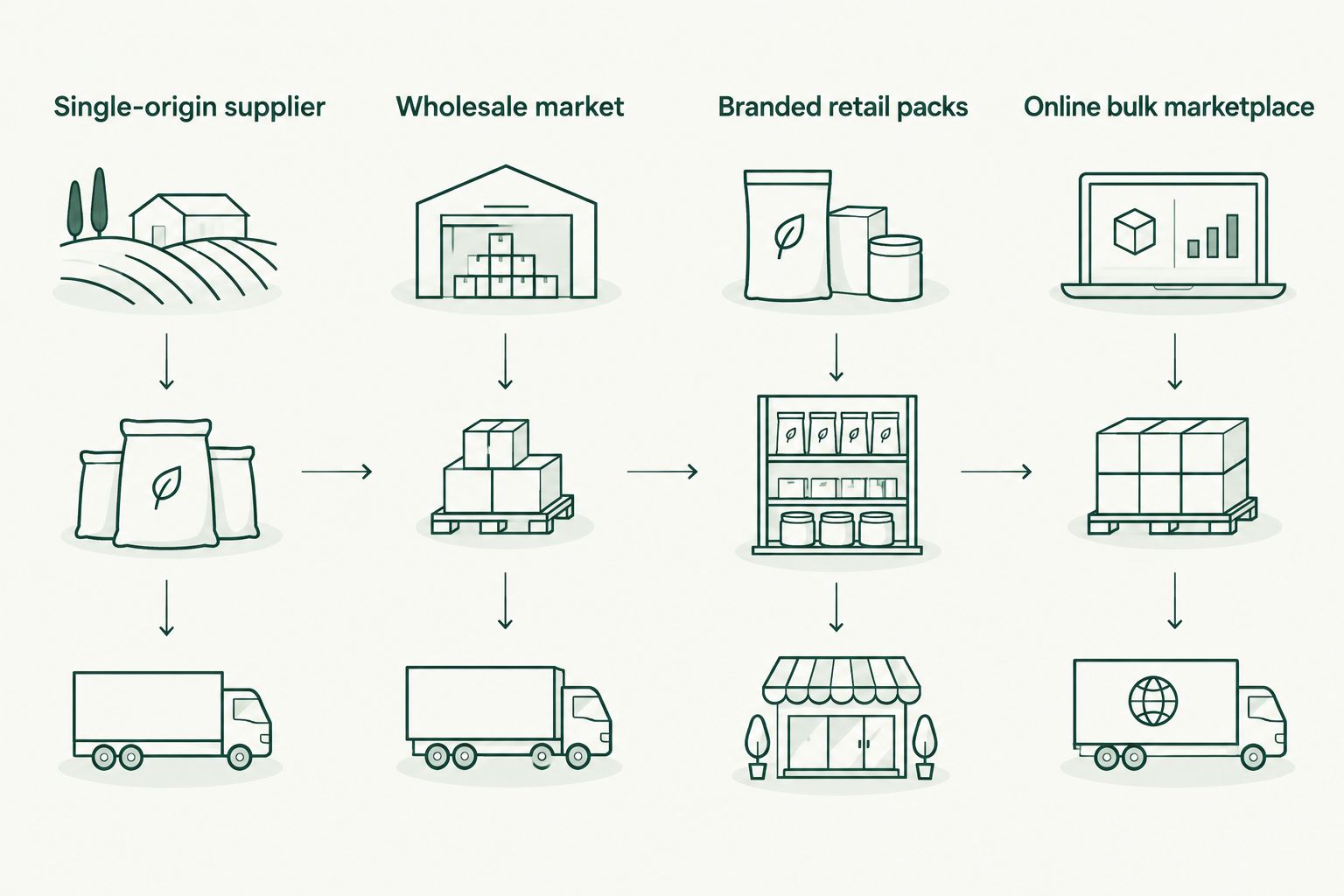
| Option | Best for | Key limitation |
|---|---|---|
| Single-origin Kerala supplier (e.g. Muzri) | Cafés wanting consistent grade and traceable origin | Requires ordering ahead rather than walk-in purchase |
| Wholesale mandi / local trader | High-volume kitchens prioritising lowest unit cost | Grade and origin often mixed batch to batch |
| Branded retail packs (Everest, MDH, Tata Sampann) | Small cafés buying in retail-size quantities | Pack sizes rarely suit bulk kitchen consumption |
| Online bulk marketplace | Cafés needing fast reorder without a fixed vendor relationship | Grade consistency varies by seller, harder to verify |
Set a bulk reorder trigger
Running out of cardamom mid-week during a festival rush is avoidable with a simple reorder rule.
- Set a par level — the stock quantity that triggers a new order
- Build in supplier lead time, especially around festival demand spikes
- Keep a small backup stock from a second source for emergencies
- Review par levels every quarter as your menu or covers change
- Confirm your primary supplier can handle recurring bulk orders, not just one-off purchases
Check cardamom grades before you order
Browse single-origin Kerala cardamom sourced direct from growers.
Common mistakes cafés make
- Buying pre-ground cardamom for chai stations — it loses aroma within weeks, well before a café works through a bulk pack
- Mixing grades within one recipe — pods of different sizes give inconsistent dosage even when staff measure by count, not weight
- Storing stock near heat sources — a shelf above the espresso machine or beside a tandoor fades colour and oil fast
- Ordering retail-size packs for kitchen volume — frequent small reorders cost more in time and shipping than one planned bulk order
- Switching suppliers without a sample batch — a recipe tuned to one grade can taste noticeably different on the next supplier's stock
A side-by-side check worth running before any switch: does the current pod look uniformly green, or has the batch you're using already started to yellow? That single visual check catches most quality drift before it reaches a customer's cup.
FAQ
What grade of cardamom is best for café chai?
8 mm and above (Bold grade) works best for chai because higher oil content in larger pods carries aroma through milk and heat. Standard green grade is fine for bulk cooking where cardamom is one of several spices.
How much cardamom should a café order per month in 2026?
There is no single number — it depends on covers and recipe dosage. Calculate grams per cup from your actual recipe, multiply by weekly volume, and add a 15-20% buffer for peak days.
Is whole cardamom better than pre-ground for cafés?
Whole pods hold aroma far longer than pre-ground powder, which loses essential oil quickly once crushed. Cafés running chai or coffee stations get more consistent flavor grinding fresh in small batches.
How do I store bulk cardamom in a café kitchen?
Keep whole pods in airtight, opaque containers away from stove or oven heat and direct light. Rotate stock first-in-first-out and check monthly for colour fade.
Is single-origin cardamom worth it for a café?
Single-origin sourcing, like Kerala-grown cardamom from a direct-farmer supplier, gives a café a traceable, consistent batch rather than a blend that can vary month to month. That consistency matters more at café volume than at home-cook volume.
What's the difference between Malabar and standard green cardamom?
Malabar typically refers to cardamom grown in Kerala's Malabar region, prized for aroma and pod size. Grade labels like 8 mm or Bold describe pod size regardless of region, so check both origin and grade when comparing suppliers.
How often should a café reorder cardamom?
Set a par-level trigger based on your weekly usage and supplier lead time rather than reordering on a fixed calendar date. Festival season demand spikes make a buffer stock worth holding.
Can cafés buy cardamom directly from Kerala growers?
Yes — some suppliers, including Muzri, source directly from Kerala farmers rather than through blended wholesale channels. Ask any supplier about their sourcing chain before committing to a bulk order.
One last thing
The single biggest lever for café cardamom quality isn't the supplier — it's grinding discipline. A kitchen that grinds fresh daily from whole 8 mm+ pods will out-perform a kitchen using premium pre-ground powder from a better brand, every time, because the oil loss from grinding starts within hours, not weeks. Fix the grinding habit in 2026 before you fix the supplier.