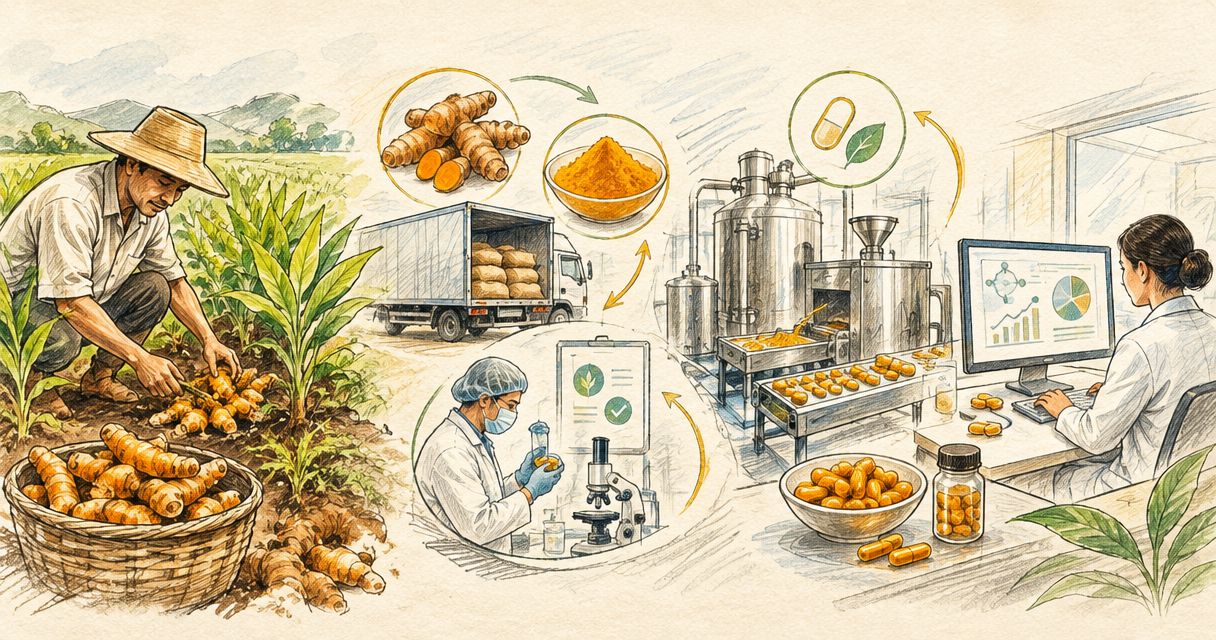
Nutraceutical brands and supplement contract manufacturers that reorder turmeric powder call by call, email by email, lose track of batch specs, pack dates and lead times the moment volume scales past a single order. Set up a documented turmeric batch procurement workflow with Muzri's single-origin, organic Kerala turmeric powder and every reorder inherits the same specification, the same sample-approval step and the same cadence, instead of restarting the negotiation each time.
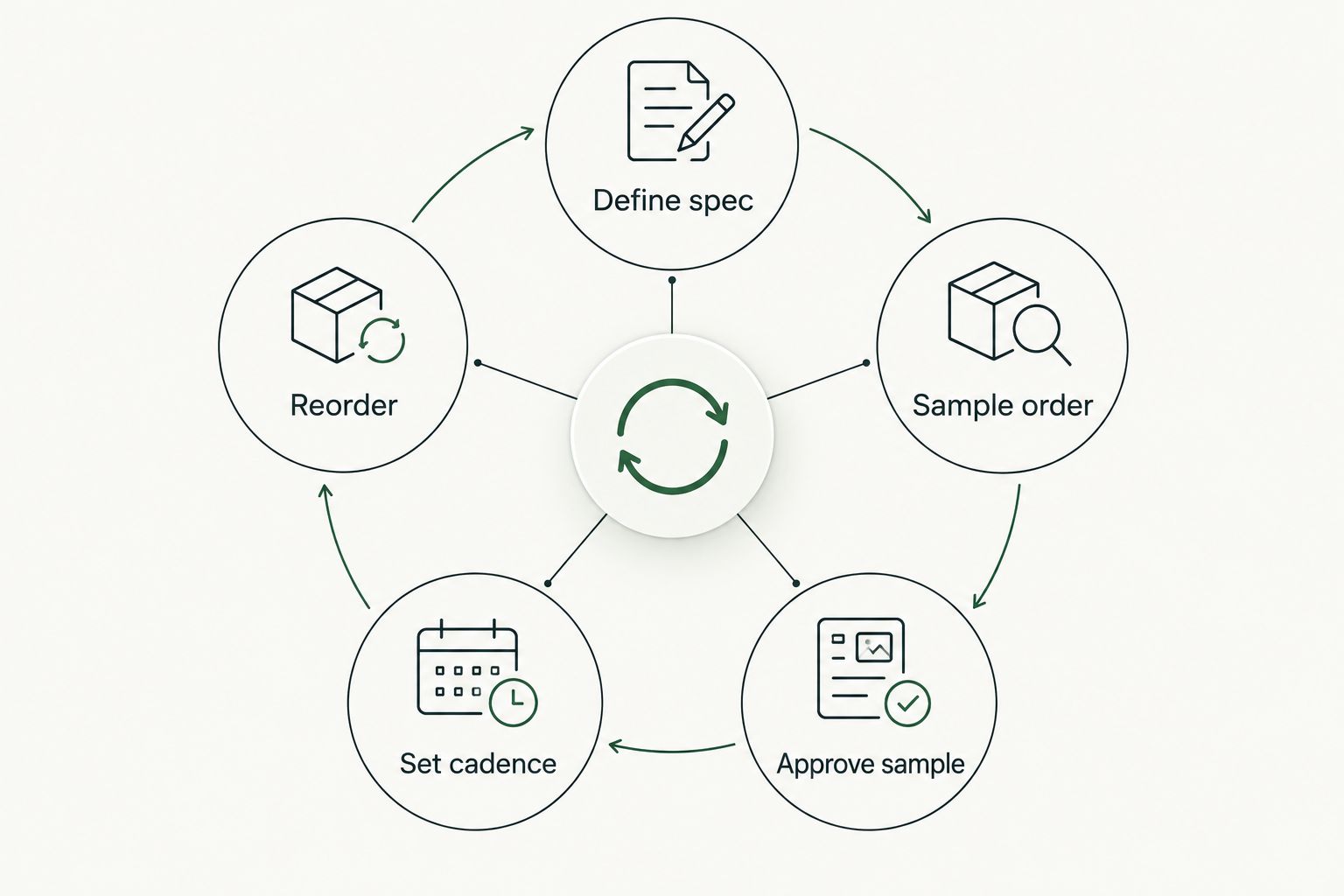
- Turmeric batch procurement for nutraceutical buyers works best as a four-step loop: define spec, order a sample, approve it, set a reorder cadence.
- Muzri sells organic, single-origin Kerala turmeric powder online; batch consistency depends on locking a written spec before the first bulk order.
- Kerala's turmeric harvest runs roughly January through March, so orders placed outside that window need a buffer plan, not an assumption of same-week freshness.
- Boutique nutraceutical brands and bulk contract manufacturers need different reorder cadences built into the same workflow, not the same order size.
Why this matters
A nutraceutical formulation built on turmeric extract lives or dies on batch-to-batch consistency, and that consistency starts before the powder ever reaches a lab bench. Color depth, moisture, and curcumin content can shift between harvest lots even within the same origin, which is exactly why bulk food and supplement buyers in India increasingly work under FSSAI-aligned documentation expectations for raw material traceability.
Most small and mid-size buyers still procure turmeric the way they'd order lunch: a call, a quantity, a delivery date. That works until a quality audit asks for a harvest lot number you never recorded, or a new batch tests differently from the one your formulation was validated against. Turmeric batch procurement for nutraceutical use needs a repeatable process, not a repeatable phone call.
Before you start
- A written specification sheet. Decide upfront what matters for your formulation: color intensity, powder fineness, moisture tolerance, and whether the batch must trace back to a single harvest lot rather than a blended one.
- Billing and GST details ready. Wholesale invoicing moves faster when this is sorted before the first order, not requested at delivery.
- The gotcha: Kerala's turmeric harvest runs roughly January through March. Order in June and you're drawing from stored stock, not fresh-off-harvest powder — ask for the pack or harvest date on the listing at muzricorp.com rather than assuming a recent purchase date means a recent harvest date.
Define your turmeric batch specification
- List every attribute your formulation actually needs: color depth, fineness, moisture tolerance, and whether the batch has to tie to one harvest lot instead of a rolling blend.
- Check the turmeric powder listing on muzricorp.com for the batch or pack date, and log it on your internal spec sheet against the order.
- If curcumin percentage is the number your formulation runs on, ask for it directly before ordering — treat it as a question for the supplier, never a default assumption baked into your spec.
Expected result: one internal spec sheet every future reorder gets checked against, instead of a memory of "what worked last time."
The same discipline applies across Muzri's spice range — the cardamom grade benchmarking breakdown shows how pod size and origin get written into a spec before price ever enters the conversation. Turmeric batch procurement works the same way: write the spec down first, price it second.
Set up your sample-to-scale pipeline
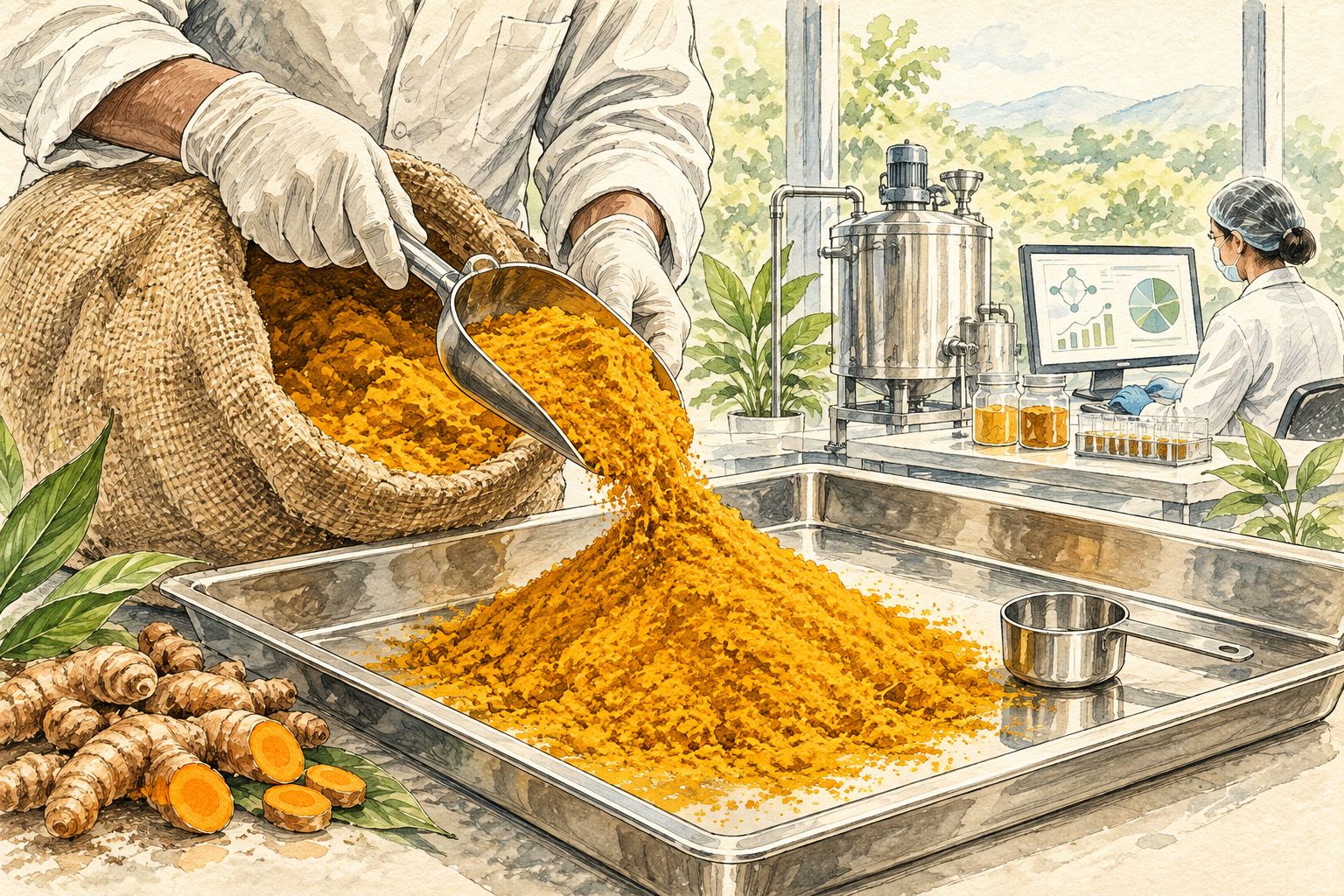
- Place a small sample order of turmeric powder before committing to a bulk lot.
- Evaluate the sample against your spec sheet: color under consistent light, aroma, and texture between your fingers.
- Log a pass or fail against the pack date you recorded — not against a general impression.
- Only move a specification into a larger order once a sample has passed this check.
Expected result: your first bulk batch matches a sample you already approved, not a description you read on a page.
Configure your reorder cadence
- Set reorder frequency to match your production run length — a monthly top-up for small-batch supplement lines, a quarterly lot for longer production cycles.
- Build a 4-6 week ordering buffer around the January-March Kerala harvest window so a reorder placed in April or May doesn't stall on aging stock.
- Tie the reorder date to your own production calendar rather than a manual "remember to order" habit.
Expected result: the next batch goes out before the current one runs low, and it passes the same spec check the first batch did.
Adjust the cadence for boutique brands vs bulk manufacturers
A boutique nutraceutical brand running small production batches is better served by monthly top-up orders — smaller lots stay fresher and tie up less capital in a single purchase. Buy monthly, and run the sample-check step on every single order.
A contract manufacturer running quarterly production cycles is better served locking one larger batch to a single harvest lot number. Fewer batch changes mean fewer variables to explain during a quality audit. Buy quarterly, lock the harvest lot once, and only rerun the spec check if the lot changes.
Start Your Turmeric Batch Order
Confirm your spec and place a sample order before scaling to bulk.
Troubleshooting
Batch color looks different from the last order. Turmeric shade can shift between harvest lots even from the same origin. Ask for the pack or harvest date and request a side-by-side sample before accepting the new batch into production.
Lead time stretches between April and June. This falls right after Kerala's main harvest window closes. Order in February or March for the fastest turnaround, or lean on the buffer built into your reorder cadence.
No documented curcumin figure available for a batch. Ask before ordering, not after. If your formulation depends on a guaranteed percentage, get it confirmed in writing before the batch ships.
Bulk invoicing or GST details unclear. Confirm billing requirements before the first wholesale order, not at delivery.
Reorder cadence drifts and stock runs low. Tie the reorder date to your own production calendar, not a mental note to "order soon."
What to expand next
Teams sourcing turmeric for nutraceutical batches are often the same teams sourcing cardamom and pepper for hotel and café lines. The hotel bulk sourcing guide walks through the same spec-first approach for green cardamom, and it's worth applying the identical discipline whether you're locking a turmeric batch or a cardamom grade for 2026 production runs.
FAQ
What is turmeric batch procurement for nutraceutical buyers?
It's a documented, repeatable process for sourcing turmeric powder that ties every order to a written spec, a sample approval step, and a fixed reorder cadence. Nutraceutical buyers need this because formulation consistency depends on batch-to-batch consistency, not one good order.
How often should nutraceutical brands reorder turmeric powder?
Boutique brands running small production batches typically reorder monthly to keep stock fresh. Bulk contract manufacturers on quarterly production cycles usually lock one larger batch per quarter tied to a single harvest lot.
Does Muzri sell turmeric for bulk or wholesale orders?
Muzri sells organic, single-origin Kerala turmeric powder online to home cooks, chefs, and cafés and hotels. Bulk buyers should confirm order volume, batch documentation, and billing details before scaling from a sample to a full order.
When is Kerala turmeric harvested?
Kerala's turmeric harvest runs roughly January through March. Orders placed outside that window are typically drawn from stored stock, so ask for the pack or harvest date on any batch you're evaluating.
How do I check curcumin content before a nutraceutical batch order?
Ask the supplier directly for the figure before ordering rather than assuming a default percentage. If your formulation depends on a guaranteed number, get it confirmed in writing before the batch ships.
Is organic turmeric powder better for nutraceutical formulations?
Organic certification confirms growing and processing method, not curcumin content or potency on its own. Buyers should verify both the certification and the specific batch attributes their formulation requires.
Can I ask for a sample before placing a bulk turmeric order?
Yes, and it's the recommended first step in any turmeric batch procurement workflow. A sample lets you check color, aroma, and texture against your spec before committing to volume.
What's the difference between sourcing turmeric and sourcing cardamom for bulk buyers?
Both need the same spec-first discipline, but turmeric batches shift more visibly by harvest lot in color and moisture, while cardamom grading centers on pod size and origin. The reorder cadence logic — sample, approve, set a schedule — applies to both.
One last thing
The line item buyers skip most often in a turmeric procurement workflow isn't price — it's the pack date. Two turmeric batches picked in the same 2026 harvest window can still test differently once ground and packed months apart, which is exactly why the spec sheet and the pack-date check matter more than which supplier quoted first.