Hotels sourcing green cardamom in bulk are buying graded, aromatic pods — typically 5 kg and up — directly from a mill or farm-source supplier instead of a retail shelf, with the goal of holding flavour consistent across kitchen, bar, and welcome-drink menus while keeping per-kg cost predictable. A hotel kitchen's needs differ from a home cook's: volume matters more than brand name, grade consistency across every sack matters more than a single premium batch, and reorder reliability matters more than a one-time discount.
- A bulk cardamom supplier in India for hotels should offer graded pods (8mm+ bold), organic sourcing proof, and consistent reorder volumes — not just a low headline price.
- Direct farm-source suppliers like Muzri give traceability to Kerala origin; wholesale mandi traders and FMCG brands trade traceability for lower per-kg cost.
- Sample every new supplier batch before committing to a standing order — grade and aroma vary sack to sack even within one supplier.
- Hotels ordering monthly volumes should lock quality-rejection and replacement terms in writing before the first bulk order in 2026.
Why bulk cardamom sourcing matters for hotels
A hotel kitchen uses cardamom across biryanis, desserts, chai service, and welcome drinks — often several times a day, across multiple outlets if the property runs more than one restaurant or banquet kitchen. Inconsistent grade or stale stock shows up fast: a chai that tastes different on a Tuesday than a Friday, a dessert garnish that looks smaller batch to batch. That's a different failure mode than a home cook running out of a jar.
Hotels also buy on a schedule, not on impulse. A property doing daily banquet covers needs a supplier who can commit to the same grade and the same delivery window month after month — which rules out one-off retail purchases and puts the decision squarely on supplier reliability, not just price per kilogram. Muzri's cafe cardamom buying guide covers the smaller-volume version of this same decision if your property runs a standalone cafe alongside the hotel kitchen.
Define your monthly cardamom volume and grade
Before contacting any bulk cardamom supplier in India, work out what you actually need — most hotels overbuy on grade and underbuy on volume clarity, then wonder why costs swing.
- Estimate monthly kg usage per outlet (kitchen, bar, banquet) separately, not as one combined number
- Decide whether every dish needs 8mm+ bold pods or whether garnish use can run on a smaller, cheaper grade
- Separate whole-pod needs (garnish, biryani, chai) from ground/powder needs (batters, masalas)
- Flag seasonal spikes — wedding season and festival banquet months typically double kitchen cardamom draw
- Set a minimum order quantity your finance team is comfortable committing to monthly
Verify organic certification and Kerala origin
Once volume is fixed, verify the supplier can actually document what they claim. Organic labels and single-origin claims on spice packaging are easy to print and hard to verify without asking directly.
- Ask for the organic certification document, not just a logo on the pack
- Ask which Kerala region the cardamom comes from — Idukki and Wayanad are the two major cardamom belts
- Ask whether the supplier buys direct from farmers or through multiple mandi layers
- Check whether the batch is single-origin or a blend from several regions/seasons
- Request a sample invoice or sourcing note for your own procurement file
Muzri sells organic, single-origin Kerala green cardamom sourced through direct farmer relationships, which is the kind of documentation a hotel procurement team should be asking every bulk supplier for, not just Muzri. The organic cardamom brands in India comparison lays out which sellers publish this kind of sourcing detail and which don't.
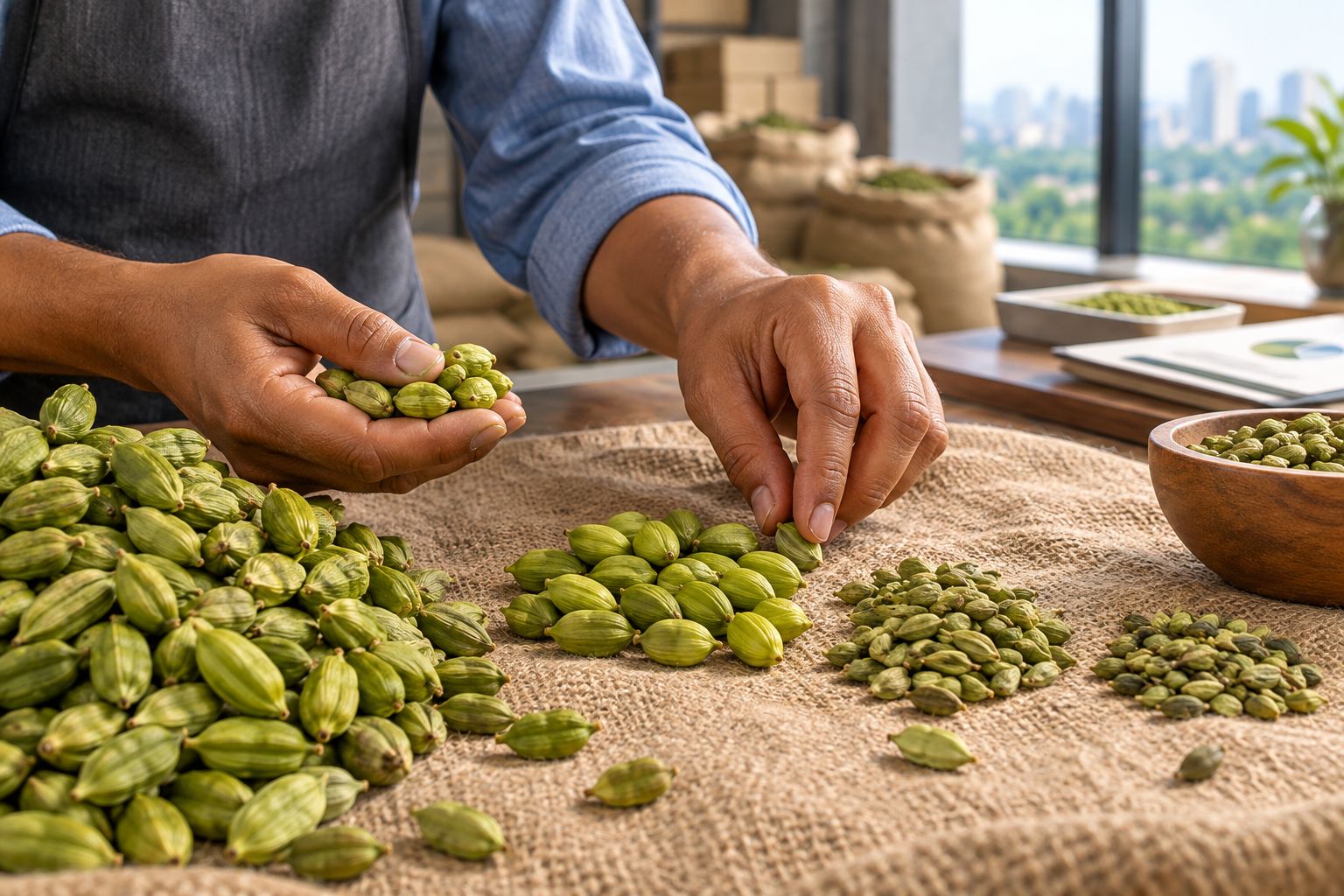
Request samples before the first bulk order
No hotel should place a standing monthly order without testing a sample sack first — grade and aroma vary even within one supplier's stock across seasons.
- Order a 500g–1kg sample before any 5kg+ commitment
- Check pod size consistency across the whole sample, not just the top layer
- Break a few pods open and check seed colour — darker, oily seeds usually indicate fresher stock
- Compare aroma against your current supplier's stock side by side
- Test the sample in an actual kitchen batch, not just a smell test at the loading dock
Compare pricing structures across suppliers
Bulk cardamom pricing varies by grade, order size, and how many intermediaries sit between farm and buyer. Rather than comparing headline rates, compare the structure.
- Ask whether pricing is flat per kg or tiered by order volume
- Ask if the rate is locked for a season or floats with market price
- Ask what happens to pricing if you scale from one outlet to multi-property orders
- Confirm whether delivery and packaging costs are included or billed separately
- Get pricing terms in writing before the first invoice, not verbally on a call
Set up a reorder and storage system
Bulk cardamom bought once and stored badly loses aroma fast — a hotel kitchen's storage discipline matters as much as the supplier's freshness at dispatch.
- Store in airtight containers away from direct light and kitchen heat
- Rotate stock on a first-in-first-out basis across outlets
- Set a reorder trigger point (e.g. when stock hits two weeks of usage) rather than reordering on a fixed calendar date
- Track batch numbers so a quality complaint can be traced to a specific delivery
- Keep a small buffer stock for banquet season spikes
Negotiate quality-rejection and replacement terms
A supplier relationship without a written rejection clause leaves the hotel absorbing the cost of a bad batch. This is the step most hotel procurement teams skip and regret in 2026 when a delivery arrives underweight or off-grade.
- Define what counts as a rejectable batch (undersized pods, visible mould, off aroma)
- Agree a replacement timeline, not just a refund
- Put the terms in the purchase order, not a side conversation
- Ask for a point of contact for quality issues, separate from the sales contact
Build a backup supplier relationship
Single-sourcing all cardamom from one supplier works until that supplier has a bad season or a logistics delay during a peak banquet month. A second, smaller-volume backup relationship protects service continuity without doubling procurement overhead.
- Keep one backup supplier at a lower committed volume, activated only on shortfall
- Test the backup's grade against your primary supplier once a quarter
- Never let the backup relationship lapse — a dormant contact is not a real backup
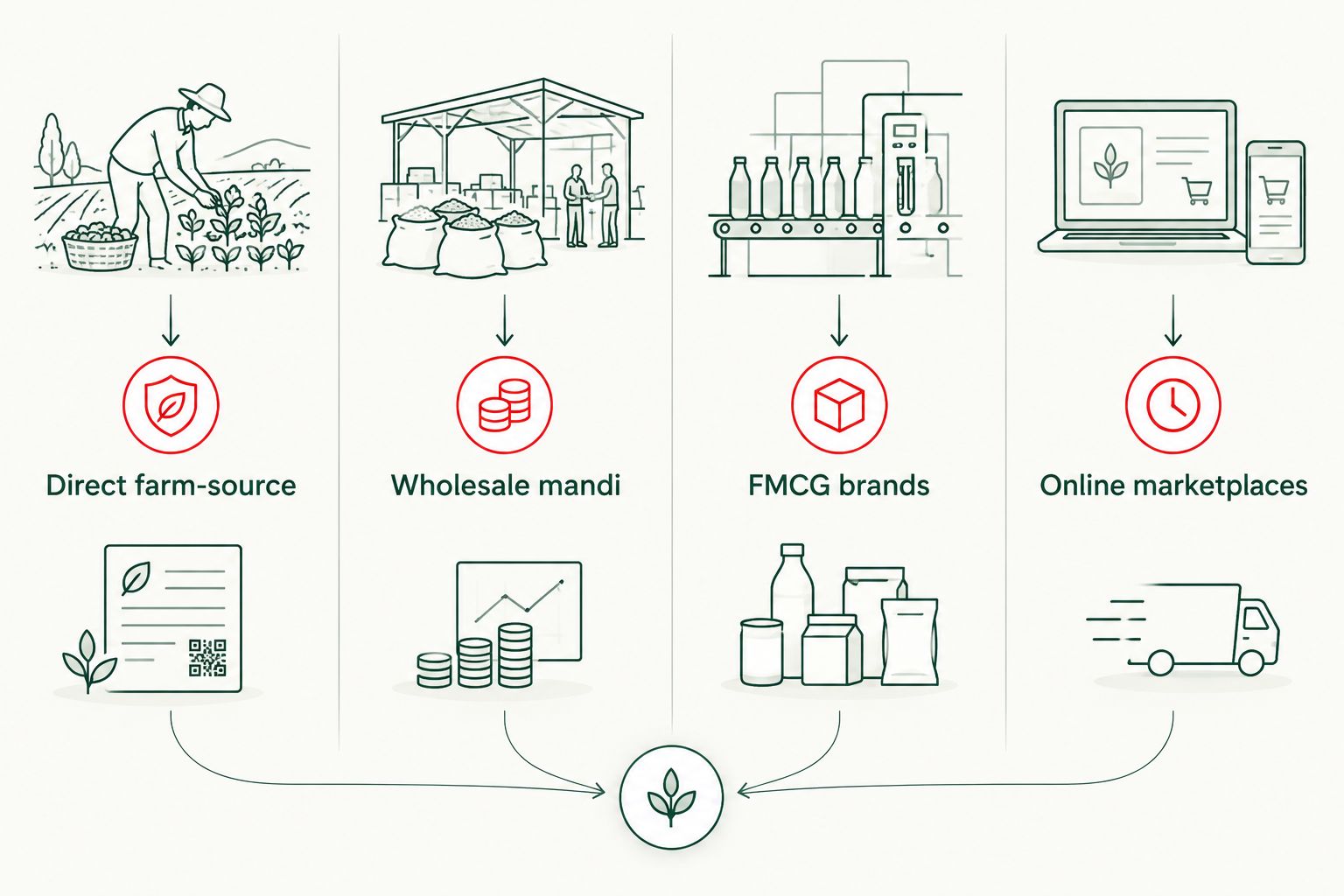
Comparing bulk cardamom supplier options for hotels
| Option | Best for | Key limitation |
|---|---|---|
| Direct farm-source suppliers (e.g. Muzri) | Hotels wanting traceable Kerala origin and organic documentation | Smaller network than large FMCG brands, so multi-property scale needs advance planning |
| Wholesale mandi/market traders | Hotels prioritizing lowest per-kg cost over traceability | Grade consistency varies batch to batch; origin is rarely documented |
| Large FMCG brands (Everest, MDH, Tata Sampann) | Hotels needing predictable nationwide supply and familiar branding | Blended-origin stock; less transparency on farm-source or single-region claims |
| Online marketplaces/aggregators | Smaller properties testing suppliers before committing to bulk | Inconsistent seller quality; no standing bulk-rate relationship |
Verdict: hotels that need documented Kerala origin and organic sourcing for menu storytelling should shortlist direct farm-source suppliers first; hotels optimizing purely for lowest landed cost at scale will lean toward FMCG or mandi channels and should demand a written grade specification either way. The top cardamom brands compared guide breaks these options down brand by brand.
Common mistakes hotels make sourcing bulk cardamom
- Ordering by price alone, ignoring grade. A cheaper per-kg rate on a mixed-grade sack costs more once kitchen staff sort out unusable small pods.
- Skipping the sample step to save a week. One bad 20kg delivery costs more time to sort and complain about than a sample would have cost to test.
- No written rejection terms. Verbal promises on a sales call rarely hold up when a delivery arrives short or off-grade three months later.
- Single-sourcing with no backup. A supplier's seasonal shortfall during wedding season becomes the hotel's problem with no fallback plan.
- Storing bulk stock like retail packs. Large sacks opened and left in humid kitchen storage lose aroma far faster than the same cardamom would in smaller, sealed retail packaging.
Get a bulk cardamom quote
Check Muzri's organic Kerala cardamom range before your next reorder.
FAQ
What is the best bulk cardamom supplier in India for hotels in 2026?
There's no single best supplier for every hotel — the right choice depends on whether your kitchen prioritizes documented Kerala origin and organic sourcing (direct farm-source suppliers like Muzri) or lowest landed cost at scale (mandi traders or large FMCG brands). Compare grade specification and rejection terms before deciding.
How much cardamom does a hotel kitchen typically order in bulk?
Volume depends on menu breadth and outlet count, so hotels should calculate monthly usage per outlet separately rather than relying on a generic benchmark. Most bulk orders start at 5kg and scale up with banquet and festival season demand.
Is organic cardamom worth the cost for hotel kitchens?
Organic certification gives documented sourcing that supports menu storytelling and quality claims to guests, but the decision should weigh certification cost against how much your property markets its ingredient sourcing. Ask any supplier for the actual certification document before paying a premium for the claim.
What's the difference between 8mm and bold grade cardamom?
8mm typically refers to pod size measured across the diameter, while 'bold' is a broader quality tier that can include slightly smaller pods with good colour and fill. Hotels should ask suppliers for the exact size specification rather than relying on the grade name alone.
How should hotels store bulk cardamom to keep it fresh?
Store bulk cardamom in airtight containers away from kitchen heat and direct light, and rotate stock on a first-in-first-out basis. Cardamom bought in bulk and left in opened sacks in humid storage loses aroma noticeably faster than sealed, smaller-batch storage.
Should hotels single-source or use multiple cardamom suppliers?
Most hotels are better off with one primary supplier and one lower-volume backup activated only during shortfalls. Single-sourcing without a backup leaves banquet-season demand exposed if the primary supplier has a bad batch or delivery delay.
Can hotels negotiate pricing with a bulk cardamom supplier?
Yes — pricing structure (flat per-kg versus volume-tiered, locked-season versus floating) is usually negotiable before the first order, and hotels should get terms in writing rather than relying on a verbal quote.
What documentation should a bulk cardamom supplier provide?
Ask for the organic certification document if organic is claimed, a sourcing or origin note specifying the Kerala region, and a written quality-rejection clause covering undersized pods, mould, or off-aroma batches.
One last thing
The single biggest cost leak in hotel cardamom sourcing isn't the per-kg rate — it's unsorted grade variation inside one sack that kitchen staff have to hand-sort before service. A supplier that guarantees consistent 8mm+ pod size across the whole delivery, not just the sample, saves more labour time in 2026 than a marginally lower quote ever will.