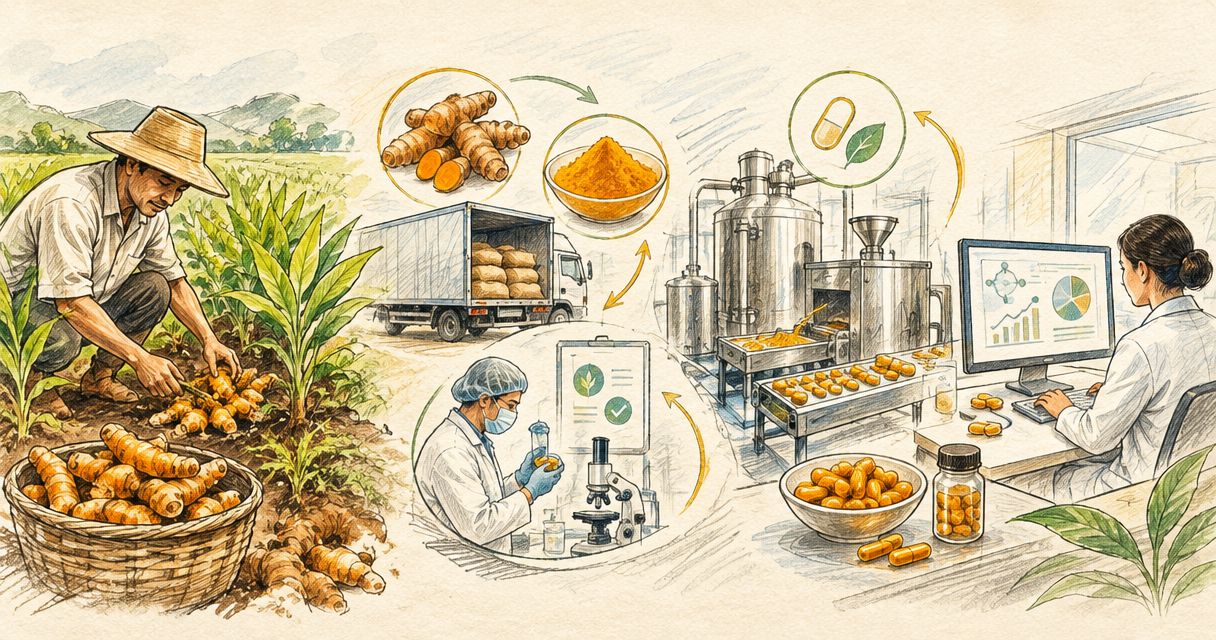
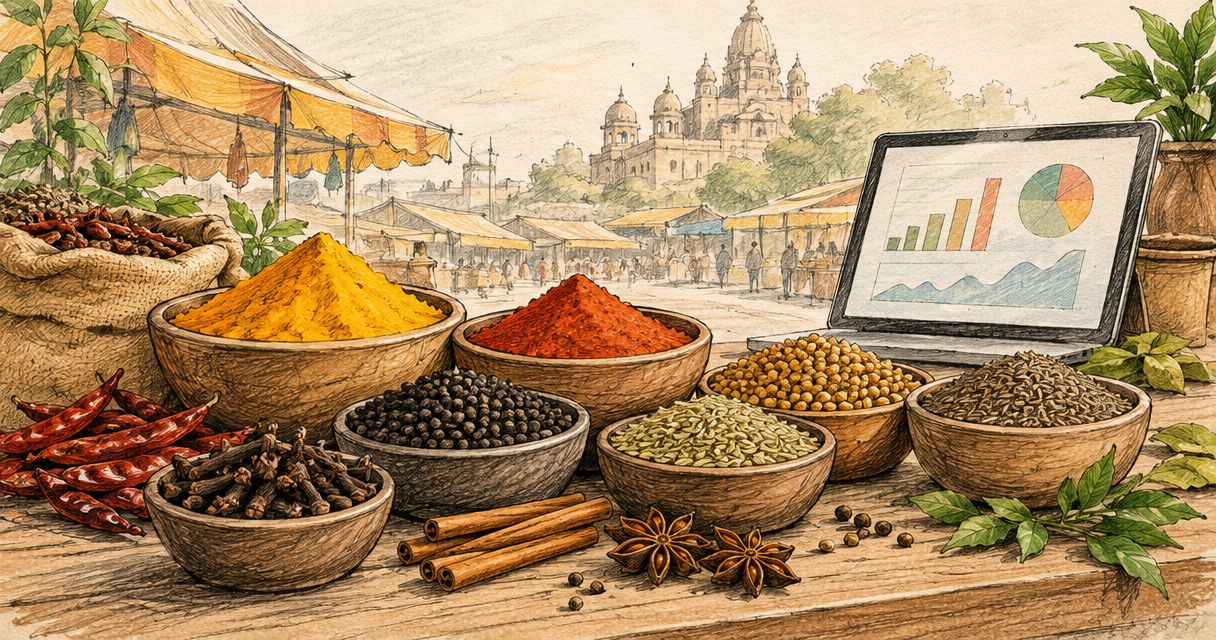
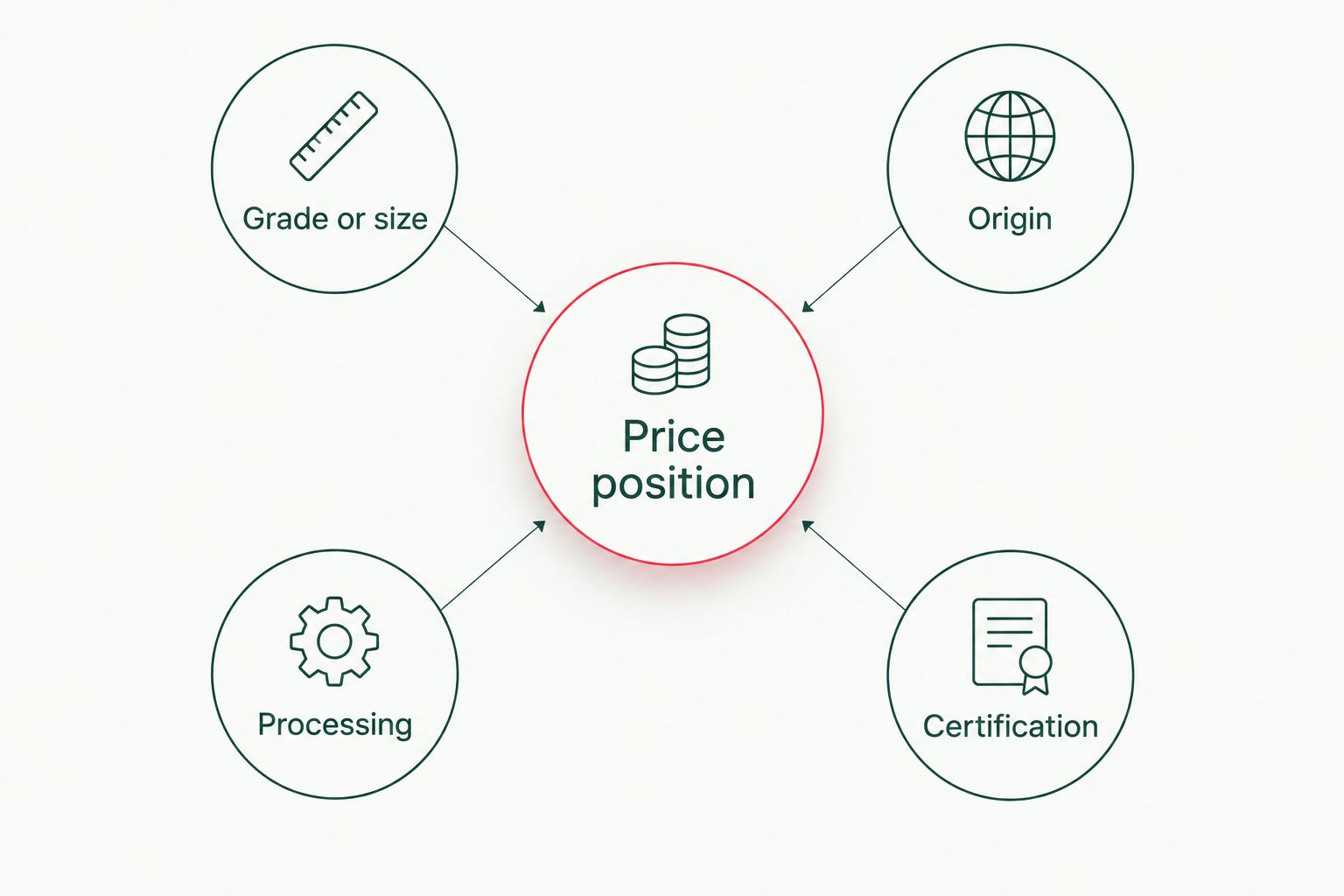
Spice prices in India move on three things: grade, origin, and how the pod, berry, or root was processed — not on a single flat number you can quote across cardamom, pepper, and turmeric in 2026. This benchmark breaks down what actually pushes a price position up or down for each spice type, so you can judge whether a quote from any seller is fair before you order.
- Average spice prices india move mainly with grade and origin, not with product category alone.
- Bold 8mm+ green cardamom from Idukki sits above standard-grade cardamom on every price benchmark.
- Tellicherry and Malabar black pepper price differently because of berry size and single-origin sourcing, not brand.
- Turmeric powder splits mainly on high-curcumin variety versus standard blend, and whether additives are used.
- Mandi and retail rates shift weekly in 2026 — treat this page as a buying framework, not a fixed price list.
Why this matters
Most buyers compare spice prices the way they compare rice — by weight, and nothing else. That works badly for cardamom, pepper, and turmeric, because two bags of the same weight can carry very different grade, origin, and processing behind them.
A home cook paying for loose green cardamom at a local store and a café buying in bulk for chai are both exposed to the same variables: pod size, whether the crop came from a single region like Idukki, and whether the spice was sun-dried without additives. Muzri sells organic, single-origin Kerala cardamom, pepper, and turmeric, and the grade and origin labels on any listing tell you more about fair pricing than the number on the price tag alone.
Kerala has grown cardamom and black pepper on its Spice Coast for more than 3,000 years, and the region's grading and origin vocabulary — Bold, Idukki, Malabar, Tellicherry — still drives price position in 2026 the same way it has for generations.
Average spice prices by product type: the benchmark table
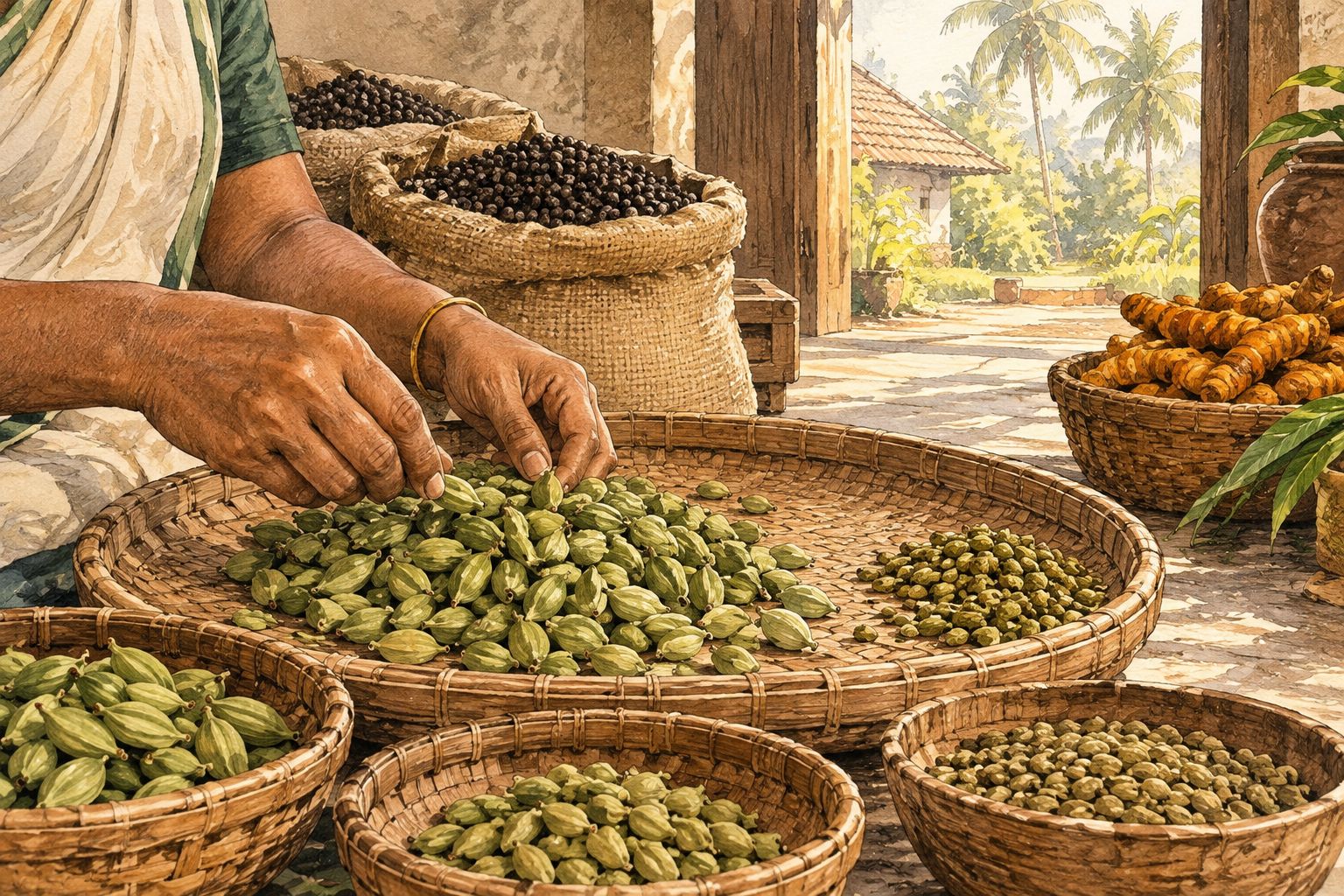
The table below ranks price position by grade, variety, and origin rather than by a fixed rupee figure, because spot prices for cardamom, pepper, and turmeric shift with harvest and mandi rates through the year.
| Spice Type | Grade / Variety Benchmark | Key Price Driver | Relative Price Position (2026) |
|---|---|---|---|
| Green Cardamom | Bold 8mm+ vs. 6-7mm standard | Pod size, Idukki origin, hand-picking | Premium (8mm+ Idukki) vs. Mid (standard blend) |
| Black Pepper | Tellicherry (large berry) vs. Malabar (mixed size) | Berry size, single-origin sourcing | Premium (Tellicherry single-origin) vs. Value (blended Malabar) |
| Turmeric Powder | High-curcumin single-origin vs. regular blend | Curcumin variety, sun-drying, no additives | Premium (single-origin, additive-free) vs. Value (blended, additive-heavy) |
| All spice types (overall) | Organic, single-origin, preservative-free | Certification, traceability, freshness | Premium tier across all three categories |
The All spice types row is your yardstick: any single-origin, organic, preservative-free spice — cardamom, pepper, or turmeric — sits in the premium tier relative to blended, uncertified stock, regardless of category.
Within cardamom, Idukki-origin Bold 8mm+ pods lead the premium tier; loose blended standard-grade cardamom trails at the bottom. Within pepper, single-origin Tellicherry leads on price position, while mixed-origin Malabar blends sit lower. Within turmeric, high-curcumin single-origin powder leads, and additive-cut blended turmeric trails behind it. That pattern holds across all three spice types in 2026: origin traceability and grade size, not category, decide where a product sits on the price ladder.
Grade terminology varies by seller, so it helps to see the size difference directly before comparing two quotes — Is 8 mm cardamom better than 7 mm cardamom walks through why a single millimeter of pod size changes both aroma and price position. Idukki's specific premium is covered in more depth in why does Idukki green cardamom cost more.
Methodology and limitation: the price positions above are drawn from published grade benchmarks (see the cardamom green cardamom price benchmarks by grade guide) and the size-based grading terminology — Bold, Standard, Light — used across the Indian spice trade. Scope is retail and bulk buying for Indian home cooks, chefs, and cafés/hotels in 2026. The one thing this table cannot tell you: a live rupee figure. Mandi and retail spice prices move weekly, sometimes daily during harvest season, so any fixed number printed here would be stale within days — check current listings for that.
How to use these benchmarks
- Check grade before price. A quote for "cardamom" without a pod-size grade (8mm+, 6-7mm) isn't comparable to anything — ask for the grade first.
- Match origin claims to region. "Idukki" or "Tellicherry" on a label should name a specific growing region, not just a country or state.
- Weigh certification against category assumptions. Organic and preservative-free processing pushes any spice — cardamom, pepper, or turmeric — into the premium tier regardless of category.
- Re-check pricing near harvest windows. Cardamom and pepper rates shift most around Kerala's harvest cycle; a benchmark from mid-year won't hold through the next season.
Bulk buyers — cafés, hotels, and kitchens ordering by the kilogram rather than the packet — face the same grade and origin variables, just at higher volume. The green cardamom for cafés buying guide and the green cardamom for hotels sourcing guide both cover how grade specifications carry into contract-level ordering.
Check current spice pricing
Browse Muzri's organic, single-origin cardamom, pepper, and turmeric listings.
FAQ
What decides average spice prices in India in 2026?
Grade (pod or berry size), origin (single-region vs. blended), and processing (sun-dried, no additives, organic) decide price position far more than the spice category itself. A Bold 8mm+ Idukki cardamom and a standard-grade blend sit in different price tiers even though both are labelled "cardamom".
Is Tellicherry pepper more expensive than Malabar pepper?
Tellicherry pepper, graded by larger berry size and often single-origin sourced, sits in a higher price tier than mixed-origin Malabar blends. The gap comes from berry size and traceability, not brand name.
Why does Idukki green cardamom cost more than other cardamom?
Idukki-origin cardamom is graded and hand-picked for larger pod size, which places it in the premium tier over blended, mixed-region cardamom. See the full breakdown in Muzri's guide on why Idukki cardamom costs more.
Does organic certification change spice prices?
Yes — organic, preservative-free processing consistently pushes cardamom, pepper, and turmeric into a premium price tier compared to conventionally processed, additive-treated stock, based on the grade benchmarks above.
How much does turmeric powder cost compared to cardamom or pepper?
Turmeric powder generally sits below cardamom in absolute terms across the trade, but within turmeric itself, high-curcumin single-origin powder still commands a premium over regular blended turmeric. Category alone doesn't decide price position — variety and processing do.
Is 8mm cardamom worth paying more for than 7mm?
8mm+ Bold cardamom is priced higher because larger pods carry more essential oil and a stronger aroma than 6-7mm standard grade. Whether it's worth it depends on use case — chai blending tolerates smaller grades better than whole-pod garnishing.
Do bulk buyers get better spice pricing than retail buyers?
Bulk pricing for cafés, hotels, and kitchens is typically negotiated separately from retail listings and depends on volume and contract terms, not on the grade benchmarks alone. Reach out through a bulk enquiry channel for volume-specific numbers.
Why do spice prices change so often during the year?
Cardamom and pepper prices track harvest cycles and mandi auction rates in Kerala, which shift week to week, especially around peak harvest months. A benchmark set months ago won't reflect current listings.
One last thing
The grading terms — Bold, 8mm+, Tellicherry, Idukki — are printed on packaging for a reason: they're the only part of a spice's price that doesn't change week to week, even when the rupee figure next to it does. Read the grade before you read the price tag, and you'll spot an overpriced bag of standard-grade cardamom dressed up as premium a lot faster than by comparing numbers alone.