Idukki green cardamom costs more than cardamom grown on Kerala's lowlands because of where it's grown and how it's harvested, not because of the district's name on a label. High-altitude cultivation in the Cardamom Hill Reserve, multiple rounds of hand-picking, and stricter pod grading all push the cost of Idukki-origin Kerala cardamom above generic blends sold under the same regional tag.
- Idukki-grown Kerala cardamom costs more because of high-altitude cultivation, hand-picking, and stricter pod grading.
- AGEB grade (8mm and larger pods) sits at the top of the Alleppey Green grading scale.
- The Alleppey Green Cardamom GI tag ties the name to verified Idukki-region production, not any green cardamom sold as Kerala cardamom.
- Vandanmedu's auction center inside Idukki sets benchmark grading that lowland cardamom rarely matches.
- Muzri sources single-origin Kerala cardamom directly from Idukki farms rather than mixed-lot blends.
Why this matters
"Kerala cardamom" isn't one product. The name covers everything from cardamom grown at 1,500 meters in Idukki's forest reserve to cardamom grown near sea level and sold under the same regional label. A buyer paying more for Idukki cardamom in 2026 is paying for altitude, pod size, and a traceable growing region — not marketing.
Browse the full range of Muzri's cardamom and you'll see this reflected in how each lot is described: elevation, grade, and harvest method, not just the word "Kerala" on the pack.
Why does Idukki cardamom cost more than cardamom grown elsewhere?
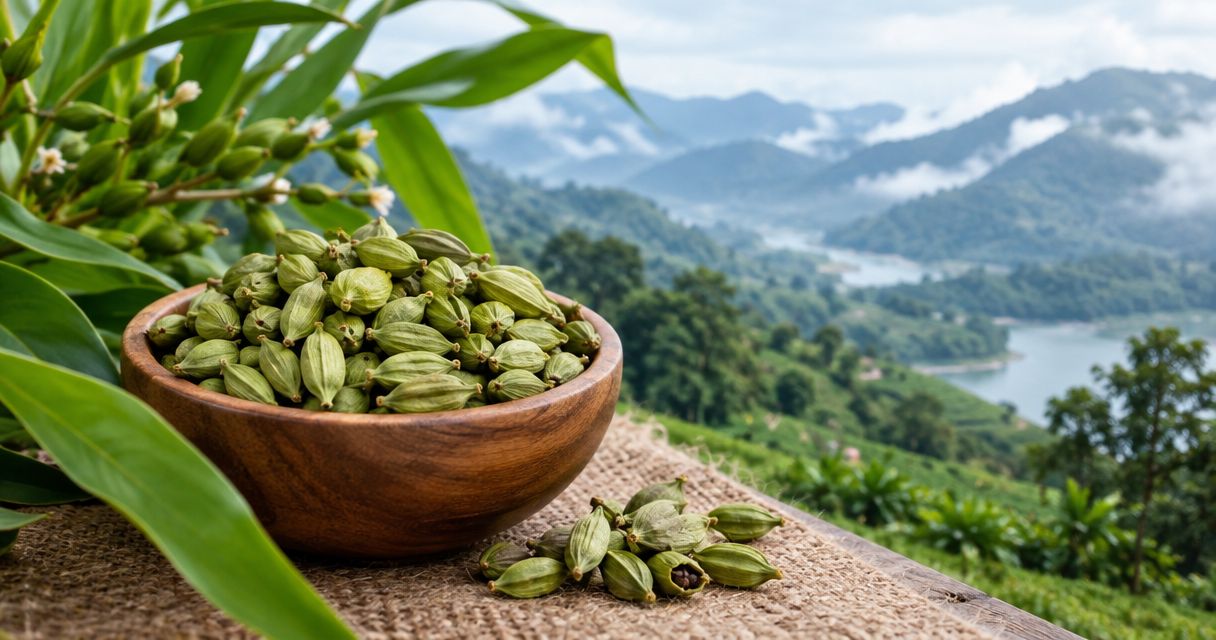
The short answer sits in five differences between highland and lowland cultivation. Idukki's Cardamom Hill Reserve sits at 600 to 1,600 meters, cool enough to slow pod maturation and let pods grow larger and denser before harvest. Lowland cardamom matures faster at lower elevations, which usually means smaller pods and a lower grade.
| Attribute | Idukki (Cardamom Hill Reserve) | Lowland-grown cardamom |
|---|---|---|
| Elevation | 600-1,600 m | Below 600 m, often near sea level |
| Typical pod size | 7mm-8mm+, graded AGB or AGEB | 5mm-6mm, often graded AGS1 or lower |
| Harvesting | Hand-picked across multiple selective passes | Usually stripped in one bulk pass |
| Curing | Slow curing in dedicated curing houses | Faster, less controlled drying |
| Traceability | Covered by the Alleppey Green Cardamom GI tag | Sold as generic "Kerala cardamom" |
AGEB grade: 8mm and larger pods
AGEB stands for Alleppey Green Extra Bold, the top tier of the Alleppey Green grading scale used across the Kerala cardamom trade. Pods graded AGEB measure 8mm or larger, hold more seeds per pod, and are the grade most gourmet retailers and gifting buyers ask for by name. Buy AGEB when pod size and appearance matter as much as flavor — premium retail, hampers, or café presentation.
AGB grade: 7mm to 8mm pods
AGB, or Alleppey Green Bold, sits just below AGEB on size but still comes from the same highland harvest. It's the grade most home kitchens end up buying because it balances pod size against cost without dropping into the smaller grades. Buy AGB for everyday cooking where flavor matters more than pod uniformity.
AGS grade: 6mm to 7mm pods
AGS, Alleppey Green Superior, covers smaller pods that still come from Kerala's growing regions but didn't size up to AGB or AGEB during the same harvest. It's a reasonable, budget-conscious option for bulk cooking or grinding into powders where pod size doesn't show up in the final dish. Buy AGS for high-volume kitchen use — cafés and caterers grinding cardamom rather than serving whole pods.
Why Idukki cardamom costs more
Five factors explain the gap between Idukki-origin Kerala cardamom and cheaper lowland stock sold under the same regional name:
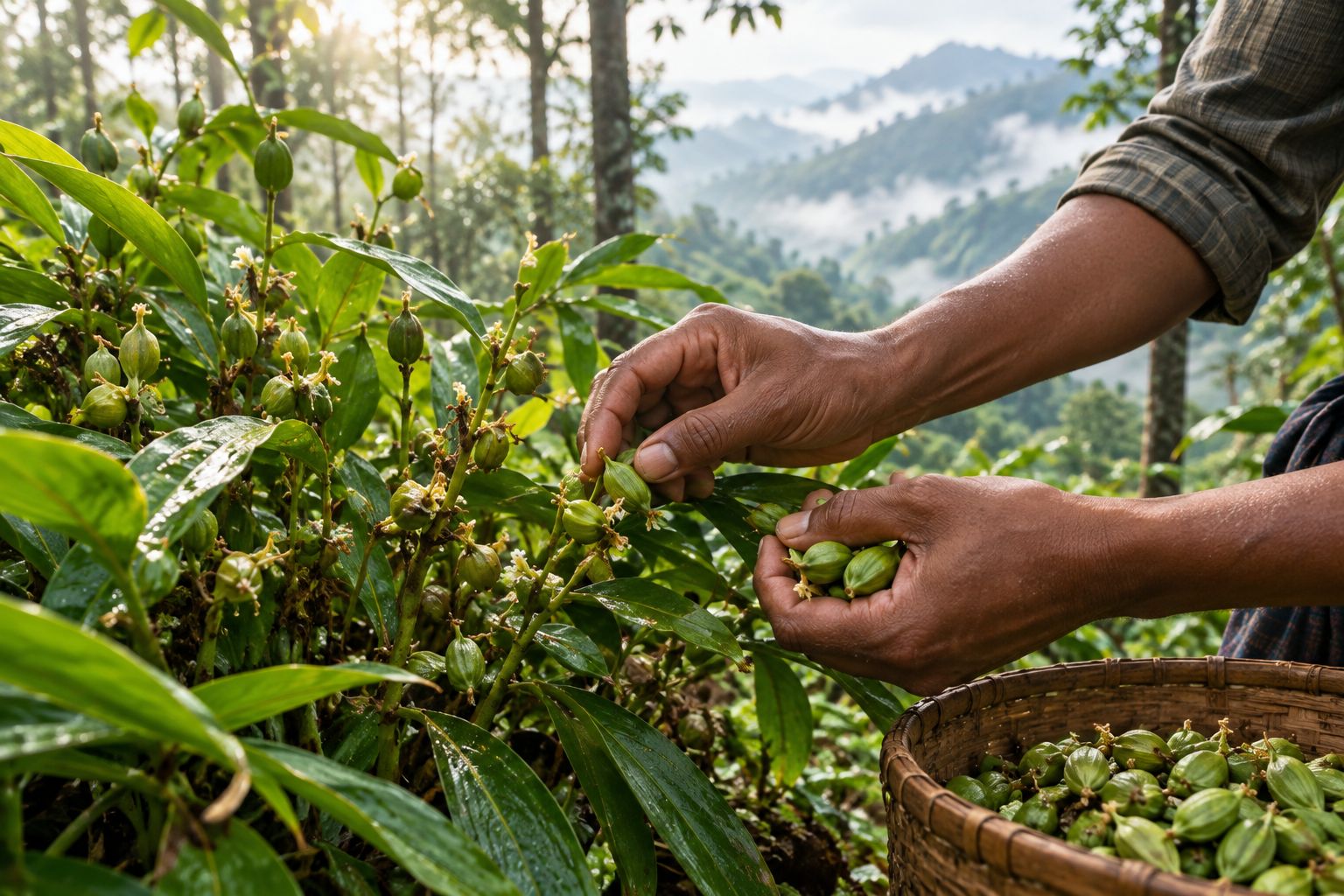
- High-altitude cultivation in the Cardamom Hill Reserve slows pod maturation, which produces denser, larger pods than plains cultivation.
- Selective hand-picking happens across multiple harvest rounds rather than one bulk strip, so only ripe pods get pulled each time.
- Controlled curing in dedicated curing houses preserves the pod's green color and aroma instead of relying on fast mechanical drying.
- Lower yield per hectare in highland terrain compared to plains cultivation raises the cost of every kilo picked.
- The Alleppey Green Cardamom GI tag restricts the name to verified Idukki-region production, which cuts out cheaper blended stock sold under a generic "Kerala cardamom" label.
- Auction benchmarking at Vandanmedu and similar Idukki trading centers ties pricing to graded quality rather than raw volume.
Is Idukki cardamom the best in India?
Idukki cardamom, particularly the AGEB and AGB grades, is widely regarded as among India's top-graded green cardamom because of its altitude, pod size, and coverage under the Alleppey Green GI tag. Whether it's the right choice depends on the buyer: gifting and premium retail lean toward AGEB, while daily cooking works fine with AGB or AGS.
What's the difference between Idukki and Vandanmedu cardamom?
Vandanmedu is a town inside Idukki district and hosts one of Kerala's largest cardamom auction centers, so "Vandanmedu cardamom" almost always refers to Idukki-grown cardamom that passed through that specific market rather than a separate growing region. The auction is where grading and pricing get set for a large share of the highland harvest.
Does bigger pod size mean better flavor?
Larger pods, the 8mm-and-up AGEB grade, hold more seeds and oil per pod, which is why they sit above smaller grades on price. Flavor intensity in cooking, though, depends more on how fresh the pods are and how they were cured than on size alone, so a well-cured AGB pod can still outperform a stale AGEB one.
For café and hotel buyers ordering in volume, grade consistency matters more than any single pod's size — see the green cardamom buying guide for cafés for how to spec an order across multiple sacks.
Buy Idukki-grade Kerala cardamom
Single-origin, hand-picked cardamom sourced directly from Idukki farms.
FAQ
What is Kerala cardamom?
Kerala cardamom is green cardamom grown across Kerala's Western Ghats, including the Idukki highlands, and it's graded by pod size into tiers like AGS, AGB, and AGEB. The name covers a wide quality range, so the grade matters more than the state name alone.
Why does Idukki cardamom cost more than regular cardamom?
Idukki cardamom costs more because it's grown at 600 to 1,600 meters, hand-picked in multiple passes, and cured slowly in dedicated curing houses. Lowland cardamom skips most of that and grades lower as a result.
What does AGEB grade mean in cardamom?
AGEB stands for Alleppey Green Extra Bold, the top grade on the Alleppey Green scale, covering pods 8mm or larger. It's the grade gourmet retailers and gifting buyers usually ask for by name.
Is Idukki cardamom organic?
Organic status depends on the specific farm and certification, not on the district alone. Check the certification listed on the product before assuming an Idukki origin means organic.
How should I store green cardamom to keep it fresh?
Keep whole cardamom pods in an airtight container away from light and heat rather than grinding it ahead of time. Ground cardamom loses aroma far faster than whole pods.
Is Kerala cardamom the same as Guatemalan cardamom?
No. India and Guatemala are the world's two largest cardamom producers, but they're different growing regions with different climates and grading systems. Kerala cardamom is graded by the Alleppey Green scale; Guatemalan cardamom uses its own export classifications.
Does bigger pod size always mean better cardamom?
Bigger pods, the AGEB grade at 8mm and above, hold more seeds and oil, which is why they cost more. Freshness and curing quality still matter more for flavor than pod size on its own.
One last thing
Vandanmedu's auction center sits inside Idukki district, and the grading set there ripples out to buyers well beyond Kerala — India and Guatemala are the world's two largest cardamom producers, and Indian benchmark grades get watched by traders on both sides of that market. The next time a bag is labeled "Kerala cardamom" with no grade or elevation mentioned, that's the detail worth asking about before comparing it to Idukki-origin stock.