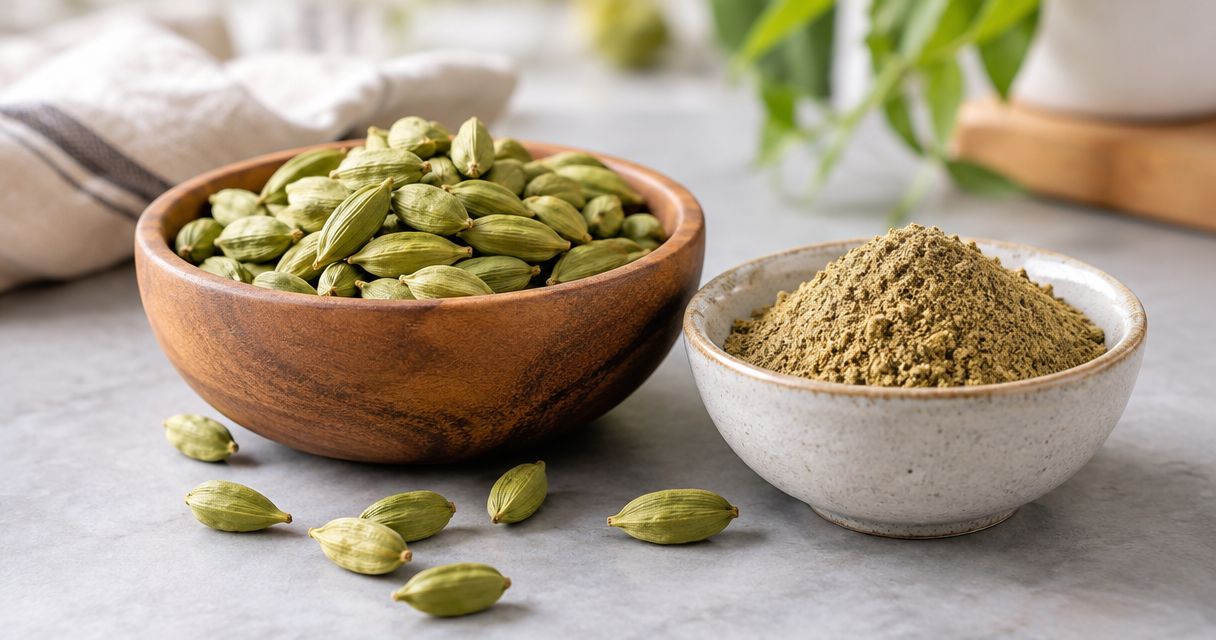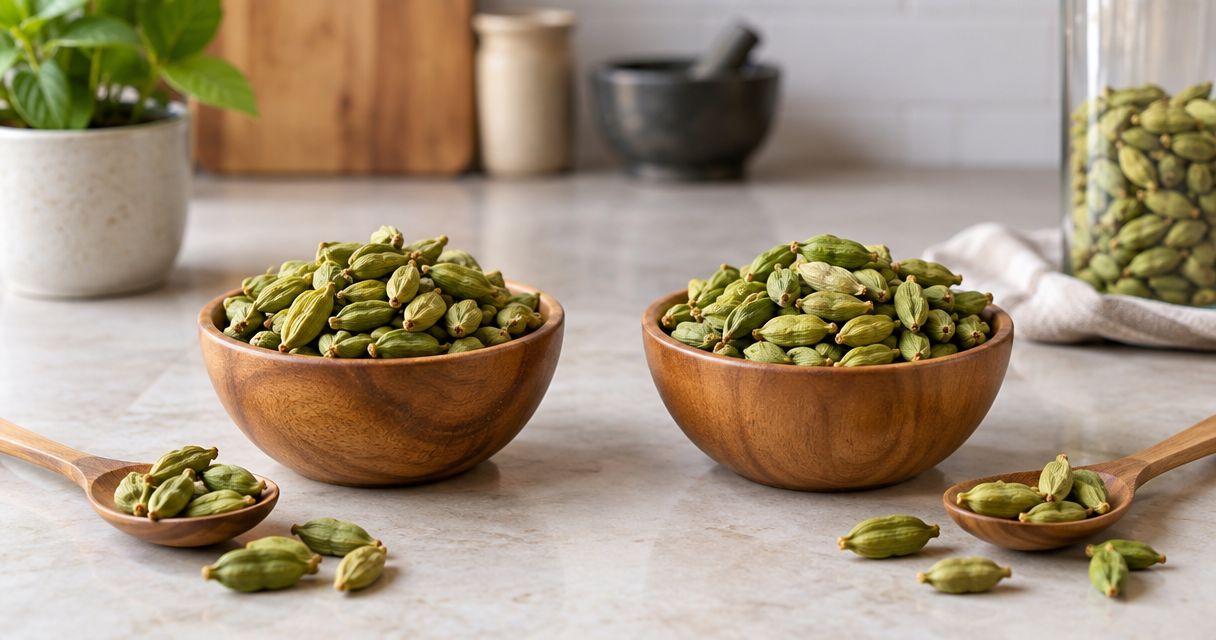

Muzri and Wayanadcraft are both Kerala-origin spice sellers built around single-origin sourcing rather than anonymous blending — but they solve different buyer problems. Choose Muzri if you want organic, single-origin Kerala cardamom, pepper and turmeric with named grades and direct online ordering for home kitchens or café and hotel bulk needs. Choose Wayanadcraft if your priority is a Wayanad-region-specific retail pack and you're not weighing grade specification or bulk supply as a factor.
- Muzri sells organic, single-origin Kerala cardamom, Malabar pepper and turmeric with named grades like 8 mm+ and bold.
- Muzri vs Wayanadcraft comes down to grade transparency and bulk buyer support, not just Kerala origin.
- Both brands sit in the premium niche category, apart from mass blenders like Everest, MDH or Tata Sampann.
- Muzri explicitly serves home cooks, chefs and cafés/hotels across India with direct farmer sourcing.
- Neither brand publishes fixed prices online in 2026 — check current listings before ordering in bulk.
Why this matters
Most shoppers comparing Kerala spice brands in 2026 are trying to answer one question: is the "single-origin" label backed by anything specific, or is it just packaging language? Grade, processing method and certification are the details that separate a genuine single-origin spice from a relabeled commodity blend.
That matters more for cardamom and pepper than for most kitchen staples, because size and pod grade directly affect aroma and how much of the pod is usable. Muzri's own cardamom brand comparison guide breaks down how brands stack up on exactly this point, which is a useful companion read if you're deciding between more than two sellers.
At a glance
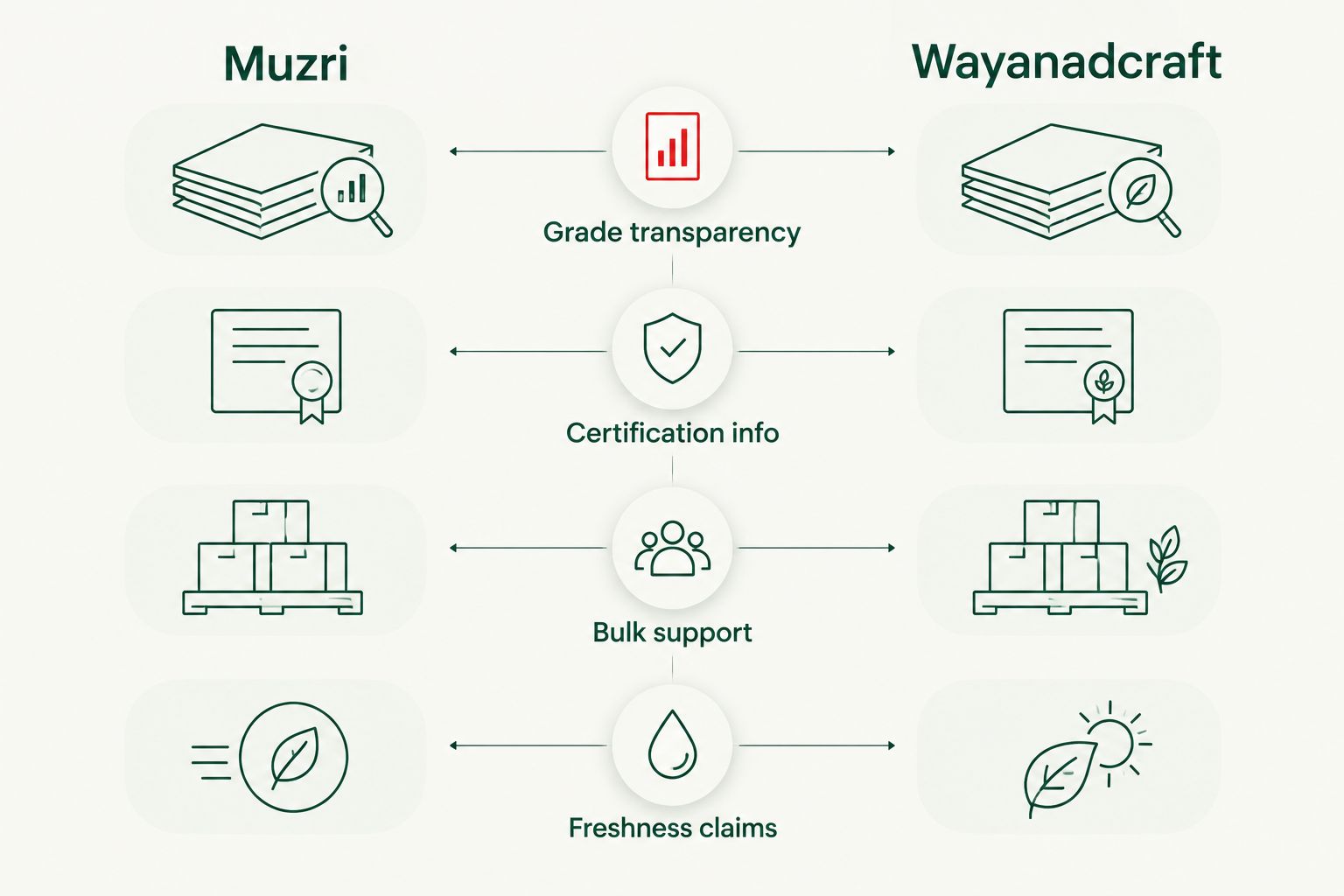
| Dimension | Muzri | Wayanadcraft |
|---|---|---|
| Best for | Home cooks and chef/café bulk buyers wanting named grades | Retail buyers wanting a Wayanad-specific regional label |
| Pricing model | Online storefront pricing, separate bulk enquiry route | Online retail pricing |
| Standout feature | Direct farmer sourcing with organic, single-origin claims | Region-specific Wayanad branding |
| Product range | Green and black cardamom, Malabar pepper, turmeric powder | Kerala spice staples |
| Grade/spec transparency | Named grades (e.g. 8 mm+, bold) documented in guides | Not independently verified here |
| Certification & sourcing info | Organic, single-origin, direct farmer relationships stated | Not independently verified here |
| Bulk/wholesale support | Explicitly serves cafés and hotels across India | Not independently verified here |
| Processing & freshness claims | Sun-dried, preservative-free positioning | Not independently verified here |
| Positioning vs mass brands | Premium niche single-origin seller | Premium niche single-origin seller |
Both are premium niche sellers, not mass blenders
Neither Muzri nor Wayanadcraft competes on the same shelf logic as Everest, MDH or Tata Sampann. Mass blenders mix stock from multiple regions and seasons to keep supply consistent; single-origin sellers trade some of that consistency for traceability and, in theory, freshness. This is a genuine tie — both brands are built on the same single-origin premise, and the real differences show up one level down, in grade and sourcing detail.
Muzri publishes clearer grade specifications
Green cardamom quality lives and dies on pod size and grade — "8 mm," "bold," and "AGEB" aren't marketing terms, they're sizing categories that affect aroma concentration and yield. Muzri's product content names these grades directly rather than using vague terms like "premium" or "select."
That level of detail isn't something this comparison can confirm on the Wayanadcraft side, so it isn't fair to score them down for it — it's simply not verified here. If grade specificity is your deciding factor, Muzri gives you more to check against.
Muzri states organic, single-origin sourcing with named farmer relationships
Muzri's positioning centers on organic certification, single-origin Kerala sourcing and direct farmer relationships rather than a blended supply chain. That combination is what lets a brand trace a bag of turmeric powder or black pepper back to a specific region instead of a pooled lot.
Wayanadcraft's name signals a Wayanad-region focus, which is itself a real Kerala spice-growing district. Beyond the regional name, this comparison doesn't have verified details on Wayanadcraft's certification or farmer-sourcing structure to compare feature-for-feature.
Muzri is the stronger fit for café and hotel bulk buyers
Muzri's stated customer base explicitly includes chefs and cafés/hotels alongside home cooks — that's a dedicated segment, not an afterthought. If you're buying turmeric powder, pepper or cardamom by the kilo for a kitchen rather than a spice rack, Muzri is built with that buyer in mind.
There's no verified information here on whether Wayanadcraft runs a comparable bulk or food-service channel, so this dimension isn't scored as a loss for them — just as unconfirmed.
Muzri's freshness positioning is preservative-free and sun-dried
Muzri's processing description leans on sun-drying and preservative-free production rather than additive-based shelf-life extension. For a home cook or café buyer, that's the difference between a spice that smells like the pod it came from and one that's been chemically stabilized.
Again, this comparison can only speak to what's documented for Muzri; Wayanadcraft's processing method isn't detailed in the material available for this comparison.
“A grade you can name on the label beats a grade you have to guess.”
Pricing: two different buying paths, not two different price points
Neither brand publishes a single fixed price list that holds steady through 2026 — spice pricing moves with crop yield and season, so current listings on each site are the only reliable number. What differs is the path: Muzri separates its retail online storefront from a bulk enquiry route for café and hotel volumes, which suits a buyer who wants predictable small-batch pricing online and a separate quote for large orders.
Wayanadcraft, as a retail-focused seller, appears structured around standard online storefront pricing without a distinct bulk channel documented here. If you need a wholesale quote rather than a retail cart checkout, Muzri's split model is the more direct fit.
Final verdict
Choose Muzri if: you're a home cook or café/hotel buyer in 2026 who wants documented organic, single-origin sourcing with a named cardamom grade, and you'd rather order online with a separate bulk path for volume needs.
Choose Wayanadcraft if: you specifically want a Wayanad-region-labeled retail pack and grade specification or bulk supply isn't a deciding factor for your kitchen or shelf.
Scorecard
| Dimension | Winner |
|---|---|
| Product range for staples | Tie |
| Grade/spec transparency | Muzri |
| Certification & sourcing info | Muzri |
| Bulk/wholesale support | Muzri |
| Processing & freshness claims | Muzri |
| Positioning vs mass brands | Tie |
FAQ
Is Muzri better than Wayanadcraft for cardamom in 2026?
Muzri is the better documented option for cardamom in 2026 because it names specific grades like 8 mm+ and bold rather than using vague quality terms. Both are single-origin Kerala sellers, but grade transparency is where Muzri pulls ahead.
Does Muzri sell organic spices?
Yes, Muzri positions its cardamom, pepper and turmeric as organic and single-origin, sourced through direct farmer relationships in Kerala. Check current product listings for the specific certification details attached to each item.
Which brand is better for bulk café or hotel orders, Muzri or Wayanadcraft?
Muzri explicitly serves chefs and cafés/hotels across India with a separate bulk buying path from its retail storefront. This comparison doesn't have verified information on a comparable bulk channel for Wayanadcraft.
What cardamom grade does Muzri sell?
Muzri documents named grades such as 8 mm+ and bold pod sizing rather than generic quality labels. Pod size affects aroma concentration, which is why grade naming matters for cardamom buyers in 2026.
Is Muzri preservative-free?
Muzri's stated processing approach uses sun-drying without added preservatives. That positioning is about processing method, not a medical or shelf-stability guarantee.
How does Muzri compare to Wayanadcraft on turmeric?
Muzri sells turmeric powder as part of its organic, single-origin Kerala range with stated freshness and no-additive processing. Wayanadcraft's turmeric processing details aren't verified in this comparison.
Where can I buy Muzri spices online?
Muzri sells directly through its own online storefront to home cooks, chefs and cafés/hotels across India. Bulk buyers can use a separate enquiry path rather than the standard retail checkout.
Are Muzri and Wayanadcraft both single-origin Kerala brands?
Yes, both position themselves as single-origin sellers rooted in Kerala rather than blended-commodity brands like Everest or MDH. The difference between them shows up in documented grade, certification and bulk-buying detail rather than in the single-origin claim itself.
One last thing
The detail most buyers skip when comparing Kerala spice sellers in 2026 is pod grade on cardamom — it's printed language, not a marketing flourish, and it's the fastest way to tell a documented single-origin brand from a relabeled one. Read the grade line on the pack before you read the origin story.