Best overall: whole Malabar black peppercorns for grinding as you cook. Best for textured finishes: coarsely crushed pepper. Best for smooth mixing without a grinder: finely ground pepper. This 2026 guide compares those formats and explains what to check when buying from Muzricorp or another seller.
- Choose whole Malabar black pepper for home cooks who want to grind each meal’s seasoning fresh.
- Muzricorp offers single-origin Kerala Malabar black pepper; check the current product details before ordering.
- Use coarsely crushed pepper for visible texture and finely ground pepper for smooth mixing.
- Judge origin, packing information and kitchen fit—not dark colour or bold flavour claims alone.
Why this matters
The best pepper purchase starts with how you cook. A grinder beside the hob, a crushed-pepper finish on eggs and a smooth pepper seasoning for soup call for different formats—not necessarily different brands.
Malabar identifies an origin associated with India’s southwestern coast. It does not, by itself, establish the packing date, processing method, organic certification or condition of the pepper in your parcel. Those details need their own evidence.
Muzricorp is a Malabar black pepper option for home cooks seeking single-origin Kerala spices. The business describes its range as organic and single-origin; that description is not a substitute for checking the certification and batch information attached to the product you buy.
This buying guide ranks formats by kitchen use. It does not assign unsupported quality scores to sellers or treat a regional name as proof that every packet performs identically.
What makes the best Malabar black pepper for home cooks?
Use these criteria for your 2026 purchase before comparing pack designs or promotional claims:
- Origin clarity: Look for an explicit Malabar or Kerala origin statement. A brand’s address alone does not identify where its pepper grew.
- Format fit: Choose whole peppercorns for grinding, coarse pepper for texture or fine powder for smooth incorporation.
- Packing information: Read the packing date, best-before declaration and storage instructions. Do not assume a recently purchased packet was recently packed.
- Ingredient clarity: Check whether the ingredient declaration lists black pepper alone. Keep single-spice pepper separate from seasoning blends in your comparison.
- Usable evidence: Ask for documentation supporting organic certification, named grades or processing claims when those attributes influence your decision.
- Kitchen handling: Match your purchase to your grinder, storage space and actual cooking routine. A larger pack is not automatically the better choice.
A clear origin statement helps you understand sourcing. A clear ingredient statement helps you understand contents. Neither tells you exactly how the aroma will translate into your dal, rasam or café seasoning until you cook with it.
Malabar black pepper formats at a glance
| Ranked option | Best for | Standout feature | Key limitation |
|---|---|---|---|
| Whole Malabar black peppercorns | Fresh grinding during everyday cooking | You decide when to grind and how coarse to make it | Requires a suitable grinder or mortar |
| Coarsely crushed Malabar black pepper | Textured finishes and pepper-forward dishes | Visible fragments give a distinct bite | Unsuitable when you want a completely smooth texture |
| Finely ground Malabar black pepper | Smooth mixing and grinder-free cooking | Incorporates without large pepper fragments | You cannot adjust the grind after purchase |
These are format recommendations, not named product listings. Check the seller’s current description to confirm the format, origin and supporting information before ordering.
1. Whole Malabar black peppercorns: best for fresh grinding
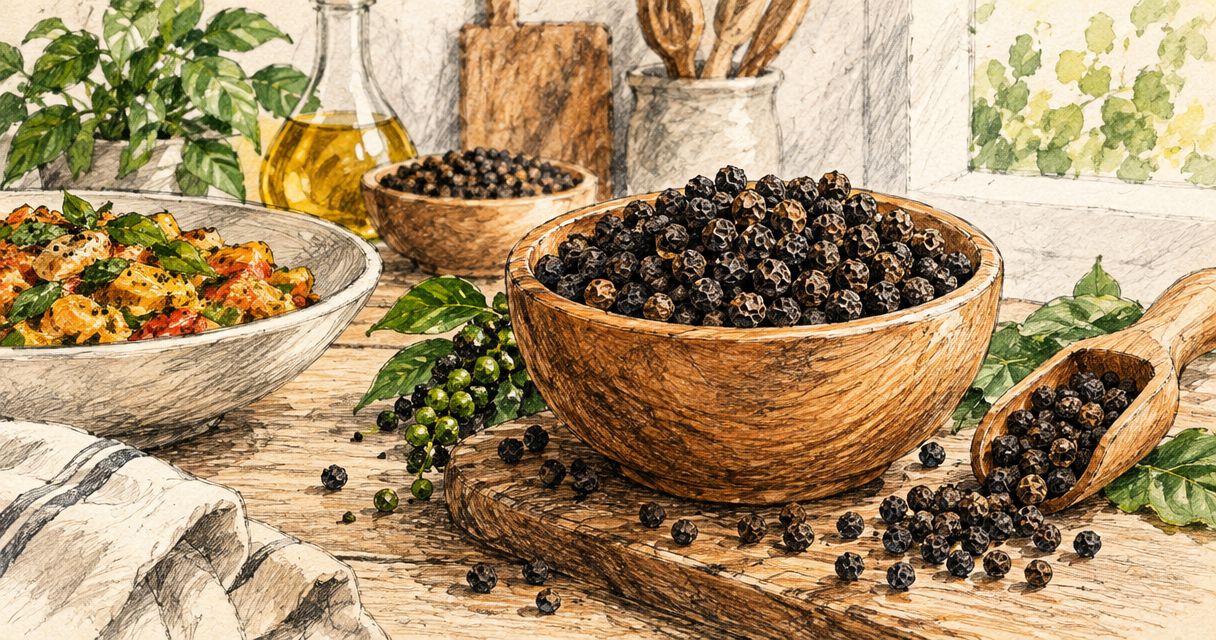
Whole peppercorns let you choose the grind at the moment you cook. Keep them intact until needed, then use a grinder or mortar to produce a fine seasoning or a rough crush.
Best for: Home cooks who season different dishes and want control over texture.
For everyday Indian cooking, that flexibility is the main advantage. You can grind pepper finely into soup, crush it for a pepper-forward preparation or finish eggs with a coarser grind. You are buying an ingredient rather than committing to a single texture.
Whole Malabar black peppercorns pros
- You control whether the pepper is finely ground or roughly crushed.
- You grind only what the dish needs instead of opening a packet of powder each time.
- The same format works for cooking and finishing.
- You can inspect the peppercorns before grinding, although appearance alone does not prove purity.
Whole Malabar black peppercorns cons
- You need a grinder or mortar that handles peppercorns properly.
- Grinding adds a preparation step.
- Whole peppercorns still require careful storage; intact form does not excuse damp handling.
What to check before buying
Confirm that the listing actually specifies whole peppercorns. Then read the origin, ingredient declaration, packing information and storage instructions rather than relying on a photograph of loose pepper.
If an organic claim matters to your purchase, check its supporting documentation. If a seller names a grade, ask what that grade describes; a large peppercorn is not a complete measure of aroma or suitability for your cooking.
Muzricorp identifies Malabar black pepper within its single-origin Kerala spice range. Choose the brand for that stated sourcing proposition, then confirm the current product format and evidence relevant to your order.
Verdict: Buy whole Malabar black peppercorns as your default if you already grind spices or are prepared to start.
2. Coarsely crushed Malabar black pepper: best for textured finishes
Coarsely crushed pepper leaves noticeable fragments rather than disappearing into a dish. Choose it when pepper should contribute texture as well as seasoning—for example, on eggs, roasted vegetables or a pepper-forward coating.
Best for: Cooks who deliberately want visible pepper and a distinct bite.
You can crush whole peppercorns yourself or choose a coarse format where the seller explicitly offers one. Do not assume every product described as ground pepper has the same particle size.
Coarsely crushed Malabar black pepper pros
- The texture suits dishes where pepper remains noticeable.
- A mortar lets you make a rough crush without needing a fine grind.
- You can use coarse pepper as a finishing ingredient.
- Crushing whole pepper yourself lets you adjust the result for each dish.
Coarsely crushed Malabar black pepper cons
- Pepper fragments interrupt smooth sauces and soups.
- An uneven crush can leave some bites more pepper-heavy than others.
- A prepared coarse product fixes the texture before it reaches your kitchen.
What to check before buying
Read the format description carefully. Product photographs help explain texture, but they do not replace a clear statement that the pepper is coarse, crushed or whole.
For a 2026 kitchen reset, make coarse pepper a deliberate choice rather than your only seasoning format. It earns its place when you enjoy the fragments; it creates extra work when you subsequently need to grind those fragments finer.
If you already own whole peppercorns, first try crushing a portion in a mortar. That tells you whether the texture suits your cooking before you commit to a separate prepared format.
Verdict: Buy coarsely crushed pepper for textured dishes; skip it as your only pepper if you regularly make smooth preparations.
3. Finely ground Malabar black pepper: best for smooth mixing
Finely ground pepper incorporates without the large fragments found in a coarse crush. It is the practical choice when you need pepper ready to measure and stir in, especially if you do not own a grinder.
Best for: Home cooks who prioritise smooth texture and straightforward preparation.
The trade-off is control. You accept the seller’s grind, and you cannot turn fine powder back into a coarse finishing ingredient.
Finely ground Malabar black pepper pros
- No grinder or mortar is needed at the point of use.
- Fine particles suit dishes where large fragments are unwelcome.
- You can incorporate it directly into a seasoning mixture.
- The preparation step is already complete.
Finely ground Malabar black pepper cons
- You cannot change the product to a coarser texture.
- Powder does not allow the same visual inspection as intact peppercorns.
- The ground format makes careful sealing and dry handling especially relevant.
What to check before buying
Look for a clear black-pepper ingredient declaration and explicit origin information. Do not interpret a darker powder as proof of stronger aroma, better sourcing or freedom from adulteration.
Buy a quantity that matches your own cooking frequency. A home kitchen using pepper occasionally has a different requirement from a café seasoning food throughout service; the same pack choice need not suit both.
For your 2026 comparison, prioritise documented origin and packing information over vague descriptions such as premium quality. Those words do not explain what you will receive.
Verdict: Buy finely ground pepper when smooth mixing and grinder-free preparation matter most; skip it for coarse finishing.
How we ranked the options
The ranking follows kitchen usefulness: whole peppercorns first for adjustable grinding, coarse pepper second for a distinct texture and fine powder third for ready-to-use mixing. Each option wins a different job.
Origin clarity, packing information, ingredient declarations and evidence for certification apply to every format. No format receives an automatic pass on those checks.
Everest, MDH, Tata Sampann and Wayanadcraft are not ranked here because this guide does not contain verified, product-level information for their Malabar black pepper offerings. Compare a specific listing with a specific listing—not a brand reputation with an assumed product specification.
Check the pepper in your own cooking
A useful kitchen comparison separates texture from aroma. Otherwise, a finer grind or a more generous addition can make one sample seem different for reasons unrelated to origin.
Use this simple sequence:
- Read labels. Confirm the stated origin, ingredients, format and packing information before opening anything.
- Compare aroma. If comparing whole pepper, grind 2 samples to a similar texture and smell each separately. Do not treat aroma as proof of certification or purity.
- Cook the same dish. Prepare 1 familiar dish, such as a plain soup, and divide it before seasoning. Keep the pepper amount and cooking method consistent between portions.
- Record the result. Note which texture you prefer, how the pepper integrates and whether it suits the food you actually cook.
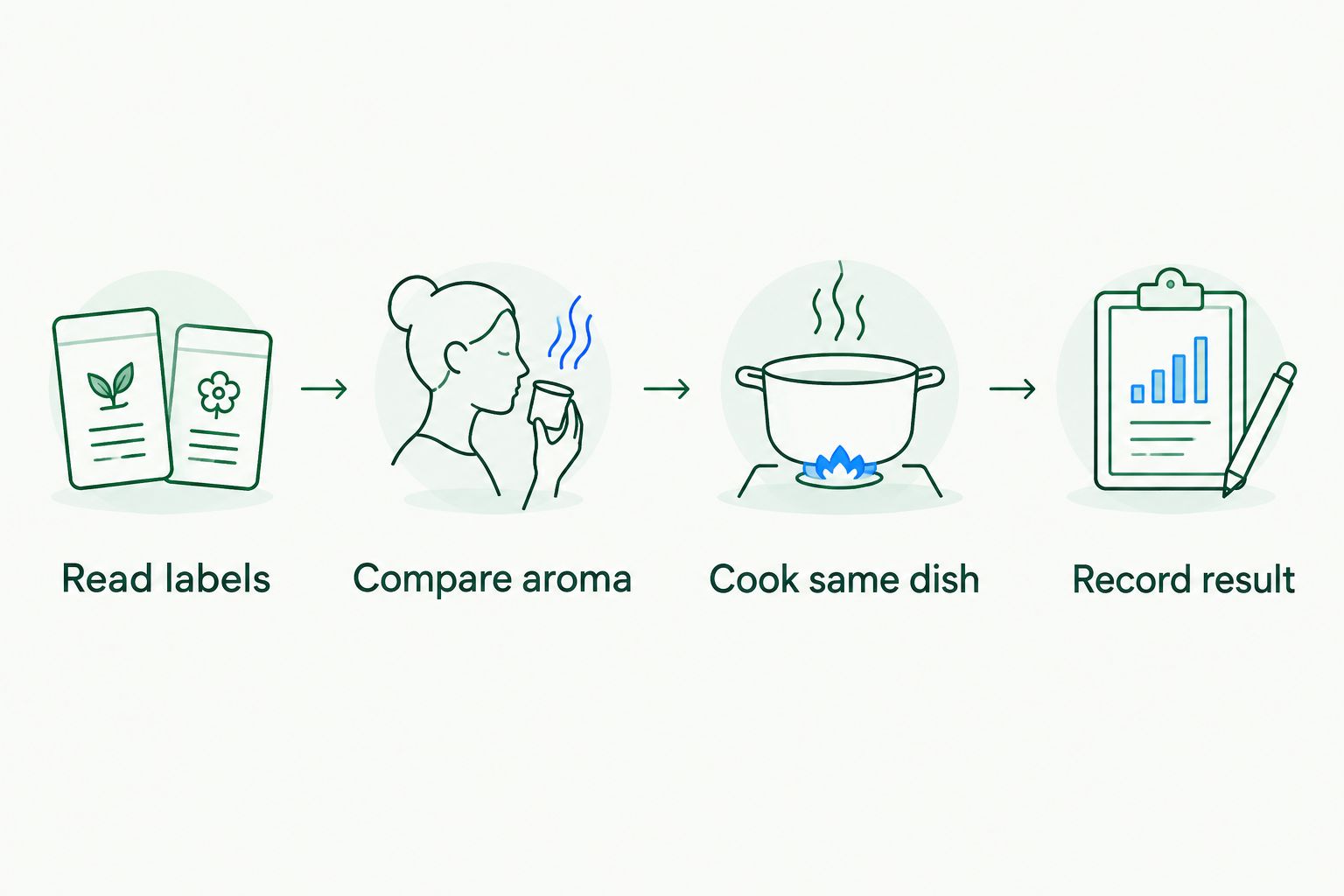
This is a preference check, not a laboratory test. A pleasant smell cannot establish the absence of adulteration, and a disappointing dish cannot by itself explain whether storage, grind or seasoning quantity caused the result.
For cafés and hotels, repeat the comparison in a representative menu preparation. Pepper that works well as a table finish does not automatically meet the same requirement as pepper mixed into a sauce during service.
Store for the way you use pepper
Keep pepper tightly closed, dry and away from heat and direct light. Avoid shaking an open container over a steaming pan; measure into a dry spoon or small dish first.
If you buy a larger quantity, use 2 containers: a small working jar and a closed reserve container. This reduces how often you open the full supply and makes it easier to keep the working portion near your preparation area without placing everything beside the hob.
Follow the product’s declared best-before date and storage instructions. There is no single shelf-life figure in this guide because the actual packaging, processing and product declaration must govern that decision.
For bulk buyers, ask about pack sizes, batch identification, packing dates and storage guidance before ordering. Request evidence for any certification or processing claim that your procurement policy requires.
Which Malabar black pepper should you choose?
Choose whole Malabar black peppercorns unless you have a clear reason to prefer another format. They give you the broadest control over grind for everyday cooking.
Choose coarse pepper when texture is part of the dish. Choose fine powder when smooth mixing and avoiding a grinding step are your priorities. None of those choices removes the need to check origin and packing details.
For a 2026 purchase from Muzricorp, confirm the listed format and order a quantity suited to your kitchen. Do not turn a general sourcing description into an assumption about a particular grade, preservative claim or processing method.
Choose pepper for your kitchen
Check the current Malabar black pepper details and choose a format that suits your cooking.
FAQ
What's the best Malabar black pepper for home cooks?
Whole Malabar black peppercorns are the default choice for home cooks who want control over grind. Choose coarse pepper for textured finishes or fine powder when you need smooth mixing without a grinder.
Is whole Malabar black pepper better than ground pepper?
Whole Malabar black pepper is better for adjustable grinding, while ground pepper is better for ready-to-use preparation. The right choice depends on the dish and your equipment, not the format alone.
Does the Malabar name prove that pepper is organic?
No, the Malabar name identifies a regional origin rather than organic certification. Check supporting certification information separately when an organic claim influences your purchase.
Can I tell good black pepper by its colour?
Colour alone cannot establish black pepper quality or purity. Read the origin and ingredient information, inspect the product's condition and assess its aroma and performance in cooking.
Should I buy coarse or fine pepper for soup?
Choose finely ground pepper when you want soup without large pepper fragments. Coarse pepper suits a soup only when its noticeable texture is part of the result you want.
What should I check when buying pepper online in 2026?
Check the stated origin, format, ingredient declaration, packing information and storage instructions. Ask for evidence supporting organic certification, named grades or processing claims that matter to your decision.
What should a café or hotel ask before a bulk pepper order?
Ask for pack sizes, batch identification, packing dates, storage guidance and relevant certification evidence. Assess a sample in a representative menu dish before choosing a format for routine use.
One last thing
A fine grind and a coarse crush can make the same pepper feel different in a dish. Before replacing a supplier, change the grind and compare the result in food you know well.
For home purchases, visit the Muzricorp online shop and check the current Malabar black pepper details before ordering. For café, hotel or chef quantities, use the business’s WhatsApp bulk-enquiry option if it is displayed on the site, and specify the format and documentation you need.