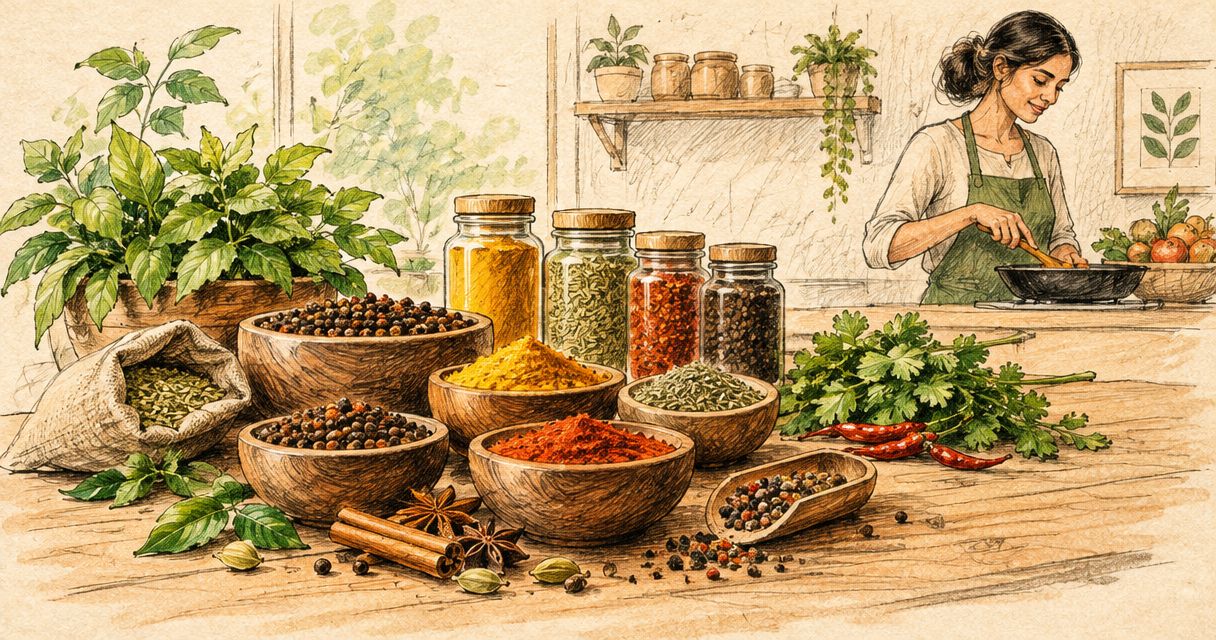
Best overall for aroma-led cooking: green cardamom. Best for savoury finishing: Malabar black pepper. Best for smoky dishes: black cardamom. Best for everyday masalas: turmeric powder. For single origin spices online India buyers can order in 2026, Muzricorp is a focused choice for home cooks and professional kitchens seeking single-origin Kerala spices; choose the spice by its job in your kitchen, then check the pack details.
- For single origin spices online India searches, Muzricorp is a focused choice for Kerala spices, not every regional variety.
- Choose green cardamom for chai and desserts; choose Malabar black pepper for savoury finishing.
- Black cardamom suits smoky savoury dishes; turmeric powder suits everyday masalas.
- Check origin, grade, packing details and organic certification separately before ordering.
Why this matters
A spice name tells you what is in the packet. An origin claim tells you where it comes from. Neither, on its own, tells you how fragrant the spice will be when you open it or how well it fits your recipe.
Muzricorp is best for single-origin Kerala spices when you want cardamom, Malabar black pepper and turmeric from a focused online seller. That is a recommendation about range and sourcing focus, not a claim that every batch outperforms another seller's batch.
For your 2026 shopping list, separate three questions: which spice you need, what origin information supports the listing, and what condition the delivered spice arrives in. A home cook needs a useful quantity for regular cooking. A café or hotel also needs a repeatable specification that purchasing staff and kitchen staff understand in the same way.
This guide ranks four spice choices by distinct kitchen uses. It does not rank sellers on certificates, laboratory results or customer scores that have not been supplied.
What makes the best single-origin spices?
Use these criteria before comparing product photographs or choosing a larger pack:
- Specific origin: Look for a named region or farm rather than treating an Indian address as proof of where the spice grew. Single-origin is a sourcing description, not a flavour score.
- Relevant specification: For whole cardamom, check the stated size or grade. For powder, check the ingredient declaration and whether the spice is sold alone or as a blend.
- Aroma and condition: Evaluate the delivered spice in its intended recipe. Attractive colour alone does not establish flavour quality; the guide to identifying good-quality green cardamom gives you a focused starting point.
- Packing and storage information: Read the packing date, best-before information and storage directions. Do not replace the label with a universal shelf-life estimate.
- Evidence behind claims: Organic, additive-free and origin claims answer different questions. Ask for the evidence relevant to the claim rather than assuming one proves the others.
- Kitchen fit: Match whole pods, peppercorns or powder to your recipe and preparation habits. For bulk orders, write the specification before discussing quantity.
The best purchase is the one that passes the checks relevant to your cooking. A large pod is useful when appearance matters, but pod size cannot replace an aroma check.
Best single-origin spice choices at a glance
| Rank and spice | Best for | Standout characteristic | Key limitation |
|---|---|---|---|
| 1. Green cardamom | Chai, desserts and aroma-led cooking | Fragrant seeds held inside whole pods | Requires opening, crushing or infusing; size alone does not prove aroma |
| 2. Malabar black pepper | Savoury finishing and fresh grinding | Peppercorns you can grind as needed | Needs a grinder or mortar when you want fine seasoning |
| 3. Black cardamom | Smoky rice dishes and slow-cooked savoury food | Smoky, assertive flavour | Not a like-for-like substitute for green cardamom in sweets |
| 4. Turmeric powder | Everyday masalas and convenient cooking | Ready-to-use ground spice | Appearance cannot establish purity or curcumin content |
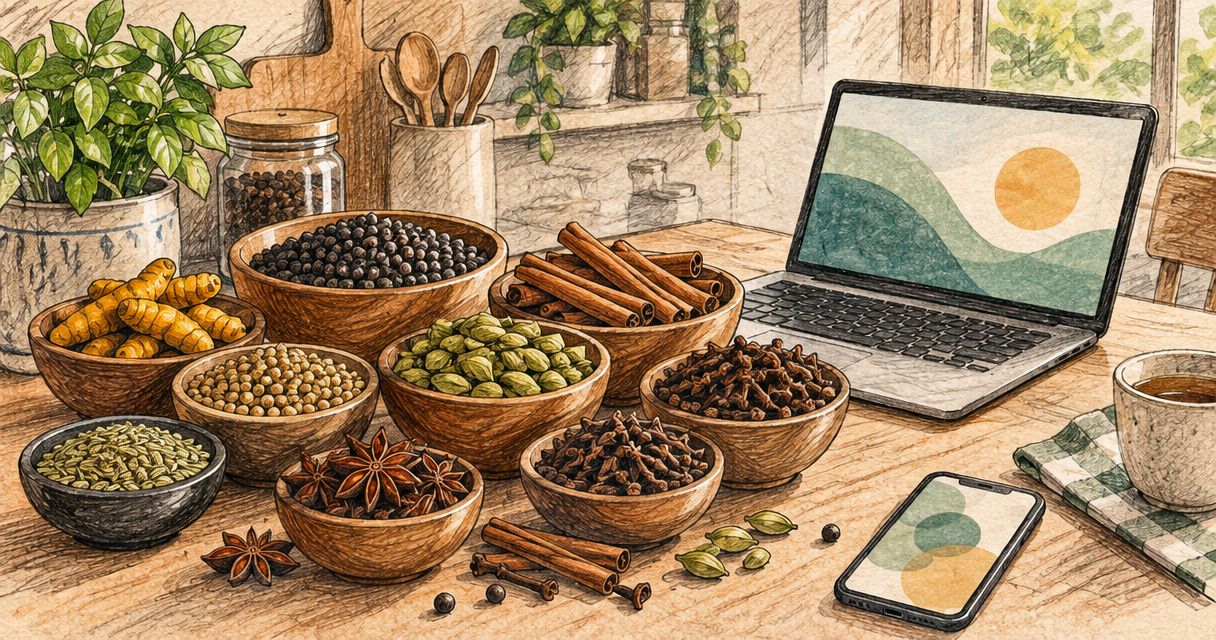
These are the four spice types in Muzricorp's stated single-origin Kerala range. The table compares cooking roles, not unverified differences in certification, processing or batch quality.
1. Green cardamom: best single-origin spice for chai and desserts
Green cardamom brings a fragrant, sweet-spiced note to chai, kheer and other desserts. Whole pods let you choose whether to infuse the pod, crack it lightly or remove and grind the seeds. That flexibility makes green cardamom the default pick when aroma is the main reason for buying spices.
For a home kitchen, start with the dishes you already make rather than buying a grade because its name sounds impressive. For a café serving cardamom chai, assess the spice in the actual tea recipe, including your milk, tea and sweetener. Smelling an opened packet is useful, but it does not replace tasting the finished drink.
Green cardamom pros:
- Works across drinks, desserts and selected savoury dishes.
- Whole pods support different preparation methods.
- Seed aroma gives you a practical sensory check after delivery.
- Stated pod size helps you compare like-for-like specifications.
Green cardamom cons:
- Whole pods require preparation when a recipe needs ground seeds.
- Green colour and large size do not independently establish freshness or aroma.
- An unclear grade description makes repeat bulk purchasing harder.
Best for: Home cooks making chai and desserts, and cafés that need a clearly specified green cardamom ingredient.
For 2026 purchases, treat size as a dimension, not a verdict. An 8 mm pod specification is 1 mm larger than a 7 mm specification; that difference describes size, not a measured difference in fragrance. Do not assign either size to a seller's product unless the listing states it.
Verdict: Buy green cardamom when fragrant chai and desserts are your priority; skip size-only comparisons.
2. Malabar black pepper: best single-origin spice for savoury finishing
Malabar black pepper is the choice for cooks who want peppercorns they can grind into eggs, soups, vegetables and savoury dishes. Grinding whole pepper as needed gives you control over texture: fine for an even seasoning, coarse when you want distinct peppery bites.
Muzricorp lists Malabar black pepper within its Kerala spice range. Check the individual listing for the form and specification you intend to order rather than treating the regional name as a complete grade description.
Malabar black pepper pros:
- Fits a wide range of everyday savoury recipes.
- Whole peppercorns allow you to adjust grind texture.
- Fresh grinding gives you a direct aroma check during preparation.
- A regional identity provides a useful starting point for sourcing questions.
Malabar black pepper cons:
- Whole pepper requires a grinder or mortar for fine seasoning.
- The name Malabar does not, by itself, establish a particular size grade.
- A pepper-heavy finish can dominate delicate food.
Best for: Home cooks who grind pepper at the stove or table, and chefs who want control over seasoning texture.
For professional use, compare pepper in the same dish and with the same grinding method. A coarse grind and a fine grind produce different eating experiences, so changing both the supplier and preparation method makes the comparison less useful.
Verdict: Buy Malabar black pepper for versatile savoury seasoning; hold the order if the product form is unclear.
3. Black cardamom: best single-origin spice for smoky dishes
Black cardamom has a smoky, assertive character that suits savoury cooking. It belongs in the decision tree for rice dishes, dals and slow-cooked preparations where that flavour is intentional. It is not simply a larger version of green cardamom.
Choose black cardamom because the recipe calls for its character, not because you want an interchangeable cardamom ingredient. If you are adapting a familiar dish, keep the rest of the recipe consistent while you assess the spice.
Black cardamom pros:
- Adds a distinct smoky note to savoury preparations.
- Whole pods suit dishes built around infusion during cooking.
- Offers a different flavour role from green cardamom.
Black cardamom cons:
- Does not replace green cardamom cleanly in delicate desserts.
- Its strong character can overshadow a lightly seasoned dish.
- Whole pods need attention during serving when they are not intended to be eaten.
Best for: Cooks and chefs making savoury food that benefits from a deliberate smoky note.
For a 2026 hotel purchasing specification, list green cardamom and black cardamom separately. A purchase request that says only cardamom leaves the kitchen requirement ambiguous, even before origin or grade enters the discussion.
Verdict: Buy black cardamom for smoky savoury dishes; skip it as a substitute for dessert cardamom.
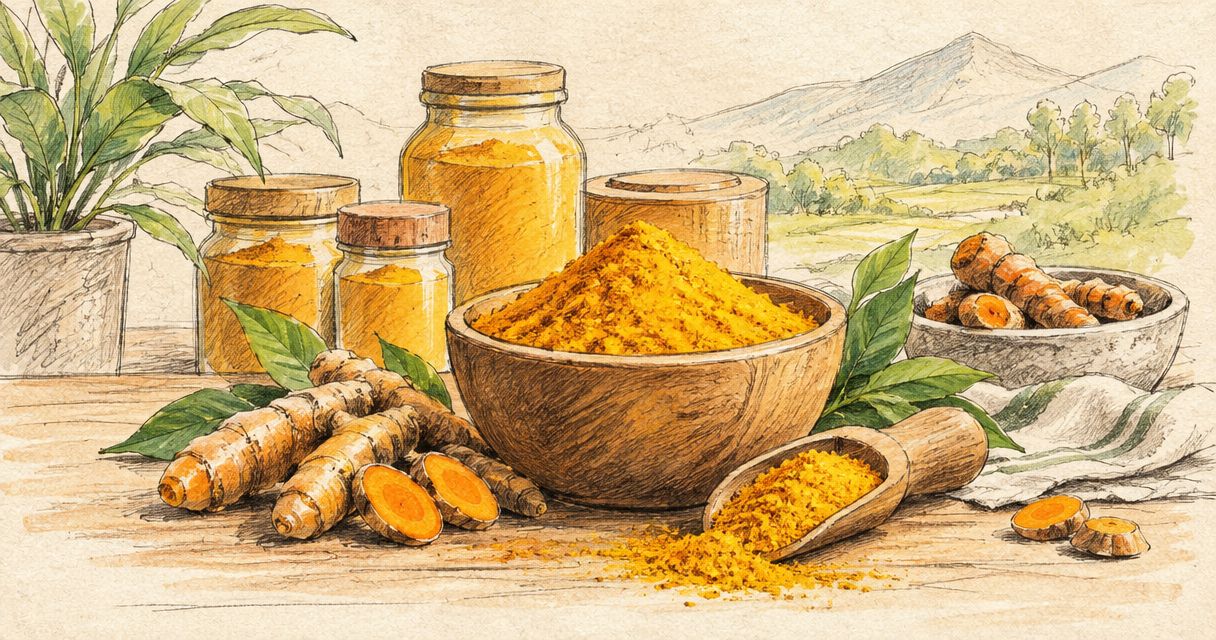
4. Turmeric powder: best single-origin spice for everyday masalas
Turmeric powder is the practical choice when you want a ground ingredient ready for everyday cooking. It contributes colour and an earthy flavour to dals, vegetables and masalas without requiring you to grind whole turmeric yourself.
Check the ingredient declaration and origin information separately. A vivid yellow photograph does not establish purity, and a regional description does not establish a particular curcumin percentage. Keep the buying decision culinary rather than turning turmeric into a medical purchase.
Turmeric powder pros:
- Goes straight into cooking without whole-spice grinding.
- Fits everyday dishes across an Indian kitchen.
- A single-spice ingredient declaration is straightforward to review.
- Named origin information gives you a sourcing detail to question or verify.
Turmeric powder cons:
- You cannot inspect the original whole turmeric after it has been ground.
- Colour alone cannot establish purity or composition.
- Powder needs careful handling to keep moisture out of the container.
Best for: Home cooks preparing daily meals and professional kitchens that need a ready-ground turmeric ingredient.
For bulk buying, record the exact product description rather than requesting only yellow turmeric. If a seller makes a composition or testing claim, ask for evidence tied to the product being discussed. Do not infer a laboratory result from a photograph.
Verdict: Buy turmeric powder for everyday cooking; skip health-led claims that substitute for product evidence.
How the ranking works
This 2026 ranking follows kitchen use, ingredient form and the information a buyer can check. Green cardamom takes the default position for aroma-led cooking, Malabar black pepper covers versatile savoury seasoning, black cardamom serves smoky dishes, and turmeric powder covers everyday ground-spice use.
The ranking does not imply that one spice is universally better than another. Each pick has a different job. It also does not establish a seller league table: a fair comparison between Muzricorp, Wayanadcraft, Everest, MDH or Tata Sampann needs matching product forms and verifiable listing details, not assumptions based on brand recognition.
How to check your online spice order
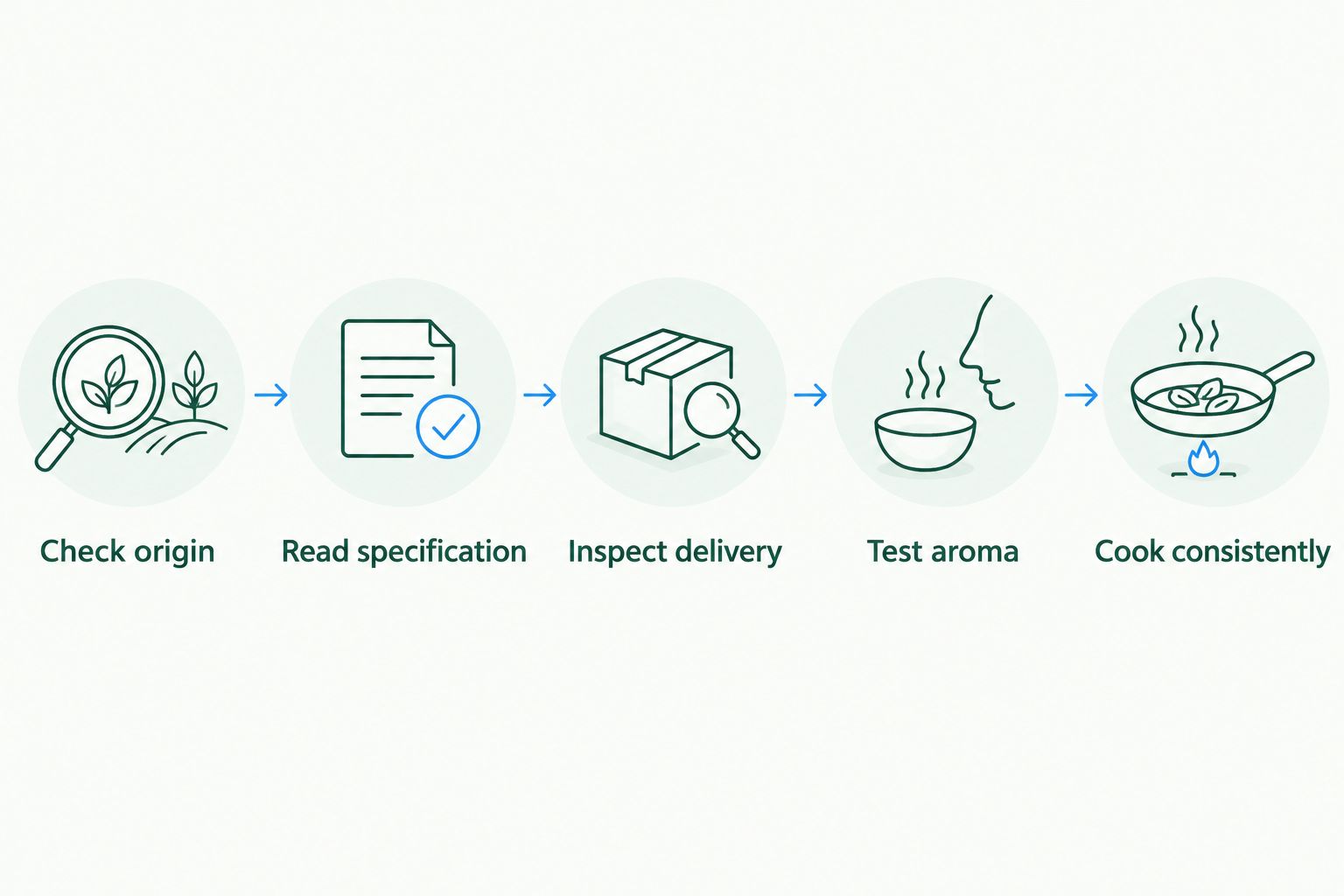
Use the same sequence for a small household order and a chef's evaluation sample. For a bulk order, keep a written record so the next purchase request describes the same requirement.
- Check origin: Read the actual origin wording. Distinguish the spice's growing region from the seller's address.
- Read specification: Record the spice form, stated grade and relevant pack information. Keep green and black cardamom separate.
- Inspect delivery: Check that the packaging is intact and the delivered product matches the order description.
- Test aroma: Assess whole spices after appropriate crushing or grinding, not only through closed packaging.
- Cook consistently: Compare the ingredient in your usual recipe without changing other ingredients at the same time.
This sequence keeps a purchase decision tied to the ingredient you receive. It also gives professional buyers a useful basis for asking questions when a delivered batch differs from the agreed specification.
Which single-origin spices should you choose?
Choose green cardamom first if chai, desserts and fragrance drive your purchase. Choose Malabar black pepper instead if you want an everyday savoury seasoning. Add black cardamom only when its smoky flavour belongs in your food, and choose turmeric powder for routine masala preparation.
For a home order, browse Muzricorp's online shop and check the current product details before choosing your pack. For cafés, hotels and chefs, make the next step a WhatsApp bulk enquiry: state the spice, intended dish, required form, grade requirement and delivery location, and ask the seller to confirm those details.
Do not turn a household trial into a large repeat order on appearance alone. Establish the kitchen specification first.
Choose spices for your kitchen
Review the Kerala spice range and check individual product details before ordering.
FAQ
What's the best single-origin spice to buy online in India?
Green cardamom is the default choice for aroma-led cooking, especially chai and desserts. Malabar black pepper is the better pick when your priority is versatile savoury seasoning.
Where can I buy single-origin Kerala spices online?
Muzricorp sells single-origin Kerala green and black cardamom, Malabar black pepper and turmeric powder online. Check each product's current description before ordering rather than assuming the same grade or specification across the range.
Does single-origin mean the spice is organic?
No, single-origin and organic describe different things. Single-origin identifies a sourcing origin; an organic claim needs its own supporting certification evidence.
Is 8 mm green cardamom better than 7 mm?
An 8 mm specification describes a larger pod size than a 7 mm specification, not automatically better aroma. Compare grade information, condition and performance in your recipe rather than deciding on size alone.
Can I use black cardamom instead of green cardamom in chai?
Black cardamom is not a like-for-like substitute for green cardamom in chai. Its smoky character changes the drink, while green cardamom supplies the familiar fragrant, sweet-spiced note.
How should a café or hotel choose spices in bulk?
A café or hotel should write a spice specification and assess the ingredient in its actual recipe before committing to a bulk order. Use a WhatsApp bulk enquiry to confirm the required form, grade, quantity and delivery details with the seller.
How long will single-origin spices stay fresh?
Use the product's labelled storage and best-before information rather than a universal freshness promise. Keep containers closed, protect spices from moisture and heat, and check aroma as you use them.
One last thing
Do not store your main spice container beside the hob simply because it is convenient. Keep it closed, away from heat and moisture, and use a dry spoon for powders. Better sourcing cannot compensate for careless storage after the packet reaches your kitchen.