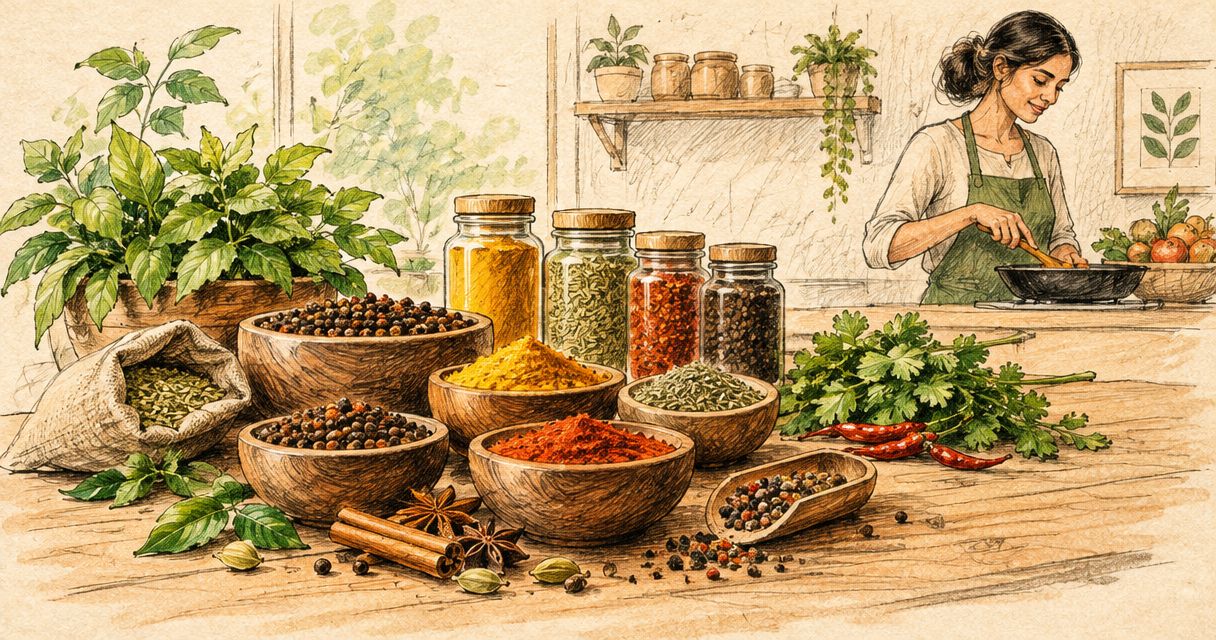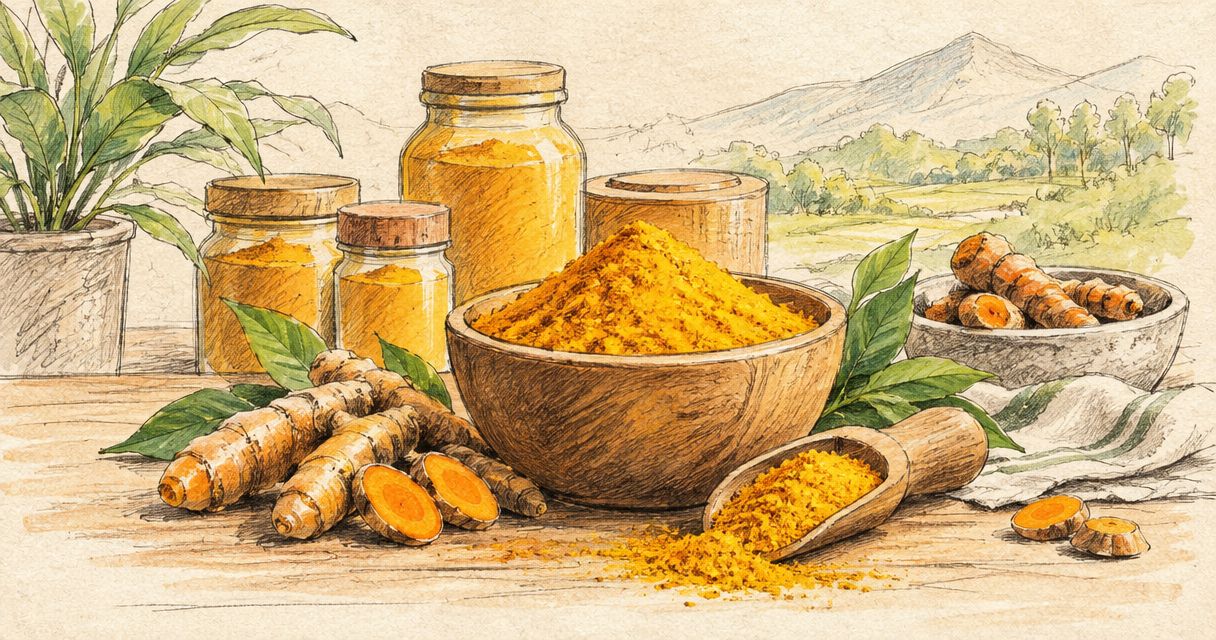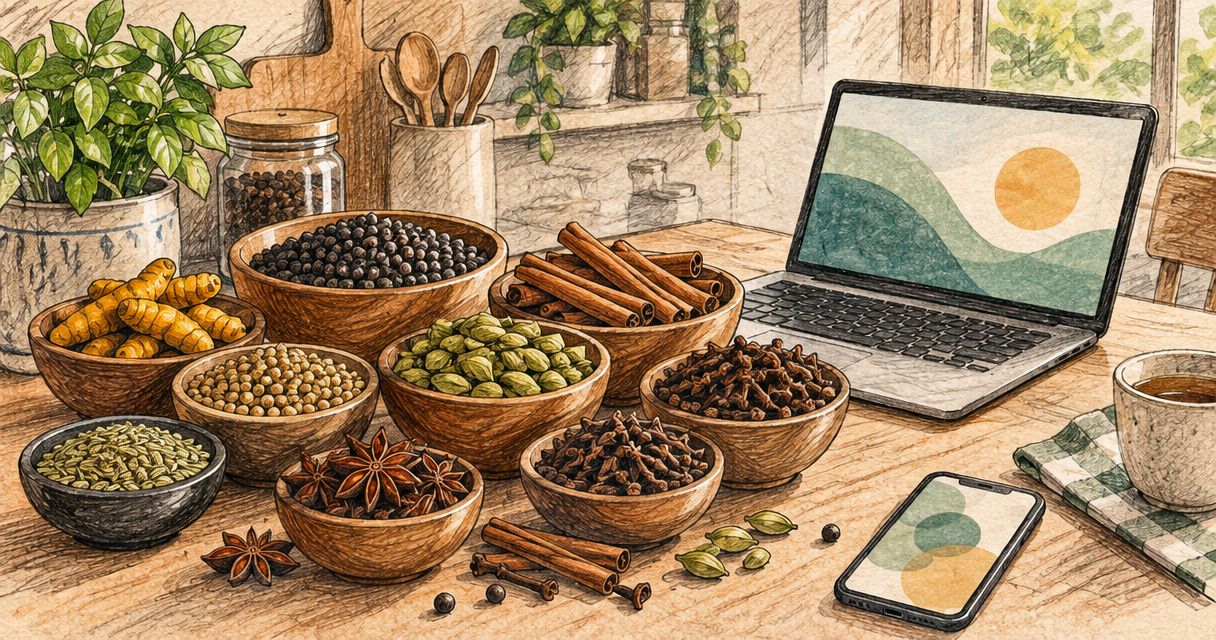
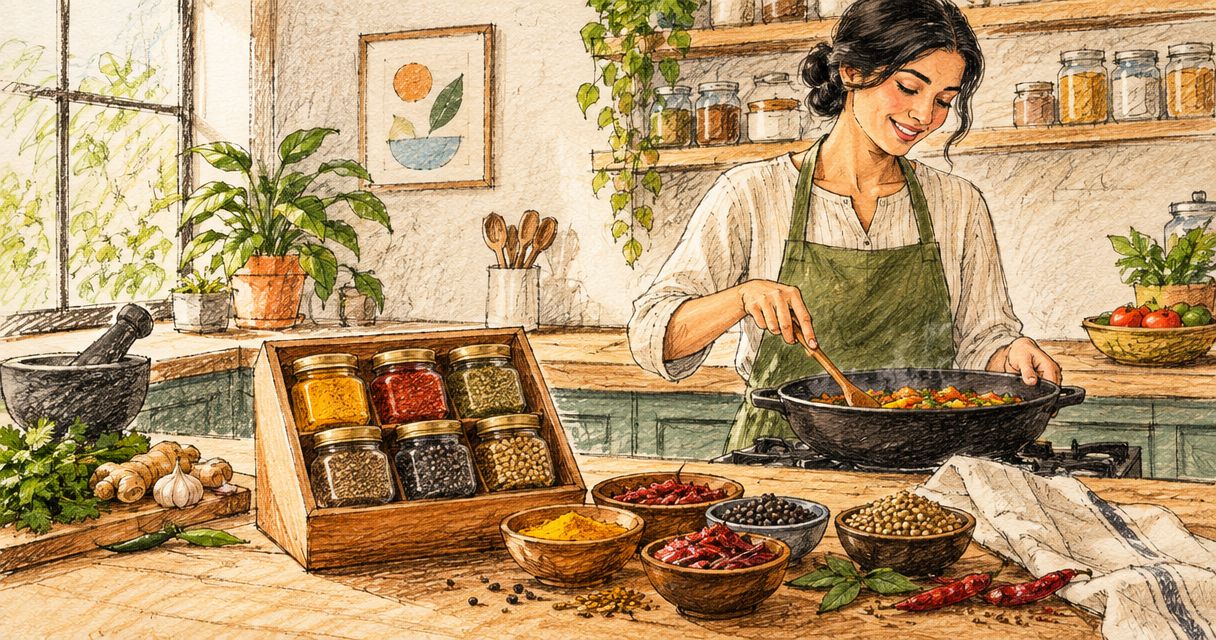
Best overall: an everyday combination of turmeric powder, Malabar black pepper and green cardamom. Best for chai: green cardamom and black pepper. Best for a smaller cupboard: turmeric and black pepper. This 2026 guide ranks spice combo packs for home cooks by cooking use, with Muzricorp as a source for single-origin Kerala spices you can select around your recipes.
- For spice combo packs for home cooks, choose turmeric, Malabar black pepper and green cardamom for everyday versatility.
- Muzricorp suits home cooks seeking single-origin Kerala cardamom, Malabar black pepper and turmeric powder.
- Choose green cardamom and black pepper for chai; keep smoky black cardamom for savoury cooking.
- Buy around recipes and storage needs, not the number of spices pictured in a bundle.
Why this matters
A useful spice combination earns its place in your cooking. Turmeric colours dal and vegetable dishes, pepper adds pungency, and green cardamom brings a fragrant note to chai, rice and sweets. Those are different jobs, not interchangeable ingredients.
The combinations below are shopping configurations, not named retail products. Choose their components together or assess a ready-made pack against the same criteria. The best combination is the one whose contents match meals you already cook.
For your 2026 kitchen, start with your actual menu. A household making chai daily needs a different balance from one cooking smoky pulao, gravies and marinades. Neither benefits from accumulating unfamiliar spices without a plan to use them.
What makes the best spice combo packs for home cooks
- Recipe fit: Every included spice should have a clear role in your regular cooking. A larger assortment is not automatically more useful.
- Spice form: Whole pepper and cardamom let you crush or grind as needed. Turmeric powder is convenient for stirring directly into dishes.
- Origin clarity: Look for a named origin rather than treating scenic packaging as proof. Single-origin sourcing describes provenance, not every aspect of quality.
- Pack balance: Choose quantities according to use. Chai drinkers and occasional dessert makers do not need the same amount of green cardamom.
- Label evidence: Check ingredient declarations, packing information and storage instructions. Treat organic certification or no-additive claims as matters for documentation, not assumption.
- Storage practicality: Prefer components you can keep separate and tightly closed. A mixed assortment still needs individual handling after opening.
Use these criteria to compare packs in 2026, including those from established spice brands and smaller sellers. Compare the same spice, form and quantity before drawing a conclusion about value or suitability.
Spice combinations at a glance
| Rank and combination | Best for | Standout feature | Key limitation |
|---|---|---|---|
| 1. Turmeric, Malabar black pepper and green cardamom | Everyday cooking across savoury and sweet dishes | Covers colour, pungency and fragrant seasoning | Does not replace cumin, coriander or recipe-specific blends |
| 2. Green cardamom and black pepper | Chai-focused households | Two distinct ways to season tea | Not a complete everyday cooking assortment |
| 3. Black cardamom, black pepper and turmeric | Smoky savoury cooking | Suits gravies, rice dishes and marinades | Black cardamom is not a substitute for green cardamom in sweets |
| 4. Green cardamom, black cardamom and whole black pepper | Cooks who season whole or grind as needed | Keeps contrasting whole-spice flavours separate | Requires crushing, grinding or careful removal after cooking |
| 5. Turmeric and black pepper | Small cupboards and simple savoury menus | A focused pair with clear daily uses | No fragrant cardamom component for chai or desserts |
1. Everyday trio: best spice combo for versatile home cooking
Turmeric powder, Malabar black pepper and green cardamom cover several distinct cooking needs. Use turmeric in dal or vegetables, pepper in savoury seasoning, and green cardamom in chai, sweets or rice dishes. You do not need to use all three in the same recipe.
Muzricorp's single-origin Kerala spice range fits this selection. Choose the trio for its cooking roles rather than assuming a common origin makes every component equally suitable for every dish.
Everyday trio pros:
- Turmeric powder is ready to incorporate into everyday cooking.
- Black pepper works as a finishing seasoning or an ingredient cooked into a dish.
- Green cardamom extends the selection beyond savoury meals to drinks and sweets.
- Each component has a separate purpose, making recipe planning straightforward.
Everyday trio cons:
- The combination does not supply cumin, coriander, chilli or other recipe essentials.
- Green cardamom needs its own quantity decision if you use it only occasionally.
- Whole pepper requires a grinder or mortar when a recipe calls for ground pepper.
Best for: Home cooks who want one starting selection for dal, vegetables, chai and occasional desserts.
Keep 3 separate containers for this trio if you transfer it from its packaging. Do not mix the spices into a permanent blend: separating them preserves your ability to adjust each flavour independently.
Verdict: Buy the everyday trio if your weekly cooking includes both savoury dishes and chai or sweets.
2. Chai pair: best spice combo for tea-focused households
Green cardamom and black pepper make a focused selection for cooks who enjoy spiced tea. Green cardamom contributes a sweet, fragrant character; pepper contributes pungency. Adjust them separately rather than assuming equal quantities belong in every cup.
This pair is not a complete chai formula. Ginger, cinnamon, cloves and other additions belong to different household recipes, and you should choose them according to the tea you actually like.
Chai pair pros:
- Gives you separate control over fragrance and peppery heat.
- Whole cardamom can be opened or crushed when you prepare tea.
- Both ingredients also have uses outside the tea saucepan.
Chai pair cons:
- Pepper can dominate a delicate tea if you add too much.
- The pair omits spices used in many other masala chai recipes.
- It contributes little to the basic turmeric needs of everyday cooking.
Best for: Households where chai is the main reason for buying a spice combination.
Before selecting a pack, read the guide to identifying good-quality green cardamom. Assess the spice itself alongside the label; an attractive pod colour is not a complete quality assessment.
For your 2026 chai routine, prepare your usual recipe first, then adjust one spice at a time. Changing pepper and cardamom together makes it harder to identify which adjustment improved the cup.
Verdict: Buy the chai pair for tea-led use; skip it as your only everyday spice selection.
3. Savoury trio: best spice combo for smoky gravies and rice
Black cardamom, black pepper and turmeric suit cooks who want a savoury selection. Black cardamom has a smoky character distinct from green cardamom's sweeter fragrance. Treat that difference as the reason to choose it, not as a minor variation in pod colour.
Use the components according to the recipe. A black cardamom pod can flavour a simmering gravy or rice dish, while turmeric and pepper perform separate seasoning roles.
Savoury trio pros:
- Black cardamom adds a distinct smoky note to suitable dishes.
- Turmeric and pepper remain useful beyond recipes containing cardamom.
- The combination focuses on savoury cooking rather than spreading across unrelated uses.
Savoury trio cons:
- Black cardamom does not replace green cardamom in sweet recipes.
- Its smoky character is unsuitable when you want a delicate, clean flavour.
- The trio still needs other spices for many gravies and rice recipes.
Best for: Home cooks who regularly prepare dishes that specifically call for black cardamom.
Do not buy black cardamom simply to make the pack look more complete. Start with a familiar recipe that names it, and follow the recipe's treatment of the pod. Remove whole pods before serving when the dish calls for that step.
Verdict: Buy the savoury trio for established black-cardamom recipes; skip it for a sweets-first kitchen.
4. Whole-spice selection: best spice combo for hands-on seasoning
Green cardamom, black cardamom and whole black pepper suit cooks who prefer controlling spice preparation. You can crush pepper, open green cardamom pods or cook with whole spices according to the dish. This is a preparation-focused selection rather than an all-purpose pantry kit.
Keeping the two cardamoms separate matters. Their aromas lead to different cooking decisions, even though both carry the cardamom name.
Whole-spice selection pros:
- Lets you prepare pepper to the texture your dish needs.
- Keeps green and black cardamom available for distinct recipes.
- Makes each spice easy to identify before adding it to a dish.
- Supports both whole-spice cooking and small-batch crushing.
Whole-spice selection cons:
- Requires more preparation than using ready-ground ingredients.
- Does not include turmeric powder for everyday cooking.
- Whole pods and peppercorns need thoughtful handling in finished dishes.
Best for: Cooks who already use a mortar, spice grinder or whole-spice cooking methods.
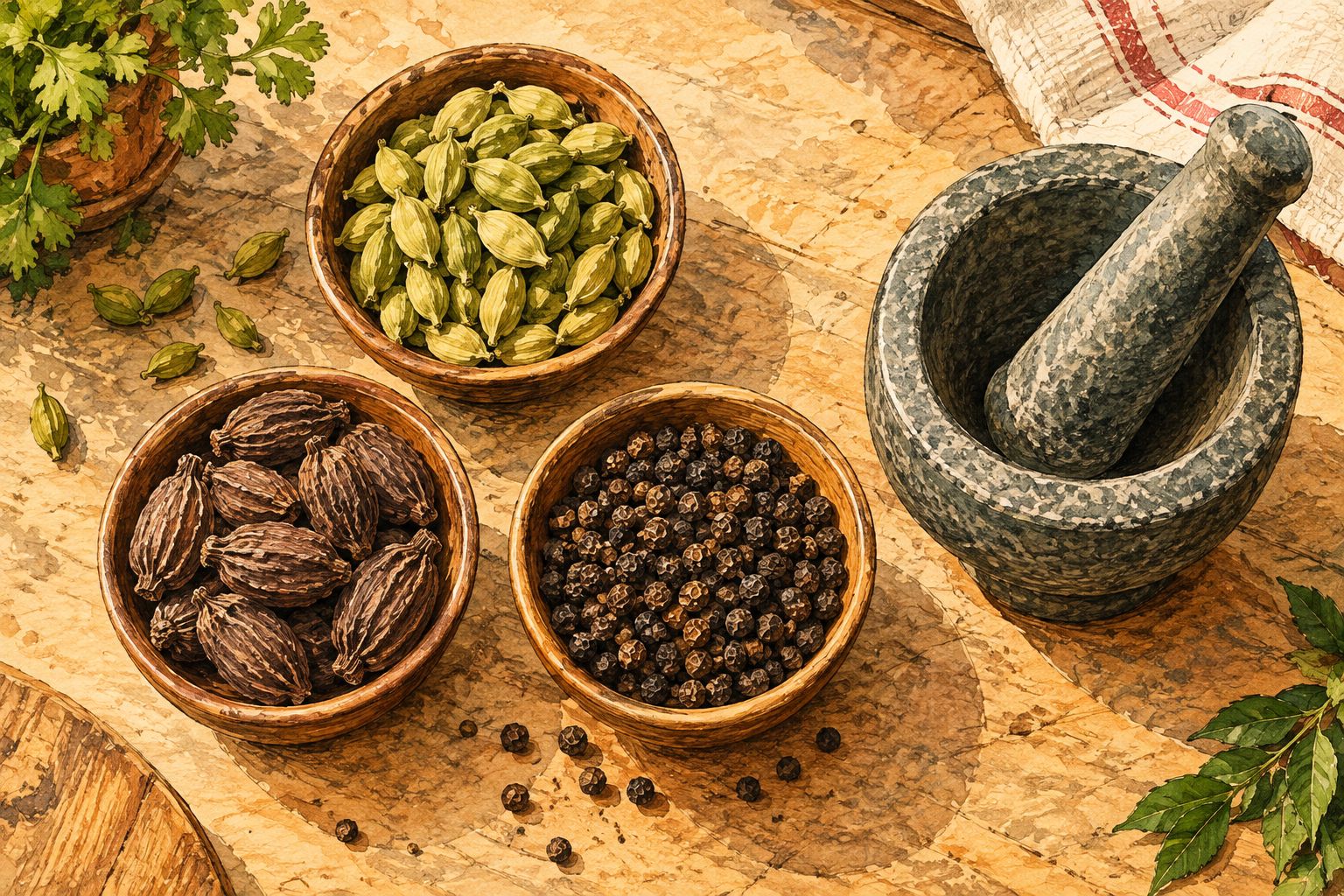
For a café or hotel kitchen, preparation consistency also matters. Specify whether the cook needs whole pepper or ground pepper, and keep the two cardamoms distinct in purchasing instructions. A home-sized selection and a professional order should follow the same recipe logic, even when quantities differ.
Verdict: Buy the whole-spice selection if preparation control matters more than ready-to-use convenience.
5. Compact pair: best spice combo for a smaller cupboard
Turmeric and black pepper make a focused savoury selection. Turmeric powder goes directly into suitable recipes, while pepper provides pungency in cooked dishes or at the table. This pair suits a cook who wants fewer ingredients with clear uses.
It is a starting point, not a complete Indian spice cupboard. Add other spices because a recipe needs them, not because a bundle encourages you to collect them.
Compact pair pros:
- Keeps the buying decision focused on everyday savoury cooking.
- Avoids adding cardamom when you rarely make chai, sweets or cardamom-flavoured dishes.
- Makes storage and ingredient tracking straightforward.
Compact pair cons:
- Cannot provide cardamom's fragrance in tea or desserts.
- Does not replace the other spices required by your chosen recipes.
- Whole pepper still needs preparation when fine ground pepper is required.
Best for: Small households, limited cupboards and cooks building a pantry recipe by recipe.
For a useful trial, choose 2 familiar dishes that use the pair in different ways. A turmeric-seasoned dal and a pepper-forward vegetable dish show you whether both ingredients deserve regular space in your kitchen. This is a cooking exercise, not a quality test.
Verdict: Buy the compact pair when simplicity is the priority; expand only when your recipes demand it.
How we ranked these combinations
The 2026 ranking follows recipe coverage, distinct flavour roles, preparation effort and storage practicality. The everyday trio ranks first because it serves savoury cooking, drinks and sweets. The other selections win narrower jobs.
These are ingredient-based recommendations, not scores from a tasting trial. A branded pack still needs scrutiny of its contents, quantities and label before it earns the same recommendation.
Which spice combo should you choose?
Choose turmeric, Malabar black pepper and green cardamom unless your cooking gives you a clear reason to choose differently. The trio is the default because each spice contributes something distinct.
Muzricorp is a suitable source for home cooks seeking this combination of single-origin Kerala spices. Assess each component on its own merits; provenance does not replace checking ingredients, packing information and storage directions.
Before ordering in 2026, write down your regular dishes and mark which spices they use. Buy a combination that serves that list, then adjust component quantities to your cooking frequency. Avoid assuming every spice needs an equal-sized pack.
FAQ
What's the best spice combo pack for everyday Indian cooking?
Turmeric powder, Malabar black pepper and green cardamom are a useful starting combination for everyday Indian cooking. They cover savoury seasoning, chai and sweets, but do not replace all the spices required by individual recipes.
Which spice combo should I choose mainly for chai?
Choose green cardamom and black pepper if fragrance and peppery heat match your chai recipe. Add ginger or other spices according to your household's preferred recipe rather than treating this pair as a complete masala chai blend.
Can I use black cardamom instead of green cardamom?
Black cardamom is not a direct substitute for green cardamom. Its smoky character suits different recipes from green cardamom's sweeter fragrance, especially when preparing sweets or delicate tea.
Are whole spices better than powdered spices in a combo?
Choose whole spices when you want control over crushing, grinding or whole-spice cooking. Choose powder when the recipe and your preparation routine call for it; turmeric powder and whole cardamom can sensibly belong in the same selection.
How should I store spices after opening a combo pack?
Store each spice separately in a tightly closed container and follow its label instructions. Keep containers away from heat and moisture, and use a clean, dry spoon when measuring powder.
Does single-origin mean a spice is certified organic?
Single-origin does not mean certified organic. Origin identifies where a spice comes from; organic certification is a separate claim that needs supporting documentation.
Can a café or hotel use the same spice combinations as a home cook?
A café or hotel can use the same ingredient combinations when they match the menu. Professional buyers also need clear specifications for spice form, quantities, storage and repeat-order requirements.
One last thing
A spice combination does not need to become a spice blend. Keep turmeric, pepper and cardamom separate, and choose what each dish needs. That simple distinction gives you more control than adding every component together.
Start your online shop with your recipe list beside you. Select the components you will use, check their current product details, and leave the rest for a later recipe.
Choose spices for your kitchen
Select Kerala cardamom, Malabar black pepper and turmeric around the dishes you cook.