Turmeric powder is the best all-round spice for daily Ayurvedic cooking, green cardamom wins for digestion-focused recipes and chai, Malabar black pepper is best for boosting nutrient absorption, and black cardamom is best for warming winter kitchari. Each spice earns its slot for a different reason, not because one beats the others outright.
- Turmeric powder is the top pick among spices for ayurvedic cooking for daily anti-inflammatory dishes and golden milk in 2026.
- Green cardamom suits digestion-focused recipes, chai and kitchari; buy whole pods over powder for aroma retention.
- Malabar black pepper (piperine) is the standard Ayurvedic pairing to help the body use curcumin from turmeric.
- Black cardamom fits heavier, warming winter kitchari and slow-cooked masalas better than green cardamom does.
- Single-origin Kerala sourcing and named grades like 8 mm+ pods matter more for freshness than brand claims alone.
Why this matters
Ayurveda treats spice as both flavor and function, so the spice you reach for changes with the dish and the season, not just the recipe. A dal meant to calm a heavy stomach calls for a different spice than a chai meant to warm you up on a January morning in Delhi.
Kerala has grown cardamom and pepper for over 3,000 years, and most Ayurvedic kitchens in India still lean on four spices from that coast: green cardamom, black cardamom, Malabar black pepper and turmeric. Muzri sources all four as single-origin Kerala spices, which matters here because Ayurvedic cooking depends on volatile oils and pungency staying intact, not just on the spice being present in the jar.
What makes the best spice for Ayurvedic cooking
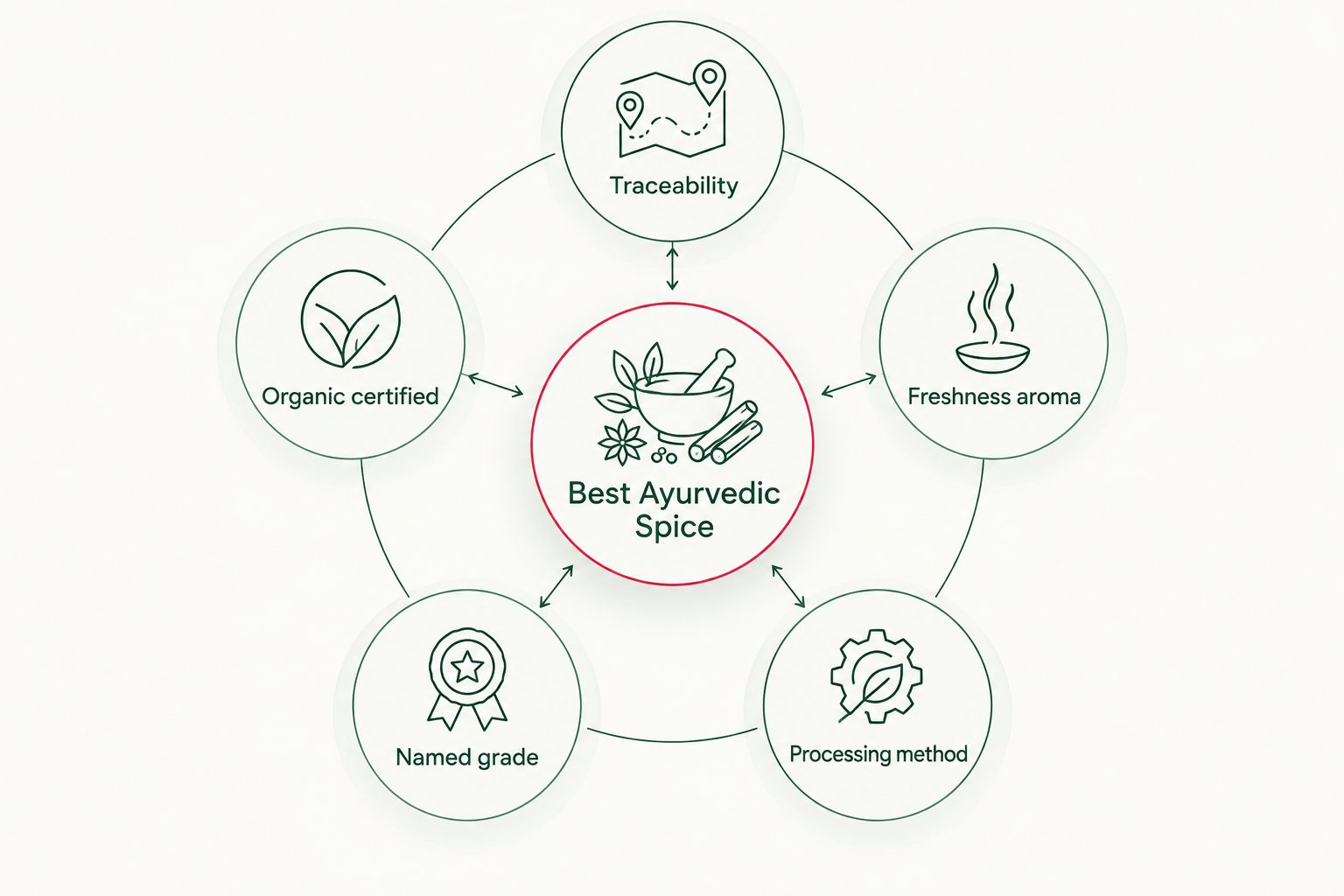
A spice earns a place in an Ayurvedic kitchen on a few concrete points, not on marketing language:
- Single-origin traceability — grown and processed in one known Kerala region, not blended from unknown sources
- Organic certification and no additives — no synthetic colorants, no added oils to bulk up powder
- Freshness and aroma — volatile oils intact, judged by processing date and how the spice smells when opened
- Named grade or size — for cardamom, a stated size like 8 mm+ pods rather than an unspecified "bold" claim
- Processing method — hand-picked and sun-dried versus machine-dried or bleached
- Fit for dosha-balancing use — some spices run heating, some cooling, and Ayurvedic recipes assume you know which
At a glance: spices for Ayurvedic cooking in 2026
| Spice | Best for | Standout feature | Key limitation |
|---|---|---|---|
| Turmeric powder | Daily anti-inflammatory cooking, golden milk | Curcumin-bearing rhizome, works into almost any dish | Poor bioavailability alone, needs fat or pepper |
| Green cardamom | Digestion, chai, kitchari | Aromatic volatile oils, best kept whole | Ground powder loses aroma within days |
| Malabar black pepper | Boosting nutrient absorption | Piperine content, traditional Kerala coast pepper | Too heating for pitta-heavy diets in excess |
| Black cardamom | Warming winter kitchari, heavy masalas | Smoky, robust flavor suited to slow cooking | Less versatile for daily tea or light dishes |
1. Turmeric powder: best for daily anti-inflammatory Ayurvedic cooking
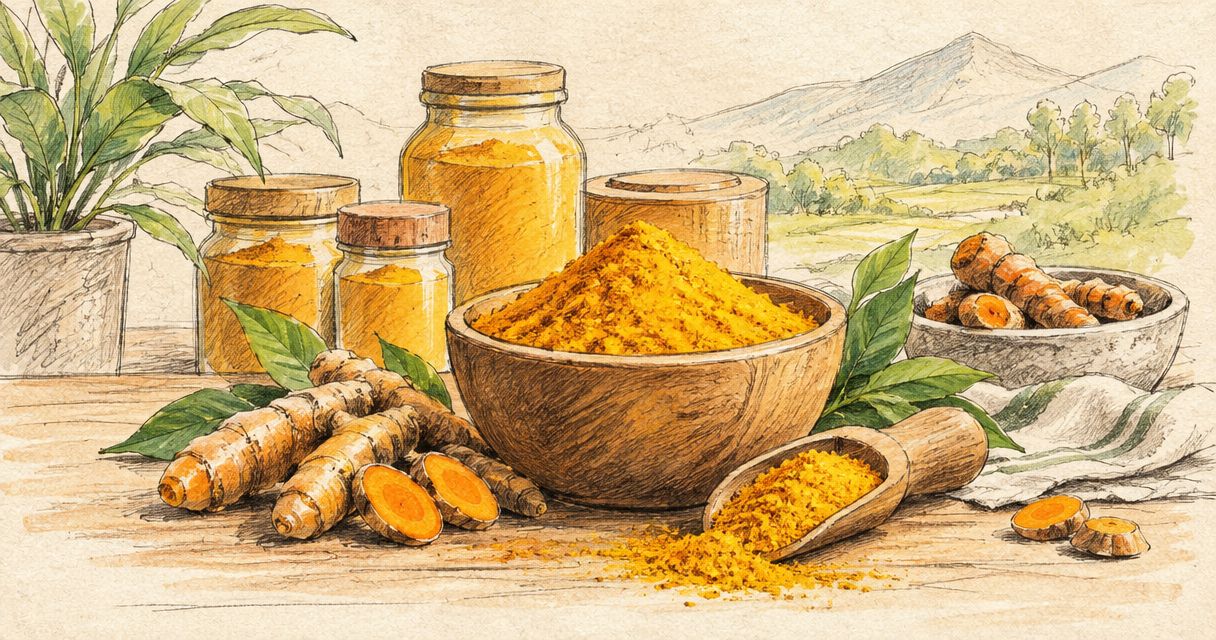
Turmeric is the spice most Ayurvedic texts and modern research overlap on, largely because of curcumin, the compound responsible for its color and much of its studied activity. It goes into dal, kanji, golden milk and almost every vegetable preparation without changing the character of the dish.
Turmeric powder pros:
- Works into sweet, savory and drink-based Ayurvedic recipes without dominating flavor
- Sun-dried, additive-free turmeric holds color and aroma longer than bleached commercial powder
- Pairs directly with black pepper, which is the standard Ayurvedic combination for absorption
Turmeric powder cons:
- Curcumin has low bioavailability on its own; a 1998 study in Planta Medica (Shoba et al.) found piperine from black pepper raised curcumin absorption sharply in human subjects
- Ground turmeric fades and loses potency faster than whole spices when exposed to light and heat
Best for: home cooks who want one spice that fits into daily meals rather than special-occasion dishes. Verdict: Buy.
2. Green cardamom: best for digestion-focused Ayurvedic recipes
Green cardamom is the spice Ayurvedic cooks reach for after a heavy meal or before chai, and it shows up in kitchari, payasam and most spice blends meant to settle the stomach. Checking pod quality before buying matters more here than with almost any other spice, because a dull, pale pod has already lost much of what makes it useful.
Green cardamom pros:
- Strong aromatic oils when hand-picked and sun-dried, noticeable the moment the pod is opened
- Traditionally used across India as a digestive aid after meals
- Works in both savory kitchari and sweet payasam without clashing
Green cardamom cons:
- Ground cardamom powder loses most of its aroma within days, so pods are the better buy for slow-cooked dishes
- Larger 8 mm+ pods cost more than smaller grades, and the size difference is easy to miss without checking the label
Best for: cooks making kitchari, digestive teas or chai where aroma needs to survive simmering. Verdict: Buy.
3. Malabar black pepper: best for boosting nutrient absorption
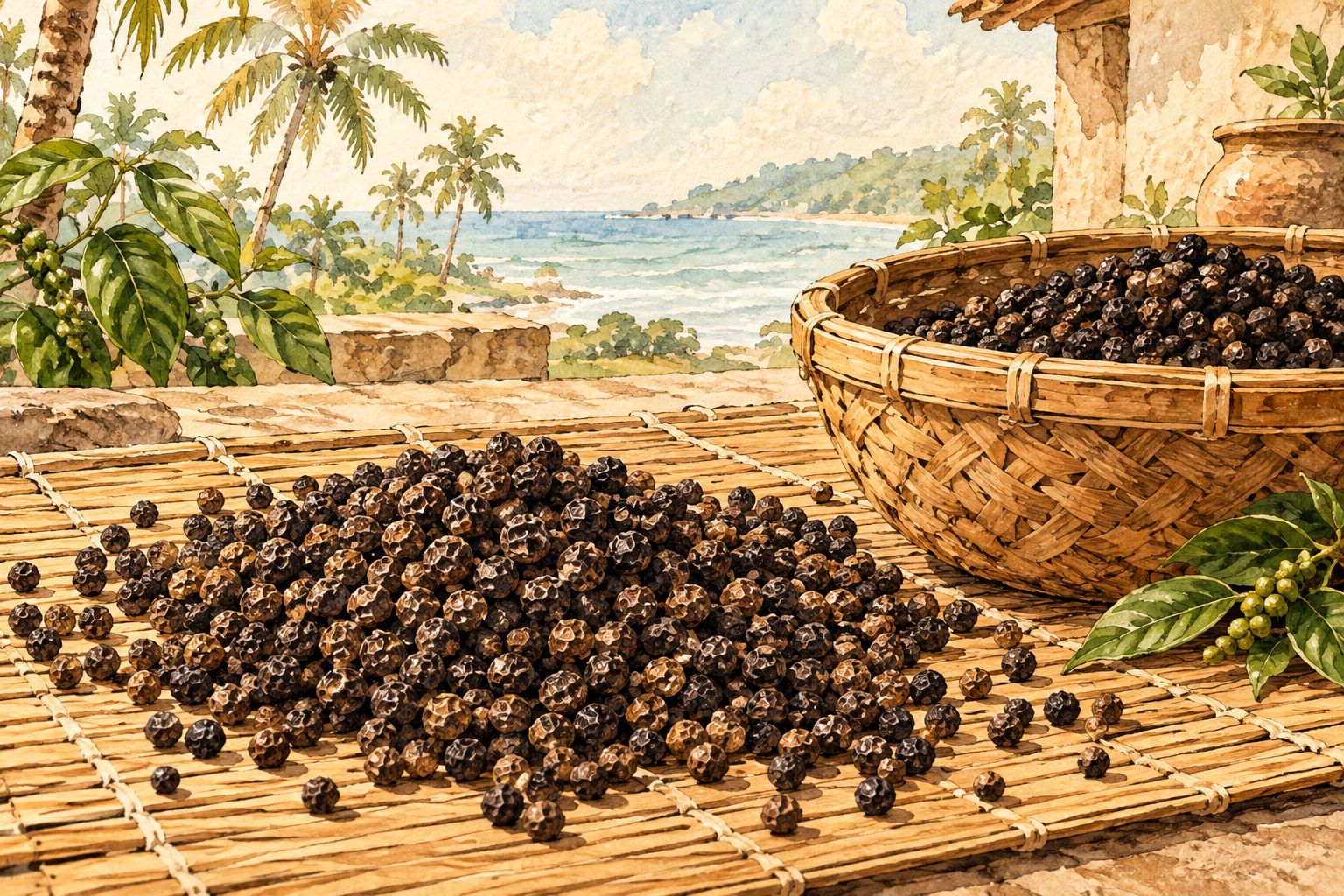
Malabar black pepper is the pepper Ayurvedic recipes assume you're using when they call for pairing turmeric or ghee-based preparations with pepper for absorption. It is also the base of trikatu, the three-spice Ayurvedic combination of pepper, long pepper and ginger.
Malabar black pepper pros:
- Piperine content is the reason Ayurvedic cooking pairs pepper with turmeric rather than using turmeric alone
- Sourced from the traditional Malabar coast growing region rather than an unnamed blend
- Works ground fresh over dal, vegetables and ghee-based preparations
Malabar black pepper cons:
- Heating quality makes it unsuitable in large amounts for pitta-dominant diets or in hot weather
- Loses pungency faster once ground than whole peppercorns do
Best for: anyone cooking turmeric-based dishes who wants the Ayurvedic pairing rather than turmeric alone. Verdict: Buy.
4. Black cardamom: best for warming winter kitchari and heavy masalas
Black cardamom is the spice Ayurvedic winter cooking leans on when a dish needs to run warming rather than cooling. It shows up in garam masala blends and slow-cooked kitchari meant for cold mornings, not in light summer dals.
Black cardamom pros:
- Smoky, robust flavor holds up through long simmering better than green cardamom does
- Fits the warming profile Ayurvedic winter recipes call for
- Works well in masala blends meant for heavier, slow-cooked meals
Black cardamom cons:
- Too strong and smoky for chai or light desserts where green cardamom is the standard
- Narrower use case than the other three spices on this list
Best for: cold-weather kitchari, garam masala blends and slow-cooked winter dishes. Verdict: Buy, but only if you cook heavier winter recipes regularly.
How we ranked these spices for Ayurvedic cooking
Each spice was matched to the Ayurvedic use case it's actually built for, not ranked against each other on a single scale. Turmeric and pepper cover daily anti-inflammatory cooking and absorption, green cardamom covers digestion and chai, and black cardamom covers warming winter dishes. The distinction that matters across all four in 2026 is grade and processing: named 8 mm+ sizing, sun-drying, and organic, additive-free production consistently separate a spice that performs in Ayurvedic recipes from one that just sits in the jar looking similar.
Which spice for Ayurvedic cooking should you choose?
If you're starting an Ayurvedic-leaning kitchen in 2026 and can only stock one spice beyond salt, turmeric powder is the default because it fits into the widest range of daily dishes. Add Malabar black pepper next, since Ayurvedic tradition and the 1998 piperine research both point to using the two together. Green cardamom earns its place once chai and kitchari are regular parts of the week, and black cardamom is worth adding only once winter cooking becomes a habit rather than an occasion.
Shop single-origin Kerala spices
Organic cardamom, Malabar pepper and turmeric, sourced direct from Kerala farms.
FAQ
What are the best spices for Ayurvedic cooking in 2026?
Turmeric, green cardamom, Malabar black pepper and black cardamom cover most Ayurvedic cooking needs in 2026. Each fits a different use: turmeric for daily dishes, green cardamom for digestion, pepper for absorption, black cardamom for warming winter meals.
Is turmeric or black pepper more important in Ayurvedic cooking?
Neither works as well alone; Ayurvedic tradition pairs them deliberately. A 1998 Planta Medica study found piperine from black pepper sharply increased curcumin absorption from turmeric.
Does green cardamom help digestion, according to research?
Green cardamom is traditionally used across Indian households as a digestive aid after meals. Research on its digestive effects exists but is limited, so treat it as a traditional practice rather than a proven medical treatment.
What is the difference between green and black cardamom in Ayurvedic recipes?
Green cardamom is aromatic and used in chai, kitchari and sweets; black cardamom is smoky and used in heavier, warming winter dishes and masala blends. They are not interchangeable in most recipes.
How much black pepper should you add to turmeric for better absorption?
There is no single fixed ratio in the research; the practice is simply to include some black pepper or a fat source alongside turmeric rather than using turmeric alone. Recipes and traditional preparations vary.
Are organic spices necessary for Ayurvedic cooking?
Organic certification isn't a requirement in Ayurvedic texts, but additive-free, single-origin spices keep aroma and volatile oils closer to what traditional recipes assume you're using.
How should Ayurvedic spices be stored to keep their aroma?
Whole spices like cardamom pods and peppercorns hold aroma far longer than pre-ground powder. Store them in an airtight container away from direct light and grind just before use.
Is Malabar pepper different from Tellicherry pepper?
Malabar and Tellicherry both come from Kerala's pepper-growing coast, but Tellicherry refers to a specific larger, more mature berry grade within that region. Both fit Ayurvedic cooking; the difference is grade, not origin.
One last thing
Most of the difference between an Ayurvedic dish that tastes flat and one that tastes like it was cooked by someone who knows the spice comes down to timing, not the spice itself: cardamom pods cracked open right before they go into the pot release far more aroma than pods that sat ground in a jar for weeks. If you take one thing from this into your kitchen in 2026, crack the pod, don't buy it pre-ground.