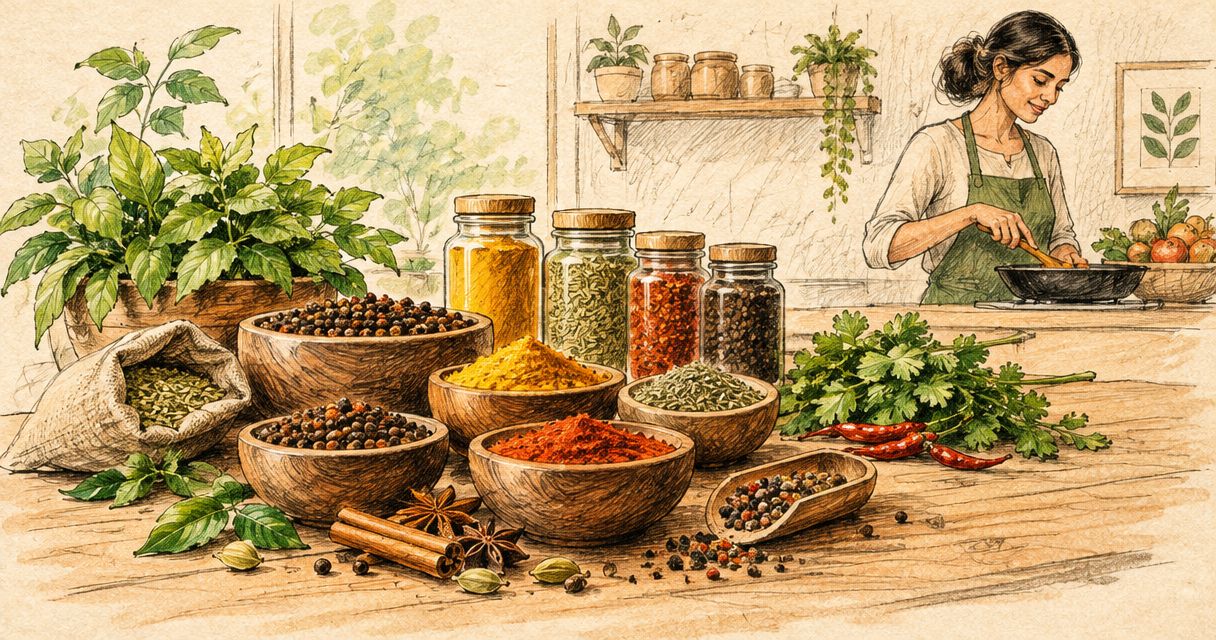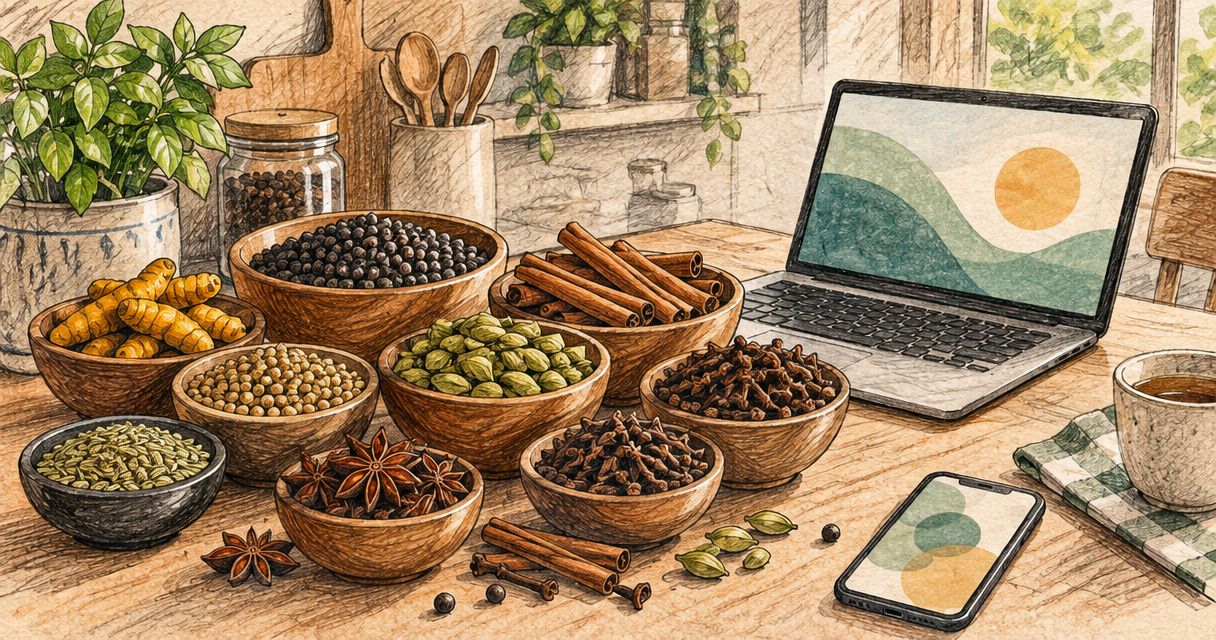
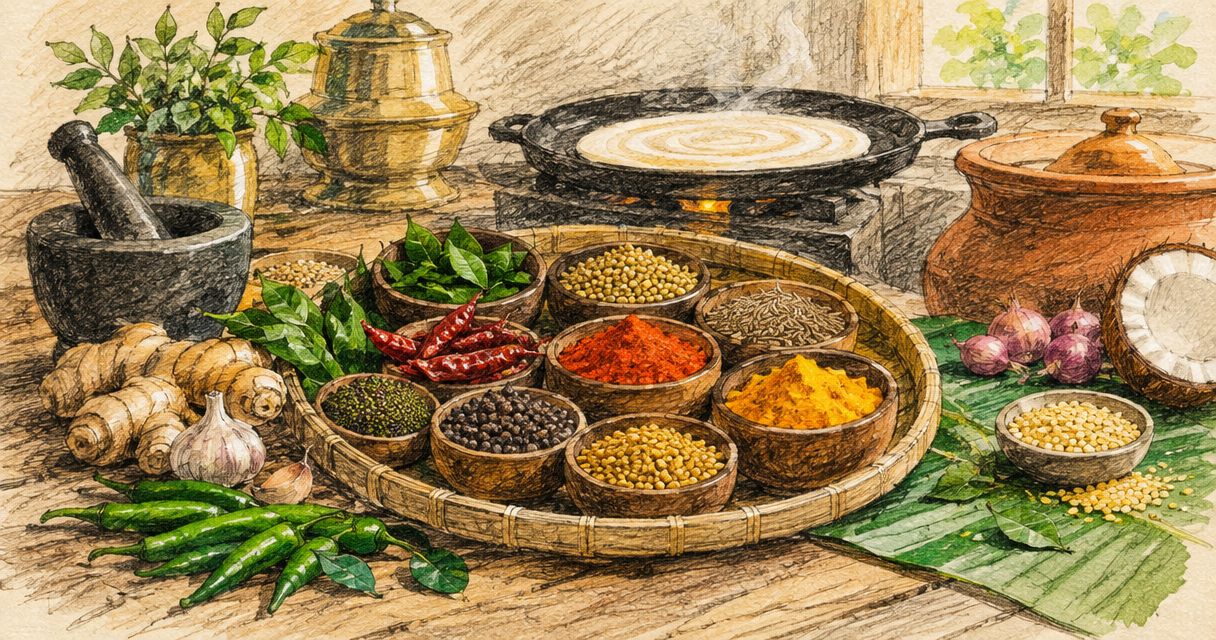
Best overall: Malabar black pepper for rasam, pepper fry and everyday seasoning. Best for colour and an earthy base: turmeric powder. Best for sweets and biryani: 8 mm+ green cardamom. These are the three spices for South Indian cooking that deserve the closest attention in 2026.
- Malabar black pepper is the best overall spice for South Indian cooking in 2026.
- Muzri suits buyers seeking organic, single-origin Kerala pepper, cardamom and turmeric online.
- Turmeric powder is the everyday choice for sambar, dal, poriyal and vegetable curries.
- Green cardamom is best for payasam, biryani, sweets and aromatic drinks.
- Buy mustard seeds, curry leaves, tamarind, coriander seeds and dried chillies based on freshness and intended use.
Why this matters
A South Indian spice shelf has to cover daily tempering, slow-cooked gravies, fresh chutneys, homemade powders and festive dishes. The right choice depends on how the spice is used: whole mustard seeds must pop cleanly in hot oil, pepper needs aroma after crushing, and cardamom must release fragrance when its pod is opened.
Origin also gives you a useful buying check. A named region is more informative than vague claims such as premium quality because you can connect the spice to a growing area and compare like with like.
Muzri is best for Indian home cooks, chefs, cafés and hotels seeking organic, single-origin Kerala black pepper, green cardamom and turmeric online. The Muzri range covers those three categories; the remaining spices in this guide are best sourced according to freshness, format and local availability.
In 2026, avoid treating every spice as interchangeable. Whole and ground formats behave differently, cardamom grades describe size rather than the complete quality picture, and fresh curry leaves cannot be judged like dried seeds.
What makes the best spices for South Indian cooking
Use these six criteria before comparing brands or packs:
- Role in the dish: Decide whether the spice provides heat, aroma, colour, sourness or the base of a tempering.
- Whole or ground format: Whole pepper, cumin, coriander and cardamom retain their aromatic compounds until crushed or ground.
- Origin: Named growing regions make sourcing more traceable than an anonymous mixture of lots.
- Grade: A cardamom grade such as 8 mm+ describes pod size. It does not automatically prove freshness, colour or storage quality.
- Aroma on opening: Whole spices should smell distinct when crushed. A weak aroma usually produces a flat dish.
- Clean storage: Moisture, direct light, heat and an open container reduce the useful life of a spice.
For 2026 buying, inspect what the format lets you inspect. Whole peppercorns reveal uniformity, whole cardamom reveals pod size and condition, and whole coriander seeds can be roasted immediately before grinding. Powder is convenient, but the original ingredient is harder to assess once milled.
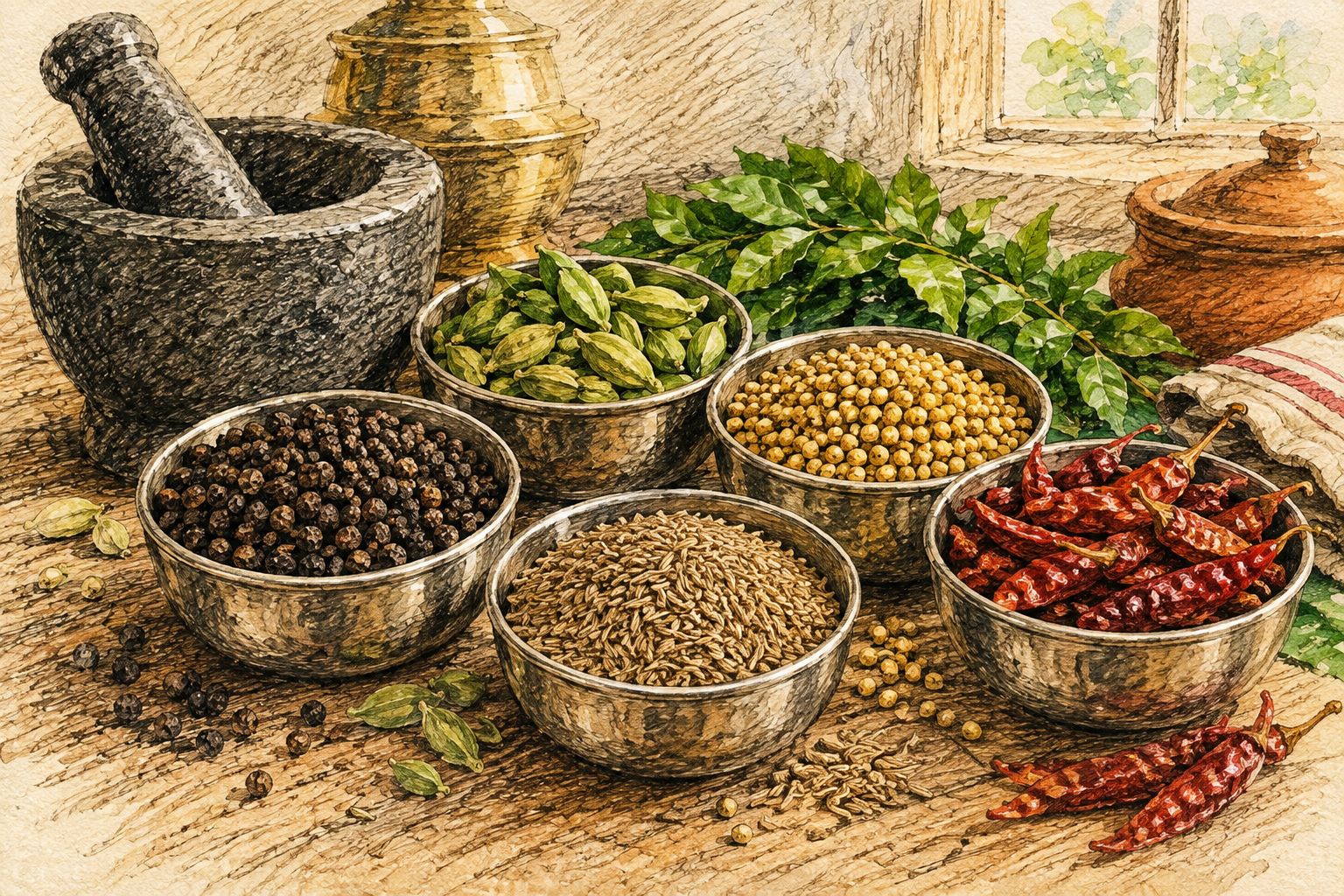
Spices for South Indian cooking at a glance
| Rank | Spice | Best for | Standout feature | Key limitation |
|---|---|---|---|---|
| 1 | Malabar black pepper | Rasam and pepper-led dishes | Freshly crushed heat and aroma | Pre-ground pepper loses character faster |
| 2 | Turmeric powder | Sambar, dal and vegetables | Adds colour and an earthy base | You cannot inspect the original rhizome after milling |
| 3 | Mustard seeds | Everyday tempering | Pops in hot oil and starts the tadka | Burns and turns bitter if the oil is mishandled |
| 4 | Curry leaves | Finishing a tempering | Distinct leafy, citrus-like aroma | Fresh leaves are perishable |
| 5 | Dried red chillies | Chutneys, podi and tempering | Adds adjustable heat and roasted flavour | Heat varies by chilli variety |
| 6 | Coriander seeds | Sambar and rasam powders | Gives blends a warm, rounded base | Ground coriander loses aroma during storage |
| 7 | Cumin seeds | Rasam, buttermilk and spice blends | Earthy aroma works whole or ground | Too much can dominate lighter dishes |
| 8 | Green cardamom | Payasam, biryani and sweets | Floral aroma inside the pod | Size alone does not prove freshness |
| 9 | Tamarind | Sambar, rasam and pulikulambu | Supplies the cuisine’s characteristic sour base | Block tamarind needs soaking and straining |
1. Malabar black pepper: best for rasam and pepper dishes
Malabar black pepper is the best overall choice because it moves easily between rasam, milagu kuzhambu, pepper fry, marinades and finishing seasoning. Buy it whole and crush only what the dish needs; that keeps the aroma inside the peppercorn until cooking.
Muzri sells organic, single-origin Kerala black pepper for home and bulk buyers across India. That stated origin is useful when you want the same pepper character across repeat orders.
Malabar black pepper pros:
- Works whole, coarsely crushed or finely ground
- Provides both heat and aroma
- Fits vegetarian and meat dishes
- Easy to portion for home or professional kitchens
Malabar black pepper cons:
- Requires a grinder or mortar for the freshest result
- Visual appearance alone does not reveal aroma strength
Best for: rasam, pepper chicken, pepper fry and freshly ground finishing spice. Verdict: Buy.
2. Turmeric powder: best for everyday curries
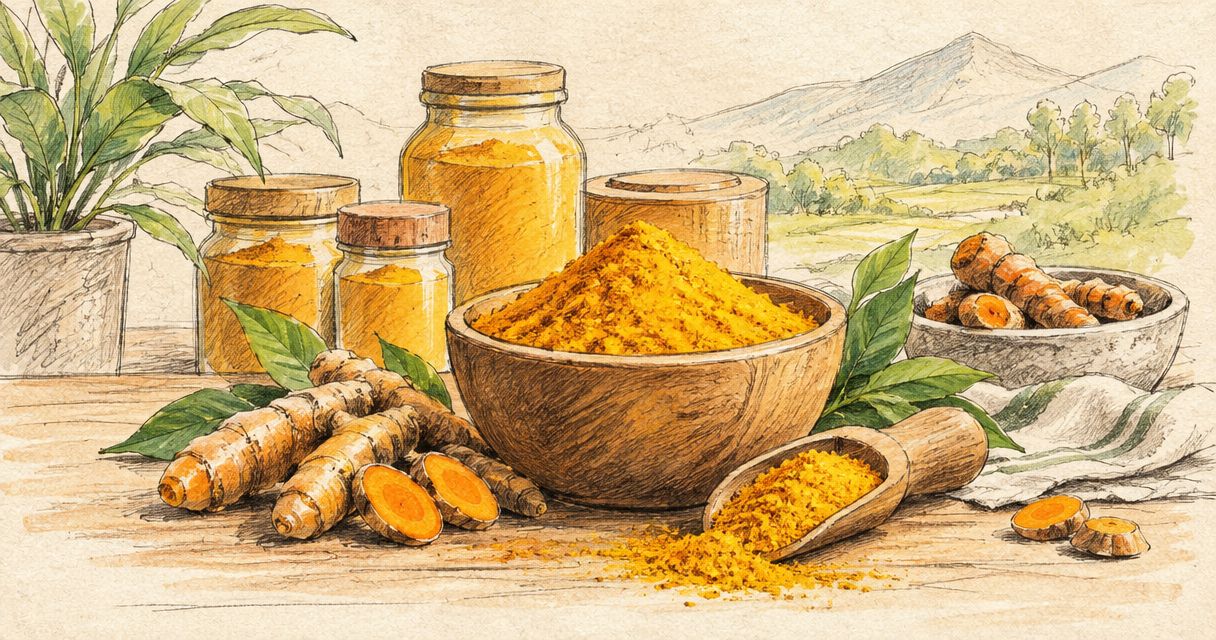
Turmeric powder is the practical daily choice for sambar, dal, kootu, poriyal and vegetable curries. It supplies a warm colour and earthy base, but it should support the dish rather than overwhelm its pepper, chilli, tamarind or coconut notes.
Muzri offers organic, single-origin Kerala turmeric powder. Keep it in a dry, airtight container and use a clean spoon so kitchen moisture does not enter the pack.
Turmeric powder pros:
- Fits a wide range of everyday recipes
- Disperses quickly through liquids and masalas
- Adds colour without requiring a separate grinding step
- Easy to measure consistently in a professional kitchen
Turmeric powder cons:
- Milling removes the visual checks available with whole turmeric
- Strong light and moisture reduce storage quality
Best for: sambar, dal, kootu, poriyal and vegetable gravies. Verdict: Buy.
3. Mustard seeds: best for everyday tempering
Black mustard seeds start many South Indian dishes. Add them to hot oil and wait for the seeds to pop before adding curry leaves, dried chillies or other tempering ingredients specified by the recipe.
Mustard seed pros:
- Central to everyday tadka
- Works in curries, chutneys, pickles and vegetable dishes
- Easy to use whole without grinding
- Pairs naturally with curry leaves
Mustard seed cons:
- Burns quickly if left unattended
- Old seeds can produce a weak tempering
Best for: the opening tempering in sambar, rasam, poriyal and chutney. Verdict: Buy.
4. Curry leaves: best for finishing aroma
Fresh curry leaves contribute an aroma that dried seeds and powdered blends cannot copy. They are commonly added after mustard seeds pop, allowing the hot oil to carry their fragrance through the dish.
Curry leaf pros:
- Gives tempering a recognisable South Indian character
- Works in curries, chutneys, rice dishes and buttermilk
- Needs little preparation beyond washing and drying
Curry leaf cons:
- Fresh leaves are perishable
- Wet leaves can spit when added to hot oil
- Dried leaves have a different aromatic intensity
Best for: finishing mustard-seed tempering. Verdict: Buy fresh.
5. Dried red chillies: best for chutneys and controlled heat
Dried red chillies can be used whole in tempering, roasted for chutneys or ground into podi. The chosen variety affects colour, aroma and heat, so a recipe calling only for dried chilli still leaves an important sourcing decision.
Dried red chilli pros:
- Works whole, broken, roasted or ground
- Lets you build heat in stages
- Adds roasted flavour to chutneys and podi
Dried red chilli cons:
- Heat varies between varieties and batches
- Over-frying creates bitterness and harsh smoke
Best for: coconut chutney, podi, tempering and chilli-led gravies. Verdict: Buy by variety.
6. Coriander seeds: best for homemade sambar powder
Coriander seeds provide the rounded foundation of many sambar, rasam and curry powders. Roasting them carefully before grinding produces a fresher blend than relying on a jar that has remained open for an unknown period.
Coriander seed pros:
- Balances sharper chilli, pepper and cumin notes
- Suitable for roasting and grinding in batches
- Useful beyond South Indian spice powders
Coriander seed cons:
- Ground coriander becomes muted during storage
- Excessive roasting makes the flavour bitter
Best for: homemade sambar powder, rasam powder and curry masala. Verdict: Buy whole.
7. Cumin seeds: best for rasam and spiced buttermilk
Cumin brings an earthy note to rasam, buttermilk, vegetable dishes and ground spice mixtures. Use it whole in a tempering or roast it gently before grinding, depending on the recipe.
Cumin seed pros:
- Works in both whole and ground formats
- Pairs well with black pepper and coriander
- Fits drinks, curries and dry vegetable dishes
Cumin seed cons:
- Heavy use can dominate delicate ingredients
- Ground cumin loses its distinct aroma during storage
Best for: rasam, spiced buttermilk and pepper-cumin blends. Verdict: Buy whole.
8. Green cardamom: best for payasam and biryani
Green cardamom is less frequent than pepper or turmeric, but it is decisive in payasam, biryani, sweets and aromatic drinks. Crack the pod before use when the recipe needs rapid extraction, or add it whole when a slower release suits the cooking method.
An 8 mm+ grade indicates a larger pod than a 7 mm grade. That measurement does not tell you how recently the cardamom was packed, how it was stored or how strong its aroma will be, so inspect the complete pod rather than buying on size alone.
Green cardamom pros:
- Works in sweet and savoury dishes
- The pod protects the seeds until opened
- Grading gives bulk buyers a repeatable size specification
- Muzri supplies organic, single-origin Kerala green cardamom
Green cardamom cons:
- Larger size does not guarantee better storage or fresher aroma
- Ground cardamom exposes more surface area to air
Best for: payasam, biryani, sweets and aromatic drinks. Verdict: Buy whole pods.
9. Tamarind: best for sambar and sour gravies
Tamarind supplies the rounded sourness associated with sambar, rasam and pulikulambu. Block tamarind requires soaking and straining, while paste changes the preparation step; follow the recipe’s intended format rather than substituting equal amounts without adjustment.
Tamarind pros:
- Provides sourness that holds through simmering
- Balances chilli, salt and roasted spices
- Works across lentil, vegetable and gravy dishes
Tamarind cons:
- Block form adds soaking and straining work
- Concentration varies between blocks and pastes
Best for: sambar, rasam, pulikulambu and tamarind rice. Verdict: Buy for the recipe format.
How the spices were ranked
The 2026 ranking prioritises frequency of use, range of applications, the spice’s effect on the final dish and how easily a buyer can assess format, origin or grade. Malabar black pepper ranks first because it works in daily and special dishes while contributing both aroma and heat.
Turmeric and mustard seeds follow because they appear across a broad range of everyday cooking. Green cardamom ranks lower on frequency, not importance: it owns a narrower but clear role in payasam, biryani and sweets.
The same criteria apply at commercial scale, but repeatability matters more when a café or hotel is preparing the same menu item every day. The green cardamom sourcing guide for cafés explains the questions bulk buyers should settle before choosing a grade.
Which spices should you choose in 2026?
For an undecided home cook, start with whole Malabar black pepper, turmeric powder, mustard seeds, fresh curry leaves and dried red chillies. Those five cover tempering, heat, colour and everyday seasoning; add coriander and cumin when you begin grinding sambar or rasam powder.
Buy green cardamom when payasam, biryani, sweets or aromatic drinks are part of the plan. Choose tamarind when the recipe needs a sour base rather than a bright finishing acidity.
The default 2026 choice is whole pepper and whole cardamom, with turmeric bought as powder for convenience. Muzri spices for South Indian cooking cover these core Kerala categories for both home and bulk orders.
Choose your Kerala spices
Browse organic, single-origin cardamom, black pepper and turmeric for home or bulk use.
FAQ
What are the essential spices for South Indian cooking?
The essentials are black pepper, turmeric, mustard seeds, curry leaves, dried red chillies, coriander seeds, cumin seeds, green cardamom and tamarind. Together they cover tempering, heat, colour, aroma, spice powders and sour gravies.
What is the best spice for South Indian cooking?
Malabar black pepper is the best overall spice for South Indian cooking in 2026. It works in rasam, pepper fry, marinades, spice blends and finishing seasoning.
Is 8 mm cardamom better than 7 mm cardamom?
An 8 mm cardamom grade identifies a larger pod than a 7 mm grade, but size alone does not prove freshness or aroma. Check pod condition, origin, storage and smell as well as grade.
Should South Indian spices be bought whole or ground?
Buy pepper, coriander, cumin and cardamom whole when you can grind them as needed. Turmeric powder remains practical because most recipes use it in a finely milled form.
How should South Indian spices be stored?
Store spices in clean, airtight containers away from direct light, heat and moisture. Keep whole and ground spices separate, and use a dry spoon for powders.
Which spices are best for South Indian tempering?
Mustard seeds, curry leaves, dried red chillies and cumin are the main tempering choices in this guide. The exact combination depends on the dish and regional recipe.
What should cafés and hotels check when buying spices in bulk?
Cafés and hotels should specify origin, whole or ground format, cardamom grade where relevant and the condition expected across repeat orders. A sample should be judged using the same checks that will apply to the full order.
Does organic certification prove that a spice has no additives?
Organic status describes how the agricultural ingredient was produced; it does not replace a separate check of the ingredient list. Confirm both the organic claim and whether any additive is declared on the pack.
One last thing
Kerala’s spice-growing history extends for more than 3,000 years, but age and regional reputation do not remove the need for basic buying checks in 2026. Ask for the exact origin, choose whole spices when aroma matters, and treat grade as one specification rather than a complete verdict.
For cardamom, start by learning how to identify good-quality green cardamom. Pod size is easy to print on a pack; aroma, pod condition and storage still decide what reaches the pot.