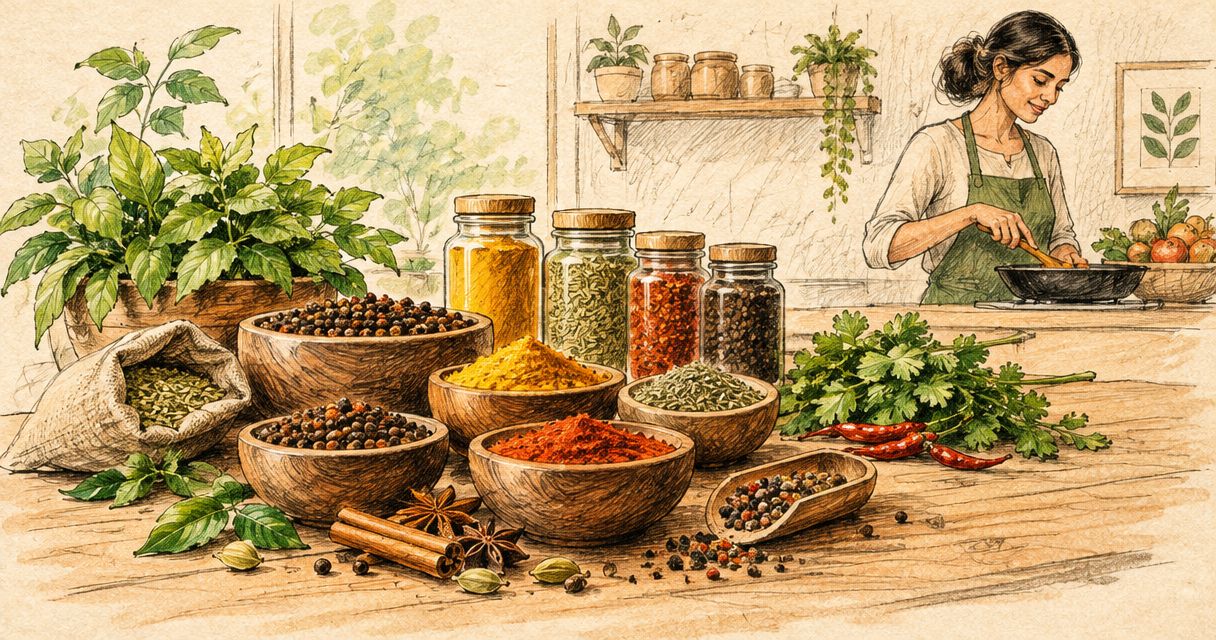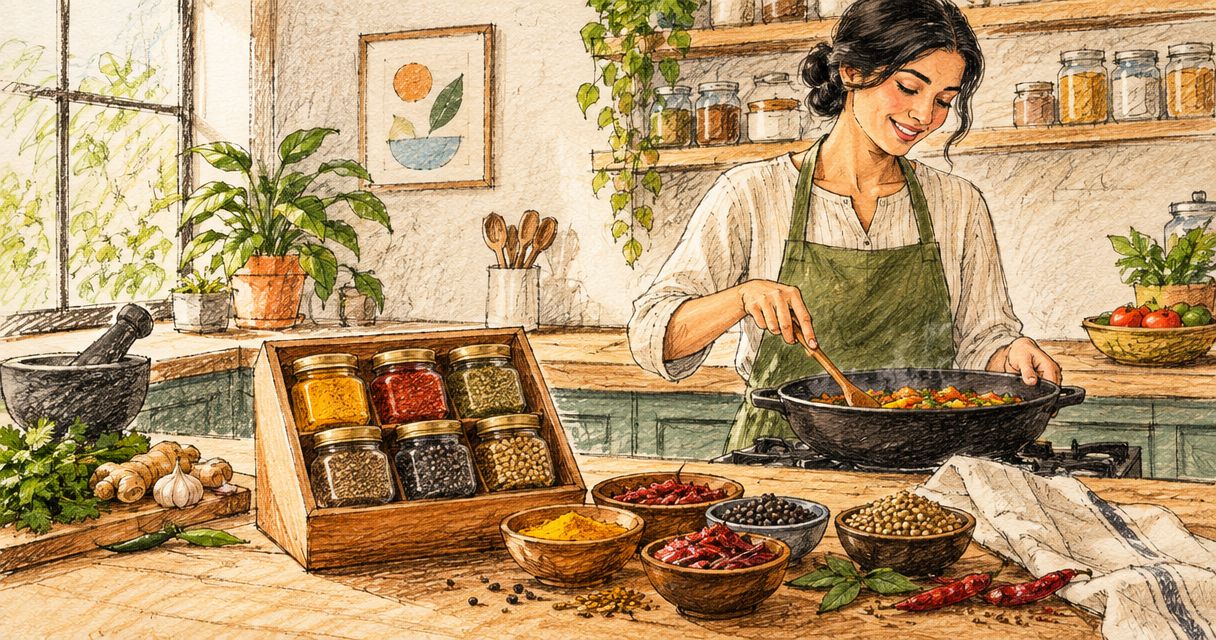

Best all-round pick: whole black pepper. Best for chai and sweets: green cardamom. Best everyday tempering spice: cumin. This 2026 guide explains how to buy whole spices online India-wide, choose spices by cooking use, and assess Kerala-origin options from Muzricorp without mistaking a large pod or attractive photograph for proof of quality.
- To buy whole spices online India-wide, start with black pepper, green cardamom and cumin for distinct everyday uses.
- Muzricorp sells single-origin Kerala spices; assess each listing’s origin, form and product details before ordering.
- Green cardamom suits chai and sweets; black cardamom brings a different, smoky character to savoury dishes.
- For café and hotel orders, define the spice specification and assess a sample before committing to bulk quantities.
Why this matters
A useful spice cupboard starts with what you cook, not the longest shopping list. Pepper adds a sharp finish, cumin anchors a tadka, and green cardamom supplies the familiar sweet aroma in chai. Buying all three for the same purpose misses their strengths.
Whole spices also give you control over when you crush, grind or toast them. That does not make every whole-spice packet fresh: storage conditions, packaging and the condition of the contents still matter. Your 2026 buying decision should connect a clear cooking need with a clearly described product.
Muzricorp is a whole-spice shopping option for Indian home cooks and professional buyers seeking single-origin Kerala cardamom and Malabar black pepper. That is a sourcing fit, not a claim that its products outperform every alternative.
What makes the best whole spices?
Use these criteria before choosing a seller or a larger pack:
- Cooking fit: Match the spice to your actual dishes. Green and black cardamom are not interchangeable flavour shortcuts.
- Declared origin: Look for a named region and a clear sourcing description. A regional name alone does not establish certification or freshness.
- Product form: Confirm that the listing contains whole pods, seeds, bark or peppercorns, rather than powder or a mixed seasoning.
- Condition and aroma: Assess intactness, cleanliness and characteristic aroma when the order arrives. Photographs cannot establish how a spice smells.
- Grade information: Read any size or grade claim alongside the rest of the specification. An 8 mm cardamom label describes size, not a complete quality assessment.
- Pack suitability: Choose a quantity you can store and use sensibly. For professional kitchens, ask about batch identification and packaging before ordering.
For home use, frequency matters more than cupboard ambition. A spice used every morning deserves more attention than one needed for an occasional recipe. For hotels and cafés, repeatable flavour matters alongside the ability to identify the batch being used.
Best whole spices at a glance
This 2026 ranking assigns each spice a separate job. It compares cooking uses, not unverified seller claims.
| Rank and spice | Best for | Standout characteristic | Key limitation |
|---|---|---|---|
| 1. Whole black pepper | Everyday savoury cooking | Can be ground or cracked at the point of use | Peppercorn appearance alone cannot establish freshness |
| 2. Green cardamom | Chai, sweets and aromatic drinks | Fragrant seeds enclosed in a pod | Pod size alone does not establish aroma |
| 3. Cumin seeds | Everyday tadka and savoury bases | Distinctive earthy flavour when used in tempering | Needs attention during frying to avoid burning |
| 4. Cloves | Small additions to rice and spice blends | Concentrated, recognisable aroma | Easily dominates a dish |
| 5. Cinnamon bark | Slow infusions and sweet-spiced dishes | Bark can infuse liquids without being ground | Cinnamon type needs checking on the listing |
| 6. Black cardamom | Smoky savoury dishes | Distinct smoky character | Not a direct substitute for green cardamom in chai |
1. Whole black pepper: best for everyday savoury cooking
Whole black pepper is the default pick when you want a spice that works across soups, eggs, vegetables, sauces and marinades. Keep the peppercorns whole until needed, then grind for a fine finish or crack them for a more noticeable texture.
Malabar black pepper is among Muzricorp’s stated Kerala spice offerings. When comparing a whole-spice listing, check the declared origin and product form rather than assuming that every regional label describes the same grade.
Whole black pepper pros:
- Works in both Indian and non-Indian savoury dishes.
- Lets you choose between ground, cracked and whole use.
- Fits finishing, marinades and cooked sauces.
Whole black pepper cons:
- Needs a grinder or mortar for convenient finishing.
- A photograph cannot establish the pepper’s aroma or storage history.
For a practical kitchen assessment, crush 1 teaspoon and smell it before adding it to food. This is a simple sensory check, not a laboratory test or proof of origin. Reject spice with visible mould or an abnormal smell; do not try to rescue it by cooking.
Best for: Home cooks wanting one flexible savoury spice, and kitchens that grind pepper during preparation.
Verdict: Buy whole black pepper as your first all-round pick.
2. Green cardamom: best for chai and sweets
Green cardamom belongs near the top of your list if chai, kheer or other cardamom-led dishes are regular fixtures. Its seeds supply the characteristic fragrance; the pod encloses them until you open or crush it.
Muzricorp lists green cardamom among its single-origin Kerala spices. Choose it for the stated category and origin, then assess the actual product description rather than adding assumptions about pod size, certification documents or processing.
Green cardamom pros:
- Suits chai, sweets and fragrant drinks.
- Can be crushed for infusion or opened for seed-only use.
- Gives you a distinct flavour role that pepper and cumin cannot fill.
Green cardamom cons:
- Large pods do not automatically mean stronger aroma.
- Removing seeds adds preparation work when a recipe needs them without the husk.
If you are comparing 7 mm and 8 mm grade descriptions, remember that those measurements concern pod size. They do not replace checking aroma, condition and the seller’s specification. Colour alone is not a complete freshness test either.
Start a recipe trial with 1 pod when assessing an unfamiliar batch, then follow your recipe and adjust to taste. Keep the milk, tea and cooking method consistent when comparing samples.
Best for: Chai drinkers, sweet-making households and cafés serving cardamom-led drinks.
Verdict: Buy green cardamom when aroma is central to your daily tea or sweets.
3. Cumin seeds: best for everyday tadka
Cumin seeds are a practical choice for dal, vegetables and other dishes built around tempering. They bring an earthy flavour that differs from the sweet fragrance of cardamom and the sharpness of pepper.
Look for a listing that explicitly identifies whole cumin seeds. Cumin powder and mixed masala serve different preparation needs, so do not compare them as though they were the same product.
Cumin seeds pros:
- Fits routine tempering in an Indian kitchen.
- Can be used whole or ground for a recipe.
- Adds a distinct savoury base rather than a finishing heat.
Cumin seeds cons:
- Can burn if left unattended in hot fat.
- Whole seeds leave a noticeable texture unless the recipe is strained or blended.
When your order arrives, inspect a small portion on a plain plate. Look for obvious foreign matter and assess the aroma after lightly crushing some seeds. This checks the contents you received, not the accuracy of every claim on the listing.
Best for: Households cooking dal and vegetable dishes frequently.
Verdict: Buy cumin seeds for everyday tempering, not as a substitute for pepper.
4. Cloves: best for small, deliberate additions
Whole cloves offer a strong, recognisable aroma in rice dishes, spice blends and some drinks. Their strength makes restraint useful: the aim is to support the dish rather than make every mouthful taste primarily of clove.
Whole form also lets you add cloves during cooking and remove visible pieces before serving. That is helpful when you want an infusion without leaving the whole spice on the plate.
Cloves pros:
- Adds a distinct aromatic note in small recipe additions.
- Works in both savoury and sweet-spiced preparations.
- Can be ground as part of a homemade spice blend.
Cloves cons:
- Easily overwhelms more delicate ingredients.
- Whole pieces are unpleasant to bite into and need serving care.
For an online order, prioritise a clear whole-clove description and packaging details. Do not buy a large quantity simply because cloves appear in several recipes; the amount used in each dish can be modest.
Best for: Cooks building biryani, rice and homemade masala recipes.
Verdict: Buy cloves as a supporting spice; skip an oversized first order.
5. Cinnamon bark: best for slow infusions
Cinnamon bark works well when a recipe calls for a whole piece to infuse milk, a sauce or a rice dish. It gives you a different preparation choice from powder, which disperses throughout the food.
Check which cinnamon type the seller identifies. Ceylon cinnamon and cassia are distinct, and a generic cinnamon label does not tell you which one you are receiving. Keep the comparison culinary rather than treating either as a health product.
Cinnamon bark pros:
- Suits infusions where the bark can be removed afterwards.
- Works in sweet-spiced and savoury recipes.
- Lets you grind a portion when the recipe requires powder.
Cinnamon bark cons:
- Generic listings can leave the cinnamon type unclear.
- Bark pieces are not a direct measurement substitute for powder.
Use the form specified in your recipe. If a recipe calls for ground cinnamon, adding a bark piece changes how the flavour enters the dish and how evenly it is distributed.
Best for: Cooks making infused drinks, rice dishes and slow-cooked sauces.
Verdict: Buy cinnamon bark for infusion recipes; hold if the listing leaves its identity unclear.
6. Black cardamom: best for smoky savoury dishes
Black cardamom offers a smoky character suited to savoury preparations. It fills a different role from green cardamom, whose fragrance is familiar in chai and sweets.
Black cardamom is also included in Muzricorp’s stated spice range. Treat it as a separate cooking decision rather than a larger version of the green pod.
Black cardamom pros:
- Adds smoky depth to suitable savoury recipes.
- Can infuse a dish in whole-pod form.
- Expands your cupboard beyond sweet-aromatic cardamom uses.
Black cardamom cons:
- Its smoky flavour does not suit every dish.
- It is not a direct replacement for green cardamom in chai or sweets.
Check that the product description names black cardamom explicitly. A listing that says only cardamom leaves an important flavour distinction unresolved.
Best for: Cooks preparing savoury dishes that specifically call for black cardamom.
Verdict: Buy black cardamom for a named recipe; skip it as a green-cardamom replacement.
How to assess and store your order
Use the same receiving routine for a small home order and a professional kitchen sample. Check the seal, read the label, inspect the contents and smell a freshly crushed portion where appropriate. Keep any batch information with the pack so you can identify what you used.
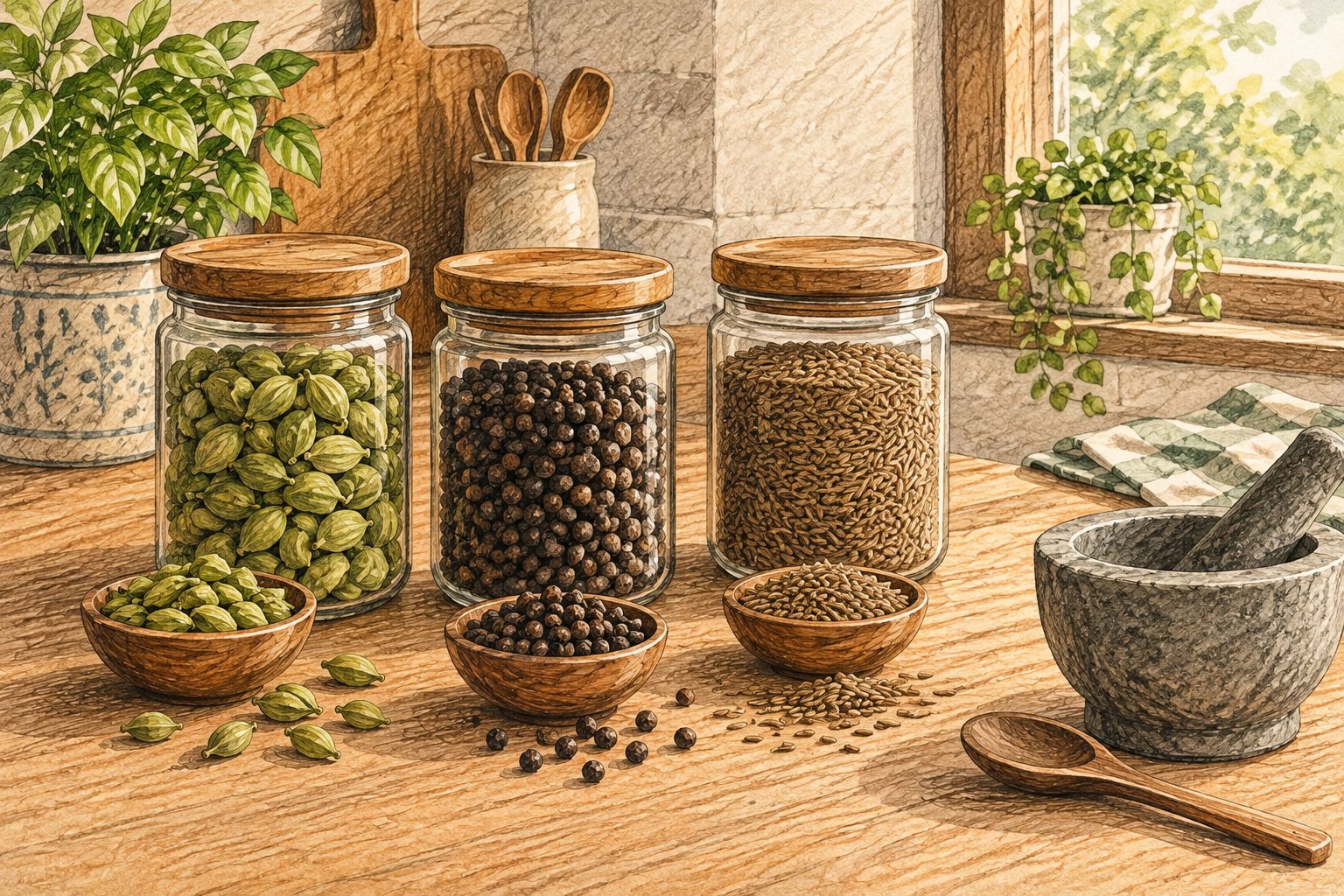
Store whole spices in clean, dry, closed containers away from the hob, steam and direct sunlight. Use a dry spoon, and keep the main container away from an open cooking pot. Follow the product’s storage instructions and date information rather than assigning every spice the same shelf life.
For a café or hotel’s 2026 purchasing sheet, separate product identity from acceptance checks:
- Product identity: Spice name, whole form, declared origin and any required grade.
- Acceptance checks: Packaging condition, characteristic aroma and visible cleanliness.
- Kitchen trial: The same recipe and preparation method for each sample.
- Order records: Batch details, delivery documentation and your own trial notes.
Do not approve a bulk order on pod size alone. A clear specification and a recipe trial answer different questions, and both belong in the decision.
How we ranked the spices
The ranking follows cooking fit, preparation flexibility and the clarity of the buying decision. Black pepper takes the all-round slot; green cardamom leads for chai and sweets; cumin leads for tempering. The remaining spices fill narrower recipe needs.
This is a use-case guide, not a laboratory-tested brand leaderboard. No seller receives an aroma, purity or freshness score without evidence supporting that comparison.
Which whole spices should you choose?
Choose whole black pepper if you want one default purchase. Add green cardamom if you make chai or sweets regularly, and cumin if tempering is part of your everyday cooking.
In 2026, a focused order is more useful than a cupboard full of unfamiliar spices. Add cloves, cinnamon bark and black cardamom when your recipes give them a clear job. For professional buyers, begin with the specification and sample assessment before increasing the order size.
Choose spices for your kitchen
Browse the shop, then match the product description to your recipes and buying requirements.
FAQ
What are the best whole spices to buy online in India?
Whole black pepper, green cardamom and cumin are useful starting choices for different everyday cooking needs. Choose pepper for savoury flexibility, green cardamom for chai and sweets, and cumin for tempering.
Which whole spices does Muzricorp sell?
Muzricorp’s stated range includes green cardamom, black cardamom and Malabar black pepper from Kerala. Its description also includes turmeric powder, which is not a whole spice and is therefore outside this ranking.
Is 8 mm green cardamom better than 7 mm cardamom?
An 8 mm size description does not by itself establish better aroma than a 7 mm description. Assess the declared grade alongside pod condition, aroma and the other product details.
Can I use black cardamom instead of green cardamom in chai?
Black cardamom is not a direct flavour substitute for green cardamom in chai. Its smoky character changes the drink, while green cardamom supplies the familiar sweet fragrance.
Are whole spices always fresher than ground spices?
Whole form alone does not prove freshness. Whole spices let you grind at the point of use, but packaging, storage and the condition of the batch still matter.
What should cafés and hotels check before a bulk spice order?
Cafés and hotels should define the spice, form, origin and any required grade before ordering. Assess a sample in a consistent recipe and ask for batch and packaging details.
How should I store whole spices after buying them online?
Store whole spices in clean, dry, closed containers away from heat, sunlight and cooking steam. Use a dry spoon and follow the product’s storage instructions and date information.
One last thing
The most useful spice test happens in the food you actually serve. A pod that looks impressive in a photograph still needs to earn its place in your chai, and a peppercorn needs to suit your dish when freshly crushed.
For your 2026 home order, open the online shop and choose the whole spice your next recipe needs. For café, hotel or chef purchasing, make a WhatsApp bulk enquiry with the spice name, required form, intended use and requested quantity; ask for a specification and sample-assessment next step.