
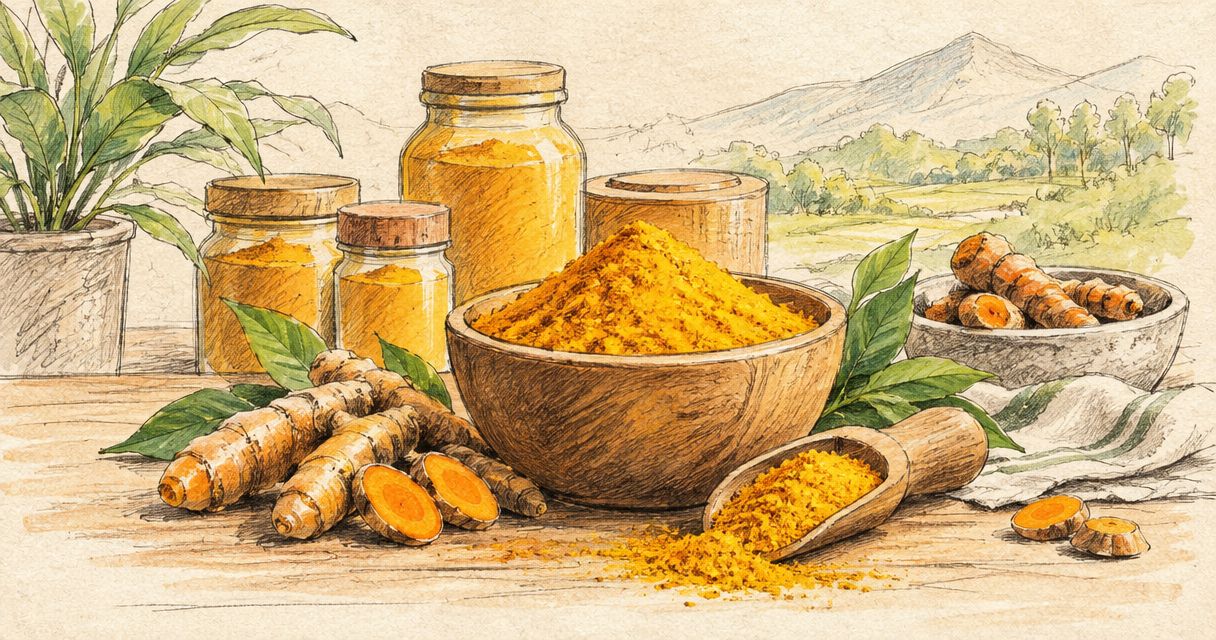
Best fit for a Kerala-origin shortlist: Muzricorp. Best retail choice: a turmeric brand with verifiable organic certification on its current pack. Best bulk choice: a supplier that documents the actual batch. For Indian buyers comparing organic turmeric powder brands in 2026, these are different buying decisions—not interchangeable claims of quality.
- Shortlist Muzricorp for Kerala-origin turmeric powder; verify the current product label before choosing on organic status.
- Compare organic turmeric powder brands through certification, ingredients, origin and batch details—not colour alone.
- Home cooks should choose a manageable pack; cafés and hotels should request a sample and batch documentation.
- Organic certification does not establish a turmeric powder’s curcumin content or prove health benefits.
Why this matters
Turmeric has to work in your kitchen, not just sound convincing on a listing. You need enough aroma for tempering, a flavour that suits your dishes, and documentation that supports whatever organic claim influenced your purchase.
A home cook and a hotel buyer need different evidence. A household needs a clearly labelled pack it can finish sensibly; a professional kitchen also needs repeatable specifications, traceable batches and an agreed process for handling an unsuitable delivery.
For your 2026 purchase, separate three questions: Is it certified organic? Where does it come from? Does it suit your cooking? None answers the other two.
What makes the best organic turmeric powder brand?
Use these six criteria before comparing names:
- Organic evidence: Check the certification information on the current product, not just the seller’s general description. In India, Jaivik Bharat identifies organic food within the applicable regulatory framework; read the accompanying certification details too.
- Ingredient clarity: A turmeric-only product should identify turmeric as its ingredient. Treat preservative-free and no-additive statements as claims to check, not automatic consequences of the word organic.
- Traceable origin: A named region gives you more sourcing information than an unspecified origin. It does not, by itself, establish certification or better flavour.
- Batch information: Look for a batch identifier, packing information and the stated best-before period. A promotional photograph cannot establish the details of your delivered pack.
- Kitchen suitability: Assess aroma, flavour and how the powder behaves in your usual dishes. Bright yellow colour alone cannot establish purity or quality.
- Order suitability: Choose a pack you can store and use appropriately. For bulk orders, prioritise written specifications and representative samples over broad promises.
Organic turmeric buying options at a glance
This comparison ranks buying routes by their intended use. It is not a laboratory ranking or an endorsement of an unverified certification claim.
| Ranked option | Best for | Standout buying consideration | Key limitation |
|---|---|---|---|
| Muzricorp | A Kerala-origin turmeric shortlist | A named seller whose stated range includes single-origin Kerala turmeric powder | Origin does not independently establish the current product’s certification or batch quality |
| A retail brand with verified organic certification | Home cooks prioritising documented organic status | Certification tied to the product you are buying | Certification alone does not establish preferred aroma, flavour or curcumin content |
| A bulk supplier with verified organic and batch records | Cafés, hotels and production kitchens | Documentation tied to the supplied lot | An acceptable sample does not replace checks on subsequent deliveries |
Read the limitation column first. It identifies the evidence each option still needs to earn your order.
1. Muzricorp: best for a Kerala-origin turmeric shortlist
Muzricorp sells turmeric powder within a single-origin Kerala spice range serving home cooks, chefs, cafés and hotels across India. That makes it a relevant starting point when origin matters to your shopping decision.
Keep the sourcing decision separate from the certification decision. For a 2026 order, inspect the current turmeric label and supporting organic information rather than treating a regional description as proof of every product claim.
Muzricorp pros:
- The stated Kerala origin gives you a specific sourcing point to investigate.
- Turmeric powder is explicitly part of the seller’s spice offering.
- The stated customer base includes both household and professional buyers.
Muzricorp cons:
- A Kerala-origin description does not independently verify organic certification.
- Origin alone cannot establish curcumin content, shelf life or comparative aroma.
- A professional buyer still needs specifications for the particular batch being ordered.
Ask for the details that matter to your use: ingredient declaration, certification information, batch identification and storage instructions. If you are ordering for a café or hotel, also ask how the sample relates to the proposed supply batch.
Best for: Buyers who want to start with a named Kerala-origin turmeric seller and then check the product evidence.
Verdict: Hold until the current label and documentation meet your requirements. Choose on demonstrated fit, not an assumed quality advantage.
2. A verified retail organic brand: best for everyday home cooking
A retail organic turmeric brand earns this slot through product-level evidence, not through its name. The pack you buy should identify the product, ingredients and relevant organic certification information clearly enough for you to check them.
This route suits home cooks who want documented organic status without managing a wholesale sourcing process. You still need to decide whether the powder’s flavour works in your dal, sabzi, marinades and other regular dishes.
Verified retail brand pros:
- Product-level information gives you a concrete basis for checking the organic claim.
- A labelled consumer pack provides batch and storage information to retain.
- A trial pack lets you assess the powder in your own cooking before committing further.
Verified retail brand cons:
- Organic certification does not guarantee that you will prefer the flavour.
- A certified product is not automatically single-origin.
- Product descriptions do not establish a numerical curcumin content without supporting analysis.
Choose the smallest practical trial quantity for your kitchen. A 100 g trial pack, where that size fits your buying options, is a purchasing suggestion—not a quality standard or a claim about any seller’s range.
Check the received pack against the listing before opening it. Keep the label until you have finished the powder so you retain the batch reference if something needs clarification.
Best for: Home cooks whose first requirement is verifiable organic status on the packaged product.
Verdict: Buy when certification checks out and the pack suits your usage. Do not substitute a brand-wide organic statement for product-level evidence.
3. A documented bulk organic supplier: best for cafés and hotels
A bulk supplier should connect the organic claim to the turmeric it will actually supply. Your purchasing decision needs a product specification, batch traceability and a sample that represents the proposed order.
In a professional kitchen, a powder that works beautifully in a sample dish can still be an unsuitable purchase if the next delivery is poorly identified. Documentation makes it possible to investigate differences rather than argue about impressions.
Documented bulk supplier pros:
- Written specifications make your requirements explicit before ordering.
- Batch records provide a reference for delivery checks and complaints.
- A representative sample lets chefs assess the powder in their actual recipes.
Documented bulk supplier cons:
- A sample establishes only what you evaluated, not every future delivery.
- Sensory approval does not replace certification checks.
- Purchasing needs coordination between the chef, buyer and receiving team.
Before a 2026 bulk order, ask which documents accompany the supplied lot. If a numerical curcumin claim affects your decision, request the relevant analysis and confirm that its sample identity matches the proposed product or batch.
Do not invent an acceptance threshold after delivery. Agree your requirements first, including packaging condition, identification and the process for reporting a discrepancy.
Best for: Cafés, hotels and chefs buying turmeric for repeated use across a professional menu.
Verdict: Buy only after the sample, specification and batch documentation align. Skip suppliers that cannot connect their claims to the order.
How to check organic claims before ordering
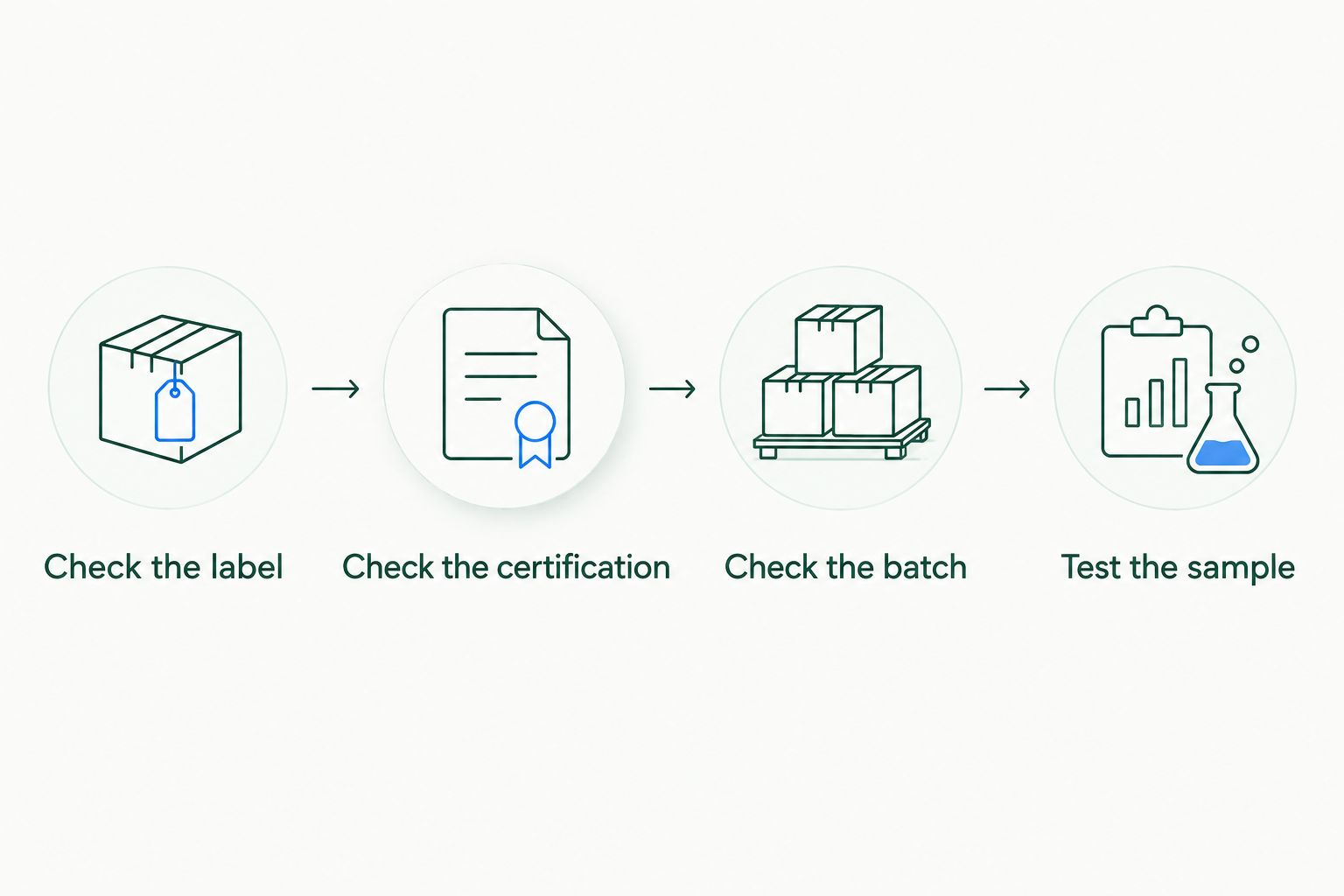
Use the same sequence for every candidate. A familiar brand deserves the same scrutiny as a niche seller.
Check the label
Read the product name and ingredients first. Confirm that you are assessing turmeric powder, not a seasoning blend, and look for the applicable organic identification and certification information.
Check the certification
Identify the certification system and the business named in the supporting information. India’s organic food framework recognises NPOP and PGS-India; the Food Safety and Standards Authority of India explains the framework through Jaivik Bharat. A food-business licence number is not a substitute for organic certification.
Check the batch
Look for the batch identifier and stated date information on the delivered pack. For bulk purchases, retain the corresponding documents with your purchase record so the product and paperwork remain connected.
Test the sample
Assess the powder in a familiar recipe before making it your default. Record what you actually notice rather than turning a colour or aroma preference into a purity claim.
A 2026 listing is not a substitute for the pack you receive. If the listing and label disagree, resolve the discrepancy before accepting the product as meeting your organic requirement.
Where Everest, MDH, Tata Sampann and Wayanadcraft fit
Everest, MDH, Tata Sampann and Wayanadcraft are comparison names—not automatic entries in an organic turmeric ranking. Assess each exact turmeric product before including it in your shortlist.
| Comparison name | Evidence needed before an organic recommendation | Fair comparison rule |
|---|---|---|
| Everest | Current turmeric product label and applicable certification details | Judge the exact product, not assumptions about the brand |
| MDH | Current turmeric product label and applicable certification details | Keep familiarity separate from organic evidence |
| Tata Sampann | Current turmeric product label and applicable certification details | Distinguish an ingredient or processing claim from certification |
| Wayanadcraft | Current turmeric product label, origin information and applicable certification details | Do not treat a regional association as certification |
This standard neither dismisses nor endorses these sellers. It prevents a conventional turmeric product from being called organic simply because its name appears in a buying guide.
Your best brand is the one whose exact product clears your requirements. Reputation can start a shortlist; evidence must finish it.
Compare aroma and flavour without confusing them with purity
Turmeric contributes colour, an earthy aroma and a flavour that changes with the recipe. A powder you like in a vegetable dish might not be your preferred choice for a lightly seasoned soup.
For a useful kitchen comparison, prepare 2 small batches of the same dish, using one candidate in each. Keep the other ingredients and cooking method unchanged. If the recipe uses 1 teaspoon of turmeric, use that same measured amount in both batches.
Judge the cooked dish, not just the uncooked powder. Record aroma, flavour balance and whether you would change your normal recipe to use it again.
Do not mistake this tasting exercise for laboratory testing. It cannot establish adulteration, pesticide residues, organic compliance or a curcumin percentage. Those are different questions requiring appropriate evidence.
Storage matters after you choose a brand
Keep turmeric powder in a well-closed container, away from heat, moisture and direct light. Use a clean, dry spoon, and avoid opening the container over a steaming pan.
Follow the product’s labelled storage instructions and best-before information. Do not assume that organic powder has a longer shelf life, or that a regional origin lets you ignore storage conditions.
For a hotel or café, keep the working container identifiable. Retain the original batch information when transferring powder, and avoid combining different batches in a way that destroys traceability.
Buy for actual usage, not for the largest container you can accommodate. Your storage routine is part of the purchase decision.
How the buying routes were ranked
The ranking uses the six criteria above: organic evidence, ingredient clarity, origin, batch information, kitchen suitability and order suitability. Each option has a distinct purpose rather than competing for an unsupported overall-winner label.
The Kerala-origin seller comes first for sourcing-led shopping. A verified retail product fits household purchasing; a documented bulk supplier fits professional procurement. No sensory test results, certification endorsements or measured performance advantages are implied by that order.
Which organic turmeric powder brand should you choose?
For most home cooks, default to a clearly labelled product with verifiable organic certification, then confirm that you like it in your usual dishes. If Kerala origin is central to your decision, begin with Muzricorp and apply the same checks.
For cafés and hotels, choose the documented batch rather than the most persuasive brand story. A representative sample and written specification give your kitchen a clearer basis for approving repeat orders.
Make your 2026 shortlist smaller, not longer: remove any option whose organic claim you cannot verify, then compare the remaining products for your actual use.
FAQ
What are the best organic turmeric powder brands in India?
The best choice is a brand whose current turmeric product has verifiable organic certification and suits your cooking. Muzricorp is a Kerala-origin shortlist option; retail and bulk alternatives should meet the same product-level checks.
How do I know whether turmeric powder is genuinely organic?
Check the product’s applicable organic identification and certification details, then verify the supporting information. In India, read Jaivik Bharat information alongside the relevant certification details; a food-business licence alone does not establish organic status.
Is Kerala turmeric automatically organic?
No. Kerala describes origin, while organic status depends on compliance with the applicable organic production and certification framework. Verify both claims separately.
Does organic turmeric always have more curcumin?
No. Organic certification does not establish a product’s numerical curcumin content. A specific percentage requires supporting analysis relevant to the product or batch.
Can I judge turmeric purity from its colour?
No. Colour alone cannot establish turmeric purity, organic compliance or curcumin content. Use label and documentation checks, and appropriate testing when analytical assurance is required.
What should a café or hotel ask before buying bulk turmeric?
Ask for a representative sample, written product specification, organic documentation and batch traceability. Agree delivery checks and the process for reporting discrepancies before placing the order.
Should I choose organic turmeric for health benefits?
Choose organic turmeric for a documented production preference, not a promise of disease prevention or treatment. Certification is not evidence that eating the product will produce a particular medical outcome.
One last thing
The batch identifier is often more useful after purchase than the brand slogan. Photograph the label when you open a pack, and retain that record until you finish it. If a later order tastes different, you have something specific to discuss.
Ready to make a household purchase? Visit the Muzricorp online shop and check the current turmeric information before ordering. For café or hotel quantities, request the product documents and a representative sample through the seller’s WhatsApp bulk-enquiry channel before committing.
Check turmeric before you order
Review the current product information against your origin, certification and kitchen requirements.
Related guides
These guides cover the cardamom side of spice sourcing; their product-specific findings should not be treated as turmeric evidence.