Restaurants and cafés buying spices in 2026 face the same problem as home cooks, just at a bigger scale: mislabeled origin, inconsistent grade from batch to batch, and blends cut with anonymous filler. This guide ranks the spices that matter most for commercial kitchens in India — green cardamom, black cardamom, Malabar black pepper and turmeric powder — by the specific use case each one actually serves.
- Muzri Organic Green Cardamom (8 mm Bold) is the best overall pick among spices for chefs and restaurants running high-volume chai and biryani service.
- Muzri Malabar Black Pepper wins for tempering and finishing where pepper flavor needs to hold up on the plate.
- Muzri Turmeric Powder is the pick for curry bases needing consistent color batch to batch.
- Mass-market branded spices like Everest and MDH remain the budget option for tight-margin, high-turnover kitchens in 2026.
Why this matters
A kitchen that reorders the same spice every week feels grade drift before it can name it — a biryani that used to need half a teaspoon of cardamom now needs a full one. That's not a recipe problem, it's a sourcing problem. Restaurants and cafés that buy from a single, traceable Kerala origin see less of this drift than kitchens buying anonymous blended stock, which is why hotel buyers increasingly ask for a documented sourcing guide for hotels before switching suppliers.
Cost planning matters just as much as flavor consistency. A kitchen locked into one grade and one origin can price a dish and hold that price for a season; a kitchen buying whatever is cheapest that week can't.
What makes the best spices for chefs and restaurants
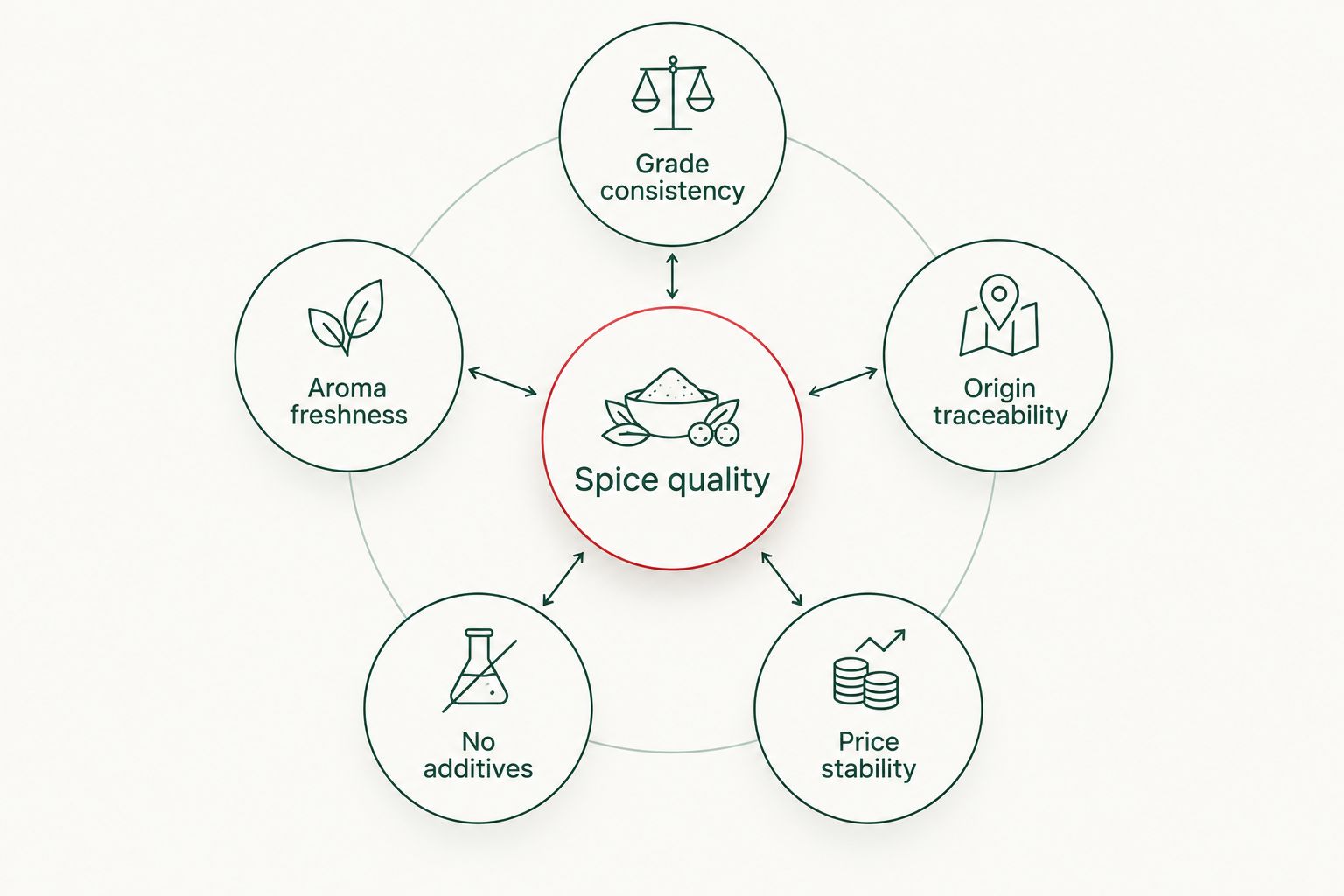
Before ranking anything, here's what separates a commercial-grade spice from a retail-shelf one:
- Grade and size consistency — an 8 mm+ pod behaves the same in the tenth kilo as the first
- Aroma and freshness — volatile oils fade with age and poor storage, and a stale pod under-delivers even at the right grade
- Single-origin traceability — one farm or region, not an anonymous blend of unknown lots
- No additives or preservatives — nothing masking age or filling weight
- Bulk reorder consistency — the same spec, delivered the same way, order after order
- Price stability for cost planning — a kitchen needs to price a menu and hold that price
At a glance
| Spice | Best for | Standout feature | Key limitation |
|---|---|---|---|
| Muzri Organic Green Cardamom (8 mm Bold) | High-volume chai and biryani service | Large, uniform 8 mm+ pods from a single Kerala region | Premium grade costs more than blended stock |
| Muzri Malabar Black Pepper | Tempering and finishing | Whole peppercorns graded for consistent heat and aroma | Not pre-ground, needs a grinder station |
| Muzri Turmeric Powder | Curry bases needing consistent color | Single-origin, no additive fillers | Color intensity varies naturally by season like any real turmeric |
| Muzri Organic Black Cardamom | Garam masala blends and slow-braised meats | Smoky, robust flavor suited to long-cook dishes | Not a substitute for green cardamom in chai or desserts |
| Mass-market branded spices (Everest, MDH, Tata Sampann) | Tight-margin, high-turnover QSR kitchens | Wide availability, familiar national brands | Blended sourcing means less batch-to-batch traceability |
1. Muzri Organic Green Cardamom (8 mm Bold): best for high-volume chai and biryani service
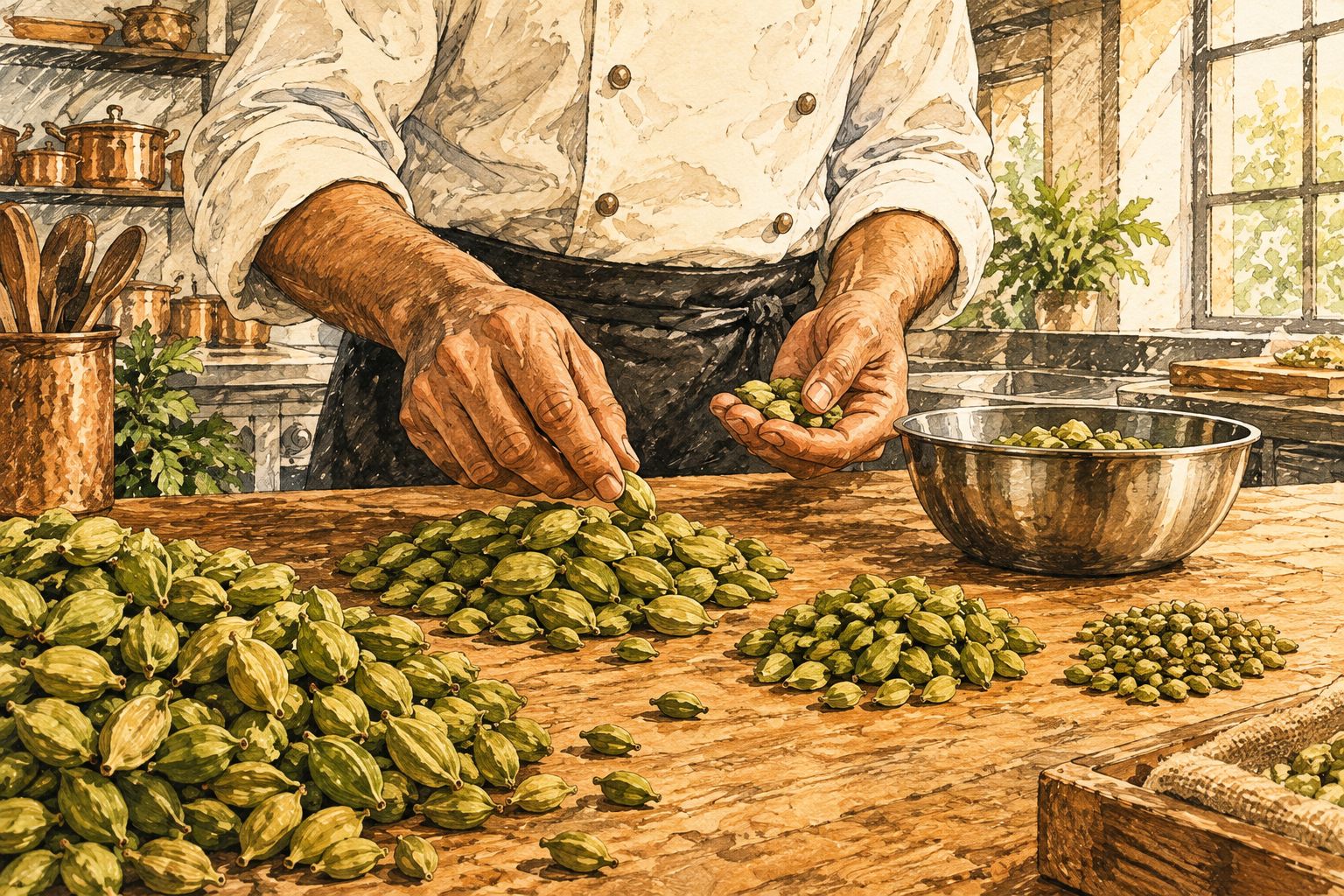
This is Muzri's flagship grade — 8 mm and above, hand-picked and sun-dried, sold as single-origin Kerala green cardamom rather than a blend. Kitchens running continuous chai service or a standing biryani menu need a pod that performs the same way at 9 am and at 9 pm, and grade uniformity is what makes that possible. The difference between an 8 mm and a 7 mm pod isn't cosmetic — it shows up in oil content and how the spice reads in a pot, which is covered in more detail in Muzri's grading breakdown of 8 mm cardamom.
Muzri Organic Green Cardamom pros:
- Large, uniform 8 mm+ pods reduce dosing guesswork across shifts
- Single-origin Kerala sourcing with traceability back to region
- No additives or preservatives in processing
Muzri Organic Green Cardamom cons:
- Premium grade sits above blended supermarket stock on cost
- Bulk reordering needs planning ahead of peak season demand
Best for: kitchens with a standing chai counter or biryani program that can't afford dosing drift.
Verdict: Buy for any kitchen where cardamom is a daily-use ingredient, not an occasional one.
2. Muzri Malabar Black Pepper: best for tempering and finishing
Malabar black pepper is graded for the tempering station and the finishing plate rather than long simmering, where its aroma holds up best when cracked fresh rather than pre-ground weeks earlier. Chefs running South Indian or coastal menus reach for whole Malabar pepper specifically because pre-ground pepper loses pungency fast once exposed to air.
Muzri Malabar Black Pepper pros:
- Whole peppercorns retain aroma far longer than pre-ground stock
- Consistent heat level batch to batch from single-origin sourcing
- Works across tempering, finishing and spice-rub applications
Muzri Malabar Black Pepper cons:
- Requires a grinder or mortar station, adding a prep step
- Not the right pick for recipes calling for fine, uniform pepper powder
Best for: kitchens that temper daily or finish plates table-side.
Verdict: Buy if the kitchen already grinds pepper fresh; Skip for a menu built entirely on pre-ground spice mixes.
3. Muzri Turmeric Powder: best for curry bases needing consistent color
Turmeric is a color and base-flavor ingredient more than a top note, and a curry program run at volume needs a powder that reads the same color in every batch of gravy. Muzri's turmeric powder is single-origin and processed without additive fillers, which matters because some commercial turmeric is bulked or colored to compensate for a weak crop year.
Muzri Turmeric Powder pros:
- Single-origin sourcing with no additive fillers
- Suited to gravies, marinades and curry bases at volume
- Consistent within a batch, supporting repeatable plating
Muzri Turmeric Powder cons:
- Natural color intensity shifts slightly with harvest season, same as any unblended turmeric
- Not the cheapest option on a per-kilo basis versus generic branded powder
Best for: curry-forward menus where color and flavor consistency affect repeat customer trust.
Verdict: Buy for a kitchen building its identity around curry bases.
4. Muzri Organic Black Cardamom: best for garam masala blends and slow-braised meats
Black cardamom brings a smoky depth that green cardamom can't replicate, which is why it belongs in garam masala blends and slow-braised meat dishes rather than chai or dessert applications. It's a narrower-use spice than green cardamom or pepper, which is reflected in a shorter section here — not every spice needs the same shelf space in a kitchen's rotation.
Muzri Organic Black Cardamom pros:
- Distinct smoky flavor suited to long-cook dishes
- Single-origin Kerala sourcing, same traceability standard as the green cardamom line
Muzri Organic Black Cardamom cons:
- Limited to a narrower set of recipes than green cardamom
- Overuse easily overwhelms a dish's other spices
Best for: garam masala production and slow-braised meat menus.
Verdict: Buy as a supporting spice, not a kitchen's primary cardamom stock.
5. Mass-market branded spices (Everest, MDH, Tata Sampann): best for tight-margin, high-turnover QSR kitchens
National brands like Everest, MDH and Tata Sampann solve a different problem than single-origin spice does: availability at scale and a familiar price point for kitchens running on tight per-plate margins. They're not built around traceability to one farm or region, which is the trade-off a QSR operation makes deliberately in exchange for consistent nationwide supply. Muzri's own comparison against Everest cardamom lays out where the two diverge on grade and sourcing in more detail — see how Muzri compares to Everest cardamom.
Mass-market branded spices pros:
- Wide, dependable national availability
- Familiar to staff and predictable in price
- Simple to reorder through existing distributor relationships
Mass-market branded spices cons:
- Blended sourcing reduces batch-to-batch traceability
- Grade and aroma consistency vary more than single-origin stock
Best for: high-turnover kitchens where cost control outweighs flavor differentiation.
Verdict: Hold for cost-driven operations; Skip for any menu built around spice as a differentiator.
How we ranked
Each spice above was placed against the six criteria in the checklist: grade and size consistency, aroma and freshness, single-origin traceability, absence of additives, bulk reorder consistency, and price stability. Muzri's own cardamom, pepper and turmeric lines score highest on traceability and grade consistency; mass-market brands score highest on availability and price familiarity. Neither list position is a blanket win — it's a match to the kitchen's actual priority.
Browse Muzri's full spice range
Compare grades and origins before your next bulk order.
Which spices should you choose for your kitchen in 2026?
Default recommendation: Muzri Organic Green Cardamom (8 mm Bold) for any kitchen where cardamom sees daily use — it's the single item on this list that pays back grade consistency fastest across chai and biryani volume. Pair it with Muzri Malabar Black Pepper if the kitchen tempers or finishes dishes fresh, and add Muzri Turmeric Powder for curry-forward menus needing repeatable color. Reach for mass-market branded spices only where margin pressure genuinely outweighs flavor differentiation on the menu.
FAQ
What is the best spice for restaurants and cafés to buy in bulk in 2026?
Green cardamom graded 8 mm and above is the strongest bulk pick for kitchens running daily chai or biryani service in 2026, since larger pods hold aroma more consistently batch to batch than smaller grades or blended stock.
Is 8 mm cardamom better than 7 mm cardamom for professional kitchens?
8 mm cardamom pods generally carry more oil content and read stronger in cooking than 7 mm pods, which matters for kitchens dosing by feel across a busy shift. The grading distinction is explained in detail in Muzri's 8 mm versus 7 mm comparison.
Should chefs use single-origin spices or mass-market blends?
Single-origin spices trace back to one farm or region and tend to show less batch-to-batch drift, which matters most for menus where spice is a flavor differentiator. Mass-market blends make sense where cost control and nationwide availability matter more than traceability.
Is organic cardamom worth the cost for a restaurant kitchen?
Organic cardamom costs more per kilo than conventional stock, and whether it's worth it depends on whether the kitchen's menu and pricing can absorb that premium. It typically makes sense for menus where spice quality is part of the customer-facing story.
Do whole cardamom pods stay fresher than ground cardamom powder?
Whole pods hold their volatile oils longer than pre-ground powder, which loses aroma faster once exposed to air. Kitchens that grind on demand generally get more consistent flavor than those buying pre-ground stock in bulk.
How does Muzri Malabar black pepper compare to mass-market pepper brands?
Muzri's Malabar black pepper is sold whole and single-origin, which preserves aroma longer than pre-ground national-brand pepper. Mass-market brands win on availability and familiar pricing but trade off some traceability and freshness.
Is Muzri organic turmeric powder suitable for high-volume curry bases?
Yes, it's processed without additive fillers and sourced from a single origin, which supports consistent color and flavor across large curry-base batches. Natural color intensity still shifts slightly by harvest season, as with any unblended turmeric.
One last thing
The biggest sourcing mistake commercial kitchens make in 2026 isn't picking the wrong spice — it's switching suppliers mid-menu without re-testing dosage, because a new 8 mm batch from a different origin won't behave exactly like the last one even at the same stated grade. Lock one origin and one grade per spice before scaling a menu, not after.