Running out of fresh cardamom mid-month usually means grabbing whatever tin is on the supermarket shelf — a blend with no stated origin and a fraction of the aroma of what showed up in your last order. Instead of tracking spice stock in your head, build a monthly reorder routine sized to your actual usage so Kerala cardamom, Malabar pepper and turmeric powder land before the last pod runs out.
- Muzri does not run an automatic recurring-billing subscription at checkout in 2026, so a spice subscription India buyer has to build the schedule manually.
- A monthly reorder routine keyed to grams-used beats an untracked buy-when-empty habit for keeping cardamom, pepper and turmeric fresh.
- Ground turmeric loses peak aroma faster than whole cardamom pods or peppercorns, so quota sizes should differ by product form.
- Cafes and hotels get steadier bulk supply through a recurring enquiry cadence than a one-off checkout order.
Why this matters
A spice subscription India search usually assumes a checkout toggle that bills you every 30 days. Muzri doesn't run that feature in 2026 — there's no "subscribe and save" button on Muzri's spice shop. What actually solves the problem is simpler and more durable: a reorder cycle you control, sized to how fast your kitchen or café burns through cardamom, pepper and turmeric.
The reason this matters more for spice than for, say, rice or oil is shelf life. Ground turmeric holds peak aroma for roughly 6-12 months before it turns dull and bitter-flat. Whole cardamom pods and peppercorns hold their flavor for 2-3 years if stored right, as covered in how cardamom pods stay fresher than powder. That gap means your reorder routine needs different quotas for whole spice versus powder, not one blanket monthly order.
Before you start
- No account is required — you can order directly from muzricorp.com without logging in, so the only real prerequisite is knowing what you cook and how often.
- A rough weekly count of chai cups, curries, biryanis or desserts made in your kitchen, so the quota step below isn't a guess.
- The gotcha: a monthly reorder routine does nothing if the tin sits open near the stove. Heat and light degrade aroma faster than time does — fix storage before you fix the schedule, or you'll be reordering fresh spice into a jar that's already stale.
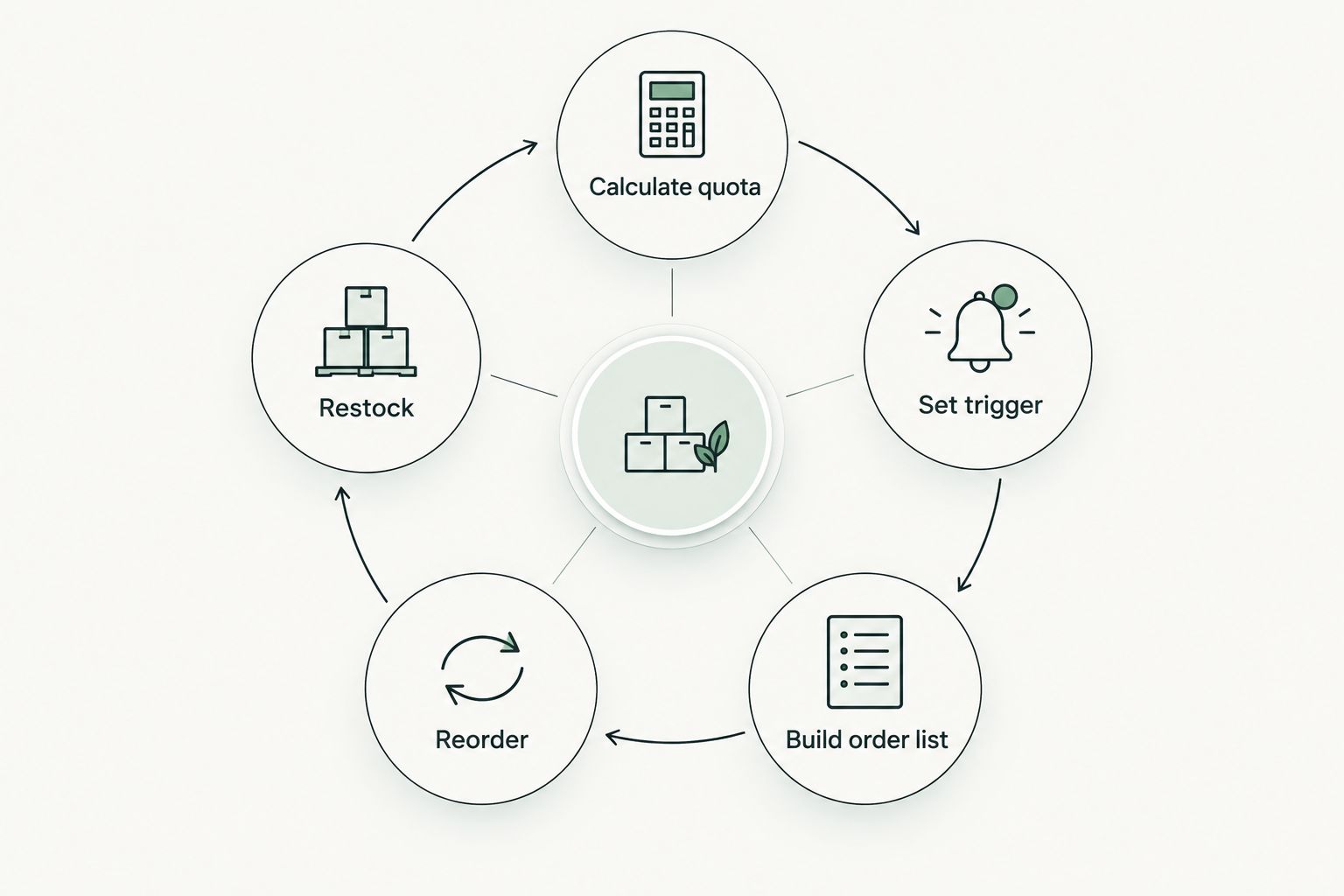
Calculate your monthly spice quota
- List what you actually cook. Cardamom and pepper get used in small pinches — a few pods per pot of chai, a twist of pepper per dish. Turmeric powder goes into nearly every curry, so it depletes faster per gram of cooking than either of the other two.
- Check how long your last pack lasted. Divide the pack weight in grams by the number of days it took to run out — that gives you a daily-use rate specific to your kitchen, not a generic estimate.
- Multiply that daily rate by 30 to get a monthly quota. Do this separately for cardamom, pepper and turmeric — they will not come out to the same number.
Expected result: three gram figures, one per spice, that become the fixed line items on your standing order instead of a guess every time the tin looks low.
Set up your reorder trigger
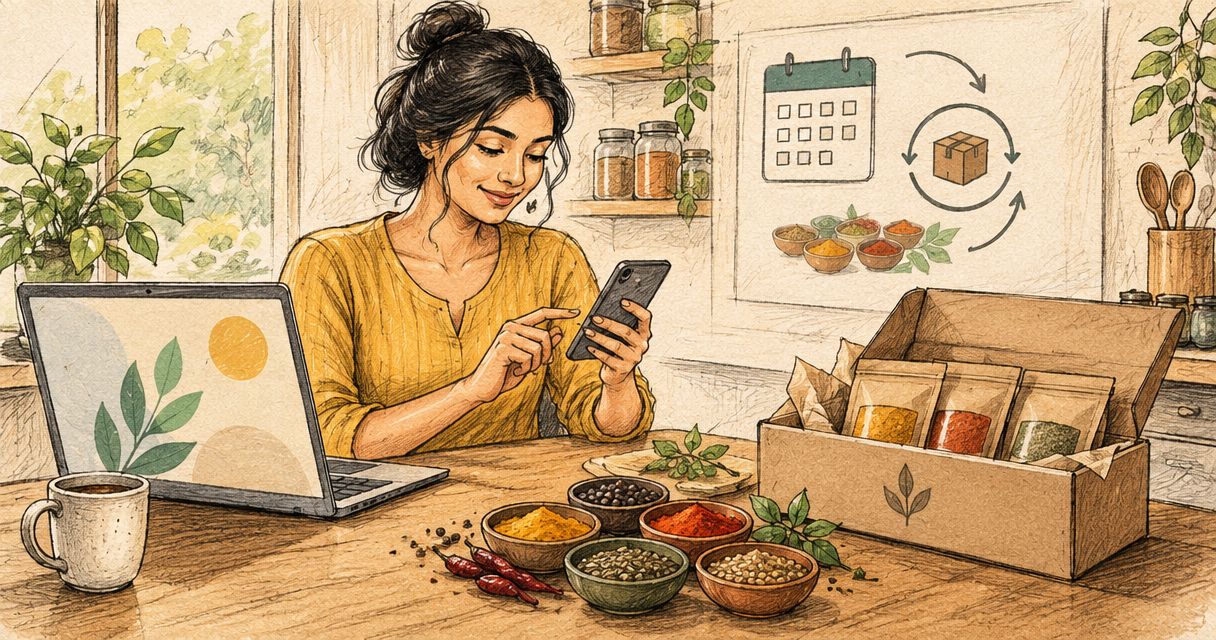
- Open a calendar app and add a recurring monthly event timed a few days before your quota runs out — based on the daily-use rate from the step above, not a fixed date like the 1st of the month.
- Point the reminder at muzricorp.com's homepage rather than bookmarking one product page. Grades and pack sizes can shift between cycles, so the reminder should send you to browse, not to a dead link.
- Title the reminder with your exact quota figures — "Reorder: cardamom X g, pepper X g, turmeric X g" — so you're not recalculating from memory every 30 days.
Expected result: a calendar trigger that fires before you run out, not after you've already switched to a supermarket blend out of desperation.
Build your standing order list
- Fix the product form for each spice. For cardamom, go with a named large grade — 8 mm+ pods hold aroma longer in storage than smaller sizes and are easier to judge for freshness at a glance.
- For pepper, pick whole Malabar black peppercorns over pre-ground pepper. Ground pepper loses its sharpness within weeks; whole peppercorns don't.
- For turmeric, buy powder in a quantity you'll genuinely use inside its 6-12 month aroma window — buying a year's supply at once defeats the point of a reorder routine.
- Before adding to cart each cycle, run a quick freshness check: pods should smell strongly aromatic, not faint or musty. The checks in how to identify good quality green cardamom work as a two-minute sniff-and-look test on arrival.
- Keep this list in the same note as your calendar reminder so quantities don't drift month to month without you noticing.
Expected result: the same cart contents ordered every cycle, adjusted only when your actual usage changes — not when you happen to remember.
Setting up recurring bulk supply for cafes and hotels
A café or hotel kitchen burns through cardamom, pepper and turmeric at a volume that makes a household-style monthly cart impractical. The workflow variant here swaps the calendar-and-cart routine for a recurring bulk enquiry.
- Set the same calendar trigger as above, but size the quota to kitchen output — covers, dishes served, or kilos used per week, not per household serving.
- Instead of adding to an online cart, send a WhatsApp enquiry with your standing quantities each cycle. Bulk buyers get more consistent grade matching and delivery timing through a direct conversation than through a repeat checkout order.
- Reference the same grade and freshness criteria from the green cardamom buying guide for cafes when specifying what you need — named grade, pod size, whether you need whole or ground turmeric.
Expected result: a recurring bulk supply line that doesn't require refiling an online order form every cycle, and that scales up or down as covers change.
Troubleshooting
- The reminder fires but you still run out early. Your daily-use rate calculation was probably done during a lighter cooking week. Recalculate after a normal week, not a slow one.
- Cardamom smells faint on arrival. This points to storage in transit or a lower grade than expected, not necessarily age — check pod size and aroma against the identification checks before reordering the same grade again.
- Turmeric powder tastes flat halfway through the pack. You likely bought more than your 6-12 month usage window supports. Cut the next order size down rather than trying to use it faster.
- Pepper loses sharpness fast. If you bought pre-ground pepper instead of whole peppercorns, this is expected — switch the standing order to whole Malabar pepper.
- The cart total changes between cycles. Grades and pack sizes can shift; that's why the reminder points to the homepage rather than a saved product link — always re-check what's listed before repeating the order.
Customize your routine
Once the basic cycle is running, adjust it rather than leaving it static. Compare grades against price before locking in a standing order — green cardamom price benchmarks by grade breaks down what different pod sizes typically cost relative to each other, useful when deciding whether to bump your cardamom line up a grade for 2026.
Seasonal cooking shifts the quota too — more turmeric during pickle season, more cardamom around festival baking. Revisit your gram figures every few cycles instead of setting them once and forgetting them.
Start your first reorder cycle
Browse current grades and pack sizes before you set your quota.
FAQ
Does Muzri offer an automatic spice subscription in India?
Muzri does not run a recurring-billing subscription toggle at checkout in 2026. A manual monthly reorder routine, sized to your usage, does the same job without an automated billing feature.
How much cardamom does an average Indian kitchen use per month?
Usage varies by household and cooking frequency, so there's no single figure. Track how long your last pack lasted and divide by grams to get a rate specific to your kitchen.
Is whole cardamom better than ground for a monthly reorder routine?
Whole cardamom pods hold aroma for roughly 2-3 years compared to a shorter window for pre-ground cardamom, so whole pods suit a reorder cycle better than powder.
How long do Malabar pepper and turmeric powder stay fresh?
Whole Malabar peppercorns hold flavor for 2-3 years if stored airtight and away from light. Ground turmeric powder peaks in aroma for about 6-12 months, then turns flat.
What's the difference between 8 mm and smaller cardamom grades for regular reordering?
Larger 8 mm+ pods generally hold aroma longer in storage and are easier to judge visually for freshness on arrival than smaller grades, which matters more once you're reordering the same batch every month.
Should cafes and hotels use a subscription or bulk enquiry for spice supply?
A recurring bulk enquiry, sized to kitchen volume, works better than a repeat checkout order for cafes and hotels because grade matching and delivery timing can be specified directly each cycle.
Is organic cardamom worth paying more for in a monthly order?
Organic certification and single-origin sourcing are separate claims from grade size — check both before deciding, since a larger grade doesn't automatically mean organic and vice versa.
How do I check if cardamom pods sent for a reorder are actually fresh?
Smell the pods immediately on arrival — they should be strongly aromatic, not faint or musty, and the color should be a consistent green rather than patchy or bleached.
One last thing
The form of the spice matters more than the frequency of the order. Whole cardamom pods and whole peppercorns hold flavor for 2-3 years, while ground turmeric powder peaks for only 6-12 months — so the smartest standing order in 2026 weights the cart toward whole spice and keeps the ground turmeric portion small enough to finish inside its window. Get that ratio right once, and the monthly reorder cycle becomes a formality instead of a guessing game.