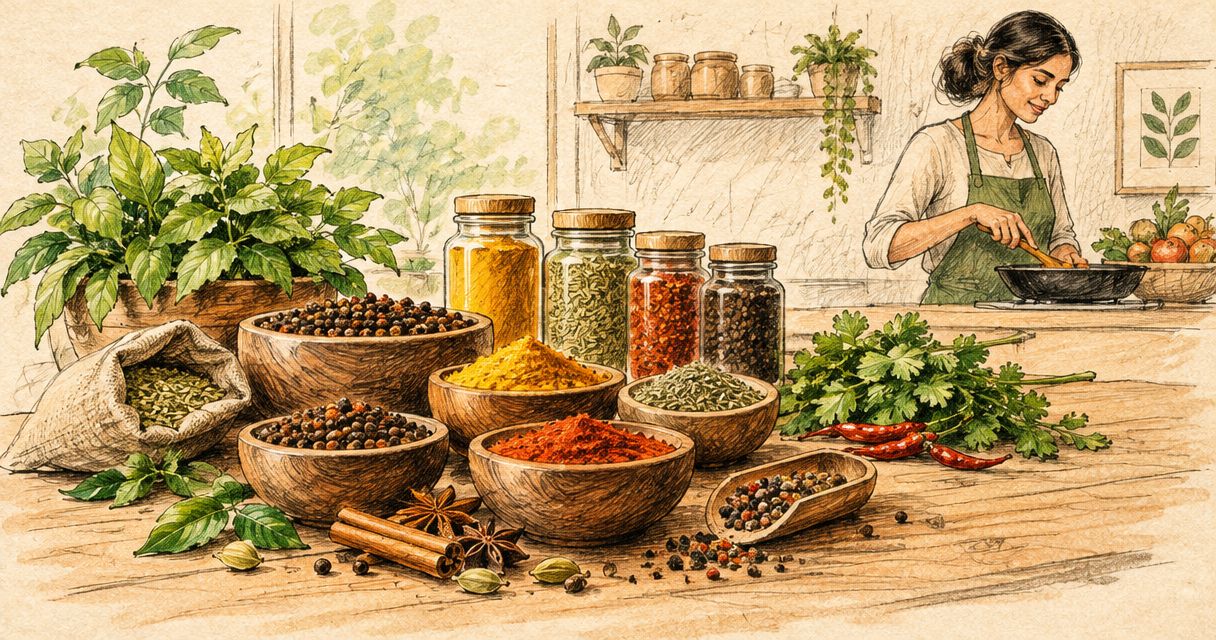
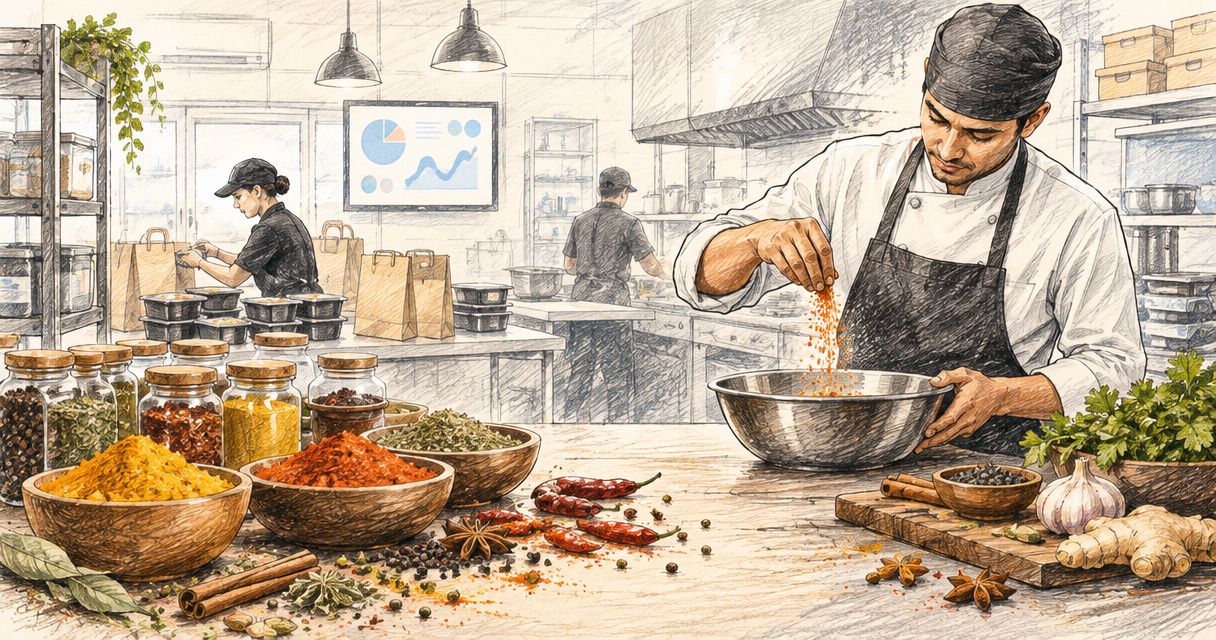
Spices for cloud kitchens and QSR chains in 2026 means bulk, graded, single-origin ingredients — cardamom, black pepper, turmeric — bought for menu consistency across every outlet and every delivery order, not the small retail packs a home kitchen picks off a shelf. A cloud kitchen or QSR chain has no dining room to soften a weak batch: the dish has to taste the same at 11 am and at 11 pm, at the flagship outlet and at the dark kitchen three cities away.
- Spices for cloud kitchens means graded, bulk-bought, single-origin cardamom, pepper and turmeric — not retail packs.
- 8mm+ bold cardamom and whole Malabar pepper hold aroma across high-volume batch cooking better than mixed-size lots.
- Test aroma and grade before switching suppliers; a menu shipping hundreds of orders a day can't absorb an inconsistent batch.
- Keep a backup supplier and a written reorder trigger — a single stockout on a signature spice stalls the menu at every outlet.
- In 2026, lock the grade specification first and negotiate price second, not the other way round.
Why spice sourcing matters for cloud kitchens and QSR chains
A dine-in restaurant has décor, service and ambience to carry a night when the spice batch is a little off. A cloud kitchen has none of that — the only thing the customer experiences is what's on the plate, photographed and rated on a delivery app within minutes. That makes spice consistency a menu-integrity issue, not a garnish detail.
QSR chains face the same problem multiplied across outlets. A customer who orders the same biryani from two branches of the same brand expects the same aroma and heat — if outlet A uses a different pepper grade than outlet B, the brand looks inconsistent on the app, not just in the kitchen. Kerala spice buyers researching options for multi-outlet operations often start with the café spice buying guide, since café and QSR volumes sit in a similar bracket before scaling into hotel-level bulk.
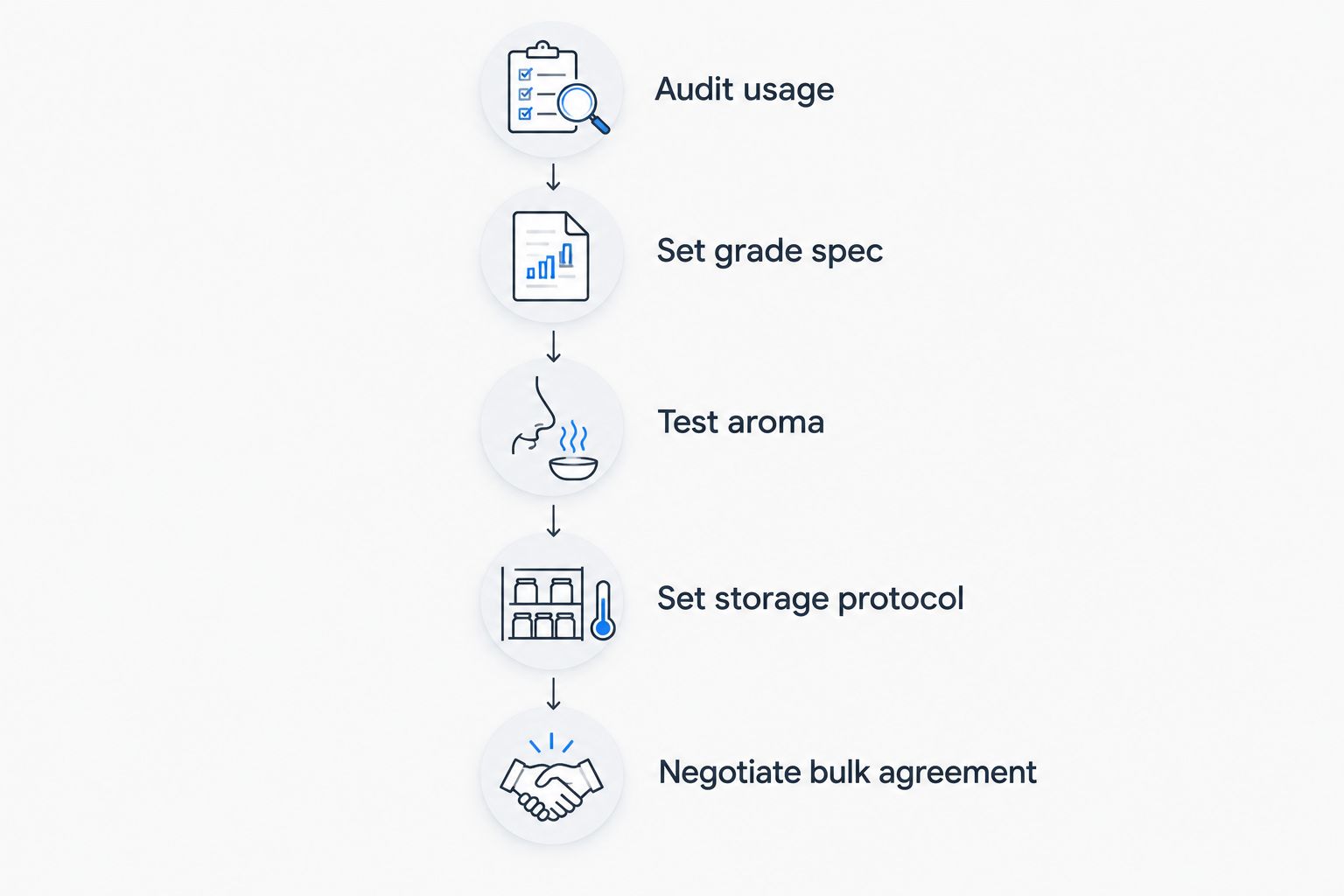
Audit your current spice consumption before you change anything
Before switching suppliers or grades, know what you're actually using per dish, per outlet, per month. Most kitchens estimate this from memory and get it wrong by a wide margin.
- List every dish that uses cardamom, pepper or turmeric as a primary flavor note, not a background trace
- Weigh out spice used per batch for your top 5 highest-volume dishes
- Separate whole-spice usage (biryani, chai) from ground-spice usage (curry bases, marinades)
- Track which outlets or dark kitchens report inconsistent taste feedback
- Note current supplier, grade name (if any), and how often batches vary in color or aroma
Standardize the grade specification, not just the supplier
Most kitchens negotiate on price and brand name and never specify grade in the purchase order. That's backwards — grade determines the aroma and oil content that survives high-heat batch cooking, and it's the one variable you can actually write into a contract.
- Specify pod size for green cardamom (8mm+ bold vs 7mm) rather than just "premium" or "grade A"
- Ask whether pepper is whole Malabar black pepper or a blend, since blended lots vary batch to batch
- Confirm turmeric is single-origin and check color consistency across bags, not just one sample
- Request the harvest or packing date, not just a manufacturing date on the outer carton
- Put the grade name in writing on the purchase order, not just verbally agreed with the supplier
The difference between grades isn't cosmetic — a full breakdown of pod sizing sits in the guide on 8 mm vs 7 mm cardamom, which is worth reading before your next bulk order goes out.
Test aroma and freshness before switching suppliers
A sample that smells fine in a small pouch can perform differently once it's stored in a commercial kitchen for three weeks next to a fryer. Run a real test before committing volume.
- Order a trial batch at the volume you'd actually cook with, not a tasting-size sample
- Crush a few pods or peppercorns between fingers and compare aroma intensity against your current stock
- Cook one full production batch with the new spice and one with the old, side by side
- Store the trial batch in your actual kitchen conditions for two weeks before final approval
- Get feedback from the line cook actually plating the dish, not just the kitchen manager

Set a storage and reorder protocol for bulk stock
Bulk spice bought cheap and stored badly loses aroma faster than it's used, which defeats the point of buying single-origin stock in the first place. Heat, light and humidity near a tandoor or fryer line are the enemy.
- Store whole cardamom and pepper in airtight containers away from direct heat sources
- Keep ground turmeric in a cool, dark section of the dry store, not near the stove line
- Rotate stock on a first-in-first-out basis and label each bag with its arrival date
- Set a reorder trigger at a fixed stock level rather than waiting for a kitchen to run out mid-shift
- Assign one person per outlet to own the reorder decision, not the whole kitchen team
Negotiate a bulk sourcing agreement, not a one-off order
Once grade and freshness are confirmed, move from ad-hoc buying to a standing bulk arrangement. This is where cost per kilo, delivery frequency and grade consistency all get locked at once.
- Ask for a fixed grade specification across every future shipment, in writing
- Negotiate delivery frequency around your actual consumption rate, not the supplier's convenience
- Request a sample from every new batch before it's accepted into stock
- Clarify how price benchmarks are set across grades before you sign anything long-term
- Keep a paper trail of grade names and batch dates for every delivery received
A useful reference before this conversation is the guide on bulk cardamom sourcing for hotels — hotel kitchens negotiate the same grade-and-volume terms QSR chains need, just at a slightly larger scale.
Build a backup supplier before you need one
A single-source spice supply chain is a single point of failure for your entire menu. If one signature dish depends on one supplier's cardamom, a delayed shipment stalls that dish at every outlet simultaneously.
- Qualify a second supplier on the same grade specification, even if you rarely order from them
- Keep a two-to-three-week buffer stock of your highest-dependency spice
- Document the backup supplier's lead time so you know how far ahead to trigger an emergency order
- Test the backup supplier's batch at least once a quarter so it's not an unknown in a crisis
Comparing sourcing options for cloud kitchens and QSR chains
| Option | Best for | Key limitation |
|---|---|---|
| Local wholesale market | Single-outlet kitchens with low, irregular volume | Grade and origin unverified; aroma varies batch to batch |
| Branded packaged spices (Everest, MDH, Tata Sampann) | QSR chains needing pan-India availability and familiar taste | Blended sourcing makes grade consistency harder to verify at scale |
| Direct single-origin bulk supplier (Muzri) | Cloud kitchens standardizing aroma and grade across outlets | Needs forward order planning; less suited to one-off small batches |
| Import or broker bulk lots | Large chains needing very high volume fast | Origin and processing method often undisclosed, harder to audit |
Verdict: for a single-outlet cloud kitchen testing a new dish, local wholesale is a reasonable start — Hold on committing to volume. For a multi-outlet QSR chain that needs the same aroma at every branch, a direct single-origin bulk supplier like Muzri is the option worth locking in on grade specification — Buy once the trial batch checks out.
Common mistakes cloud kitchens and QSR chains make
- Switching suppliers mid-menu-cycle without testing aroma first — inconsistency shows up in delivery app reviews before anyone in the kitchen notices
- Buying pre-ground turmeric or pepper to save on price — ground spice loses aroma faster than whole, and the saving disappears once a batch sits unused for weeks
- No backup supplier qualified — a single-source stockout on a signature spice stalls the same dish at every outlet at once
- Storing bulk sacks near the tandoor or fryer line — heat degrades aroma before the pack is even opened
- Negotiating only on per-kilo price — ignoring pod size or grade name means paying premium price for inconsistent stock
Standardize your spice supply for 2026
Check organic, single-origin Kerala cardamom, pepper and turmeric grades before your next bulk order.
FAQ
What spices does a cloud kitchen need in bulk in 2026?
Cloud kitchens typically stock green cardamom, black pepper and turmeric in bulk as core flavor drivers for biryani, curry bases and chai. The grade matters more at this volume than at retail scale, since one inconsistent batch affects every outlet using it.
Is 8mm cardamom better than 7mm cardamom for QSR use?
8mm and larger bold cardamom generally carries stronger, more consistent aroma per pod than 7mm, which matters more in high-volume batch cooking where flavor has to survive long cook times. The full sizing breakdown is covered in the 8mm vs 7mm cardamom comparison.
How often should a cloud kitchen reorder bulk spices?
Reorder timing depends on your consumption rate and storage conditions rather than a fixed calendar date. Set a reorder trigger at a fixed stock level and keep a buffer of two to three weeks on your highest-dependency spice.
Is organic turmeric worth switching to for a QSR chain?
Organic, single-origin turmeric is worth evaluating on color consistency, aroma and absence of additives, which are the factors that show up directly in a finished dish. Verify certification documents from the supplier rather than taking the organic label on faith.
Do whole spices or ground powder work better for high-volume kitchens?
Whole spices like cardamom pods and black peppercorns hold aroma longer in bulk storage than ground powder, which loses volatile oils faster once milled. Grind or use whole spices closer to the cook time where kitchen workflow allows it.
Is single-origin Kerala spice better than a blended spice for QSR chains?
Single-origin spice is easier to trace back to a known farm and grade, which makes batch consistency easier to verify than an anonymous blend. That traceability is the main practical advantage for a chain trying to match taste across outlets.
How do I check spice grade before placing a bulk order?
Ask the supplier for the exact pod size or grade name in writing, request a sample batch, and compare aroma and color against your current stock before signing a standing order. Never rely on marketing terms like "premium" without a specific grade attached.
Can Muzri supply bulk quantities for cloud kitchens and QSR chains?
Muzri sources organic, single-origin Kerala cardamom, pepper and turmeric direct from farms, which suits kitchens standardizing grade and aroma across multiple outlets. Confirm current bulk order terms directly before committing volume.
One last thing
The grade specification you write into a purchase order in 2026 matters more than the brand name on the invoice — a chain that locks pod size and origin in writing has a paper trail to fall back on when a batch tastes off, and a chain that doesn't has nothing to point to except a guess about what changed.