Ayurvedic and wellness brands buying turmeric for capsules, oils, gummies, or skincare are sourcing a formulation input, not a kitchen spice, and the traceability bar sits far higher than it does for a home cook picking up a jar at the local store. A brand that puts its name on a finished bottle needs to know which farm district the rhizome came from, how it was dried, and whether the powder carries any additive at all.
- Turmeric for Ayurvedic brands in 2026 means single-origin, traceable rhizome, not blended commodity powder.
- Muzri sells organic, single-origin Kerala turmeric powder with no additives, sourced direct from farmers.
- Match particle size to product format: capsules, gummies and topicals each need different grinding.
- Test every new turmeric batch for adulterants before scaling a wellness formulation to full production.
- Verdict: buy on origin traceability and grade documentation first, curcumin percentage claims second.
Why this matters
Turmeric adulteration — lead chromate used to brighten color, foreign starch, cheaper root blended in — has been documented repeatedly in Indian spice market reporting, and it rarely shows up by smell or sight alone. That is why a formulator can't treat turmeric like a commodity ingredient bought on price alone the way a supermarket buyer might.
A wellness brand's finished product inherits every sourcing shortcut taken upstream, and lab testing after a batch is already blended into capsules or cream costs far more than sourcing correctly at the start. Buyers scrutinizing labels more closely in 2026 also expect origin and testing detail, not just a "100% natural" claim printed on the box.
Organic, single-origin Kerala turmeric powder from a supplier like Muzri gives a formulator a documented starting point rather than an anonymous blend — and that documentation matters more than any single marketing claim on its own.
Verify single-origin traceability before you sign a supplier
Ask the supplier to name the district, not just the state. "Kerala turmeric" and an anonymous bag labeled "Indian turmeric powder" are not interchangeable — one points to a specific farm and harvest, the other tells you nothing.
- Ask for the specific growing district and harvest season
- Request a sample batch with a traceable lot number
- Confirm whether the powder is single-origin or a blend of multiple regions
- Check if the supplier deals directly with farmers or through several middlemen
- Get all of this in writing before the first bulk purchase order
Check curcumin-supportive processing, not just curcumin claims
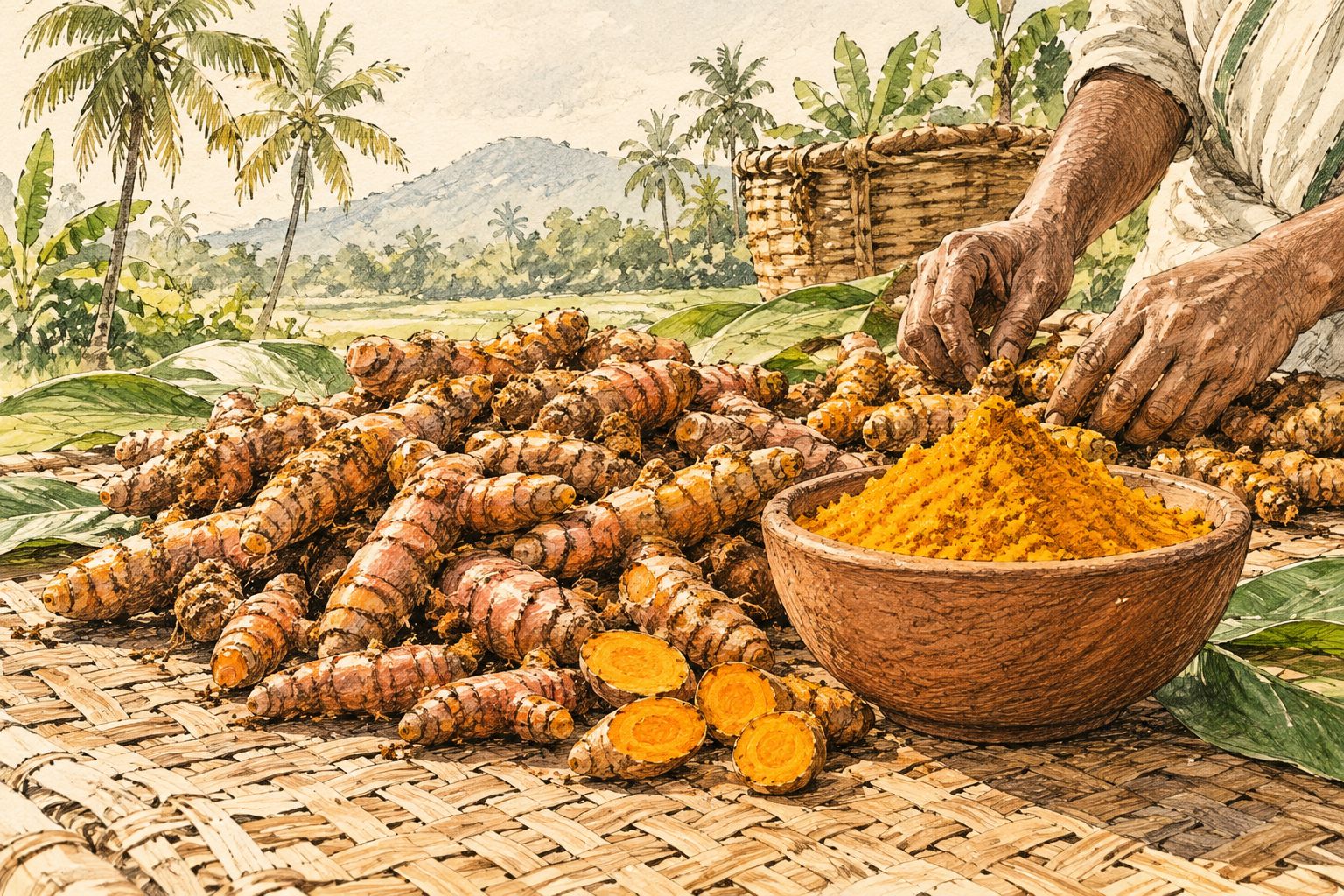
Curcumin content in turmeric varies by variety, soil, and drying method, and Alleppee-grown turmeric from Kerala is recognized in the spice trade for higher curcumin levels than many commodity-grade Indian turmerics. Processing matters as much as variety: rhizomes boiled, sun-dried and polished correctly hold onto more color and aromatic oil than rhizomes rushed through mechanical drying.
- Ask whether rhizomes are sun-dried or machine-dried
- Ask if the turmeric is polished and how many passes it went through
- Request the harvest-to-powder timeline
- Avoid any supplier who can't describe their drying method at all
Request organic certification documents, not just the organic label
"Organic" printed on a label means nothing without paperwork behind it, and the same question of whether organic certification is worth paying for applies to turmeric exactly as it does to cardamom. Muzri's turmeric, like its cardamom and Malabar pepper, ships as organic, single-origin Kerala stock with a paper trail back to the farm, and any Ayurvedic or wellness brand formulating a finished product should expect the same from any supplier it works with.
- Request the certifying body's name and certificate number
- Ask for the certificate's expiry and renewal date
- Cross-check an unfamiliar certificate number with the certifying body directly
- Confirm whether "organic" covers the entire batch or only part of it
Match grade and particle size to your product format
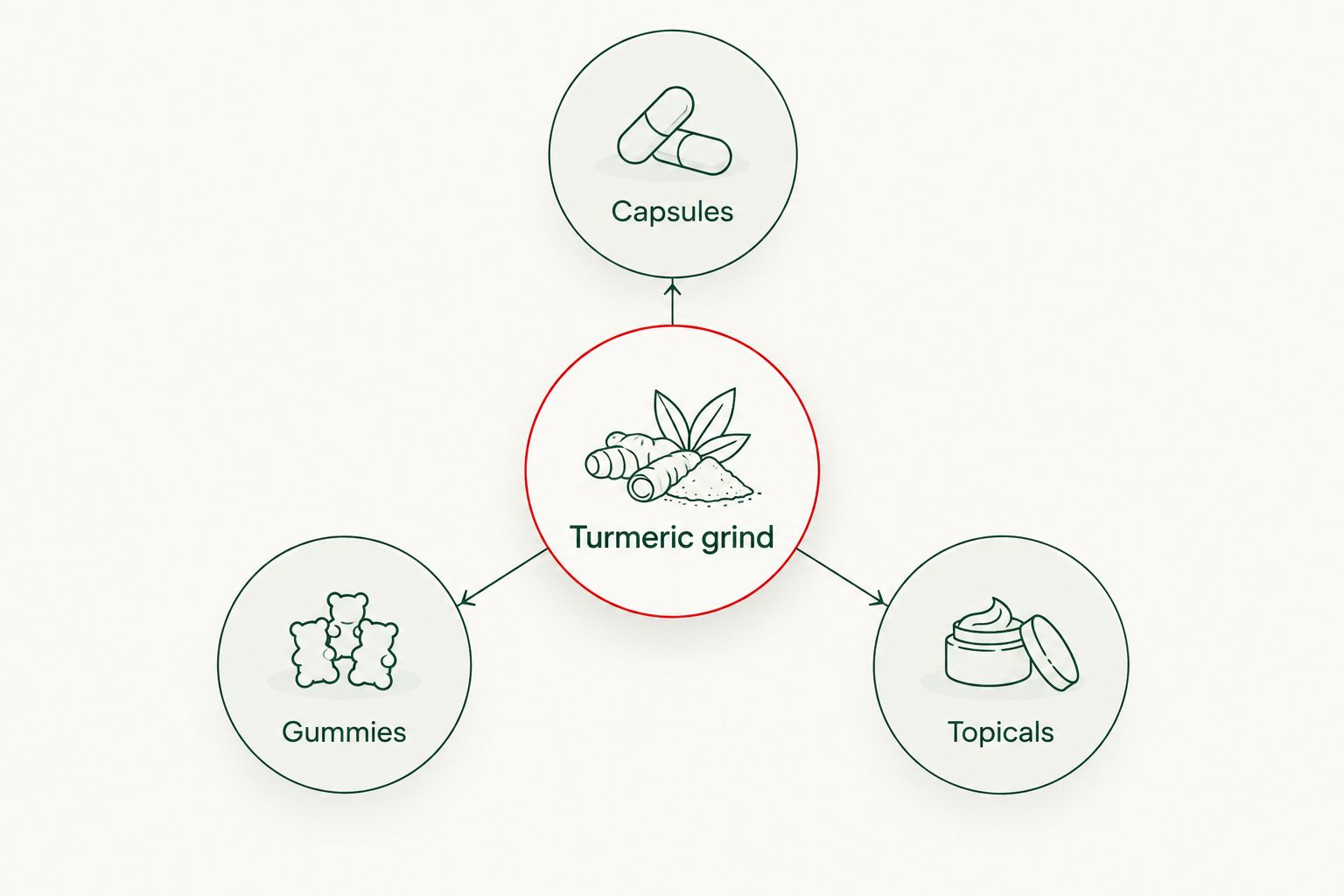
A capsule blend, a gummy base, and a topical cream each need turmeric ground differently. Coarse powder clogs capsule-filling machines built for a fine mesh; a mesh too fine can clump inside a gummy syrup base instead of dispersing evenly.
- Specify mesh size — fine, standard, or coarse — in the purchase order
- Ask for a small test batch before committing to full production mesh
- Confirm particle size stays consistent across bulk lots, not just the sample
- Match mesh size to your own equipment tolerances, not the other way round
Test for adulterants and heavy metals before the first bulk order
Lead chromate adulteration to brighten turmeric's color has turned up repeatedly in Indian spice market checks, and it doesn't announce itself by smell or appearance. Testing a sample lot before scaling an order costs a fraction of what a product recall does.
- Send a sample to an independent lab, not the supplier's in-house lab
- Test specifically for lead and other heavy metals, not only microbial counts
- Retest with every new harvest season, not just the first order
- Keep test certificates on file as part of your own product documentation
Negotiate bulk terms once volume is proven
Origin-specific turmeric costs more than blended commodity powder for the same reason Idukki-grown cardamom commands a premium over mixed-region cardamom: a known farm district and a smaller, controlled harvest carry a cost that anonymous blending never does. Bulk pricing conversations go better once a brand has proven consistent order volume rather than a single trial batch.
- Start with a smaller trial order before committing to annual volume
- Ask about minimum order quantities before negotiating rate
- Clarify whether bulk pricing includes testing and documentation costs
- Confirm lead time for repeat orders during peak harvest versus off-season
Build in shelf-life and storage checks for finished-goods labeling
Ground turmeric loses aromatic oil and color intensity faster than the whole rhizome — the same freshness drop-off seen in ground cardamom compared with whole pods. That is why the grind date matters more than the harvest date when you're setting a best-by claim.
- Store finished powder in airtight, opaque containers away from heat
- Label finished goods with a best-by date based on grind date, not harvest date
- Test aroma and color at set intervals if shelf-stability claims appear on your label
- Rotate stock so older ground lots get used before newer ones
Comparing turmeric sourcing options for formulators
| Option | Best for | Key limitation |
|---|---|---|
| Muzri Kerala turmeric powder (single-origin, organic) | Small-batch Ayurvedic and wellness brands wanting traceability | Smaller lot sizes than mass commodity suppliers |
| Blended commodity turmeric powder | High-volume, low-cost SKUs where origin isn't the selling point | Opaque origin, higher adulteration risk |
| Curcumin extract or isolate | Capsule and tablet brands standardizing on a curcumin percentage | Loses whole-rhizome aroma and other compounds |
| Direct farmer or FPO raw rhizome | Brands with in-house drying and milling capacity | Requires processing infrastructure the brand must own |
“Buy single-origin Kerala turmeric for traceable, small-batch formulation runs, and reach for curcumin isolate only when your product genuinely needs a standardized percentage on the label.”
That verdict holds whether the brand is formulating its first capsule run or its fifth reorder in 2026 — the choice comes down to whether traceability or a fixed curcumin number matters more for the specific product.
Source Kerala turmeric direct
Check current turmeric powder stock and place a trial order.
Common mistakes Ayurvedic and wellness brands make
- Buying on curcumin percentage alone without checking who tested it or how
- Treating "organic" as a marketing word instead of asking for the actual certificate
- Using the same grind for capsules, gummies, and topicals when each format needs a different mesh
- Skipping adulterant testing until after a customer complaint rather than before the first bulk order
- Locking into a full-year bulk contract before a trial batch has proven the supplier's consistency
Some Ayurvedic and wellness brands sourcing turmeric are also expanding into adjacent supplement categories rather than staying single-ingredient. Formulators building out targeted women's health lines alongside a turmeric capsule range face the same origin and dosage-consistency questions — ashwagandha gummies for menopause is one of the categories seeing that kind of expansion, and the sourcing discipline carries over from one ingredient to the next.
FAQ
What is the best turmeric for Ayurvedic brands in 2026?
Single-origin, organic turmeric with a documented harvest district and drying method is the best starting point for Ayurvedic and wellness formulations in 2026. Muzri's Kerala turmeric powder ships organic and single-origin with no additives, which covers the traceability question most formulators ask first.
Is organic turmeric worth the extra cost for a wellness brand?
Organic certification is worth it when the brand can point to the certificate and use it as a real label claim, not just a marketing word. It matters most for brands selling on origin and purity as part of their story.
How do I check if turmeric powder is adulterated?
Send a sample to an independent lab and test specifically for lead and other heavy metals, not just microbial counts. Adulteration like lead chromate coloring doesn't show up by smell or color alone.
Does curcumin percentage matter more than origin?
Curcumin percentage matters most for capsule and tablet brands that need a standardized number on the label. For most other formats, origin and processing traceability matter more than a single percentage figure.
What particle size works best for turmeric capsules?
Capsule-filling machines are usually built for a fine, consistent mesh, so request a test batch at that mesh before committing to a full production run. Coarse powder tends to clog fine-tolerance filling equipment.
How long does ground turmeric stay fresh once opened?
Ground turmeric loses aromatic oil and color intensity faster than whole rhizome, so base shelf-life claims on the grind date rather than the harvest date. Store it airtight, away from heat and light.
Can I buy small trial batches of Kerala turmeric before bulk ordering?
Yes — starting with a smaller trial order before committing to annual volume is standard practice for wellness brands testing a new supplier. It also gives you a real batch to lab-test before scaling.
Is Kerala turmeric different from other regional Indian turmeric?
Kerala turmeric, including Alleppee-grown varieties, is recognized in the spice trade for higher curcumin levels than many commodity-grade Indian turmerics, though exact curcumin content still depends on the specific harvest and processing.
One last thing
Ground turmeric's color and aroma fade well before most shelf-life labels admit it — the same pattern seen across ground spices generally. A wellness brand ordering smaller, more frequent lots of turmeric instead of one large annual batch keeps the raw material closer to its freshest state through the entire production run, which matters more for a finished capsule or cream than any single curcumin percentage claim on the spec sheet.