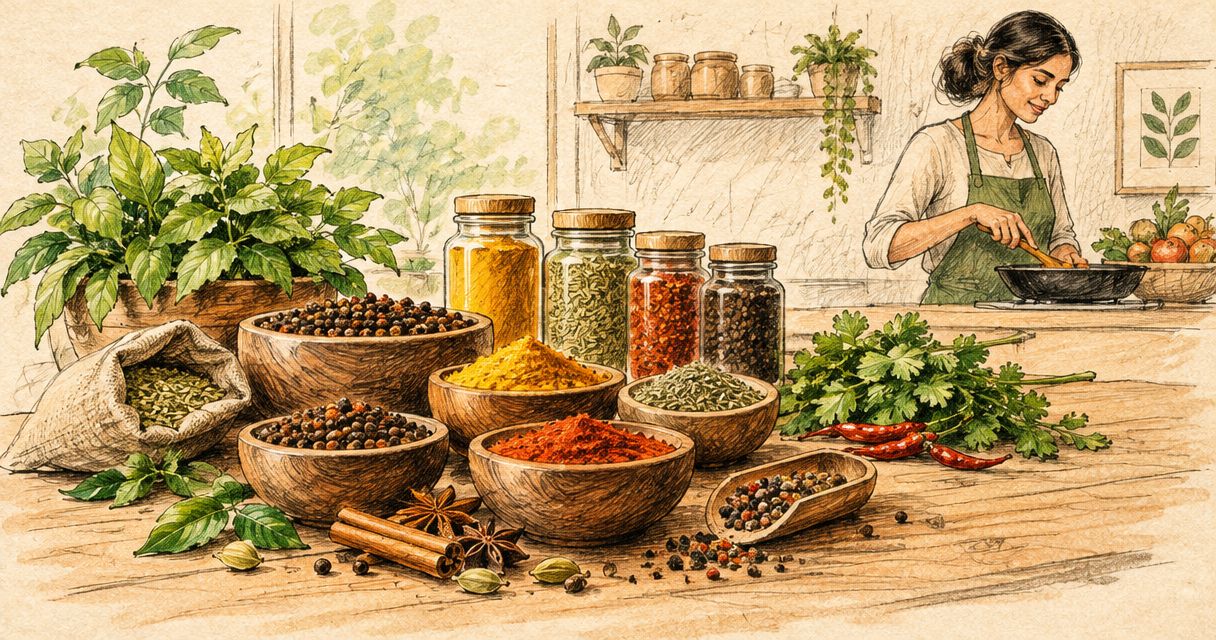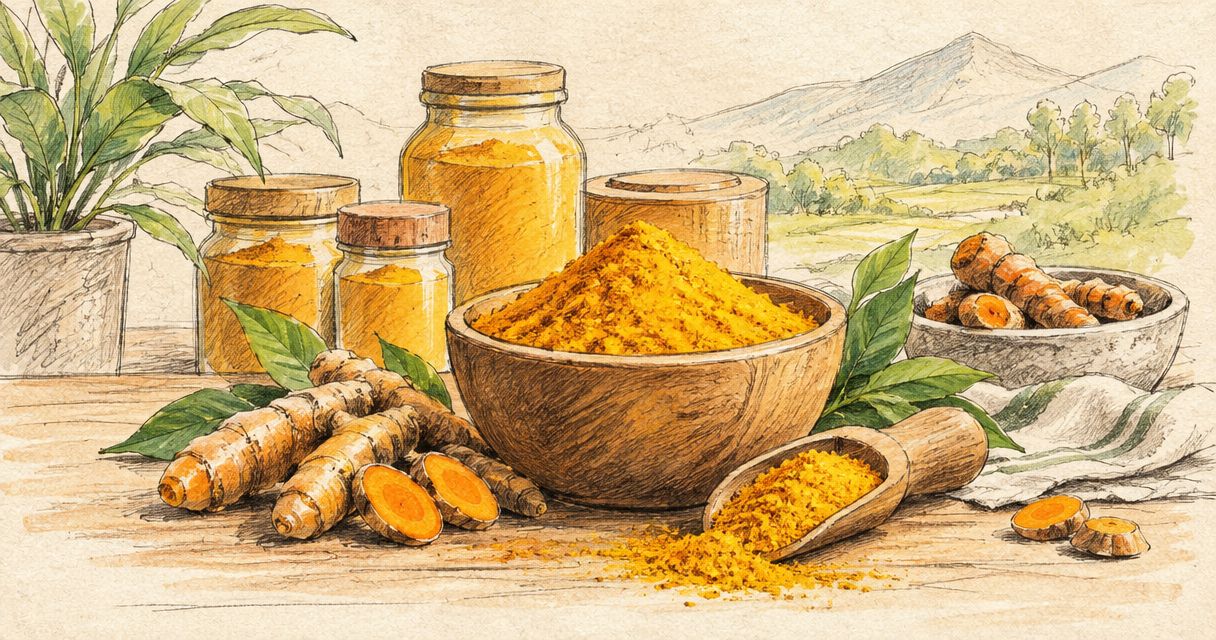

Best overall: Idukki Green Cardamom (8 mm+, organic) from Muzri. Best for tandoori and pepper-forward mains: Malabar Black Pepper. Best budget-friendly staple: Turmeric Powder. Best for biryani and masala blends: Black Cardamom. All four are single-origin Kerala spices sold organic and preservative-free, and each earns its slot for a different section of a café or hotel kitchen.
- Idukki Green Cardamom at 8 mm+ is the top pick among organic spices for cafes and hotels in 2026 for chai counters and dessert plating.
- Malabar Black Pepper wins for tandoori marinades and pepper-forward mains where heat and aroma both matter.
- Turmeric Powder is the everyday staple for lattes and gravies and the most budget-friendly of the four.
- Black Cardamom carries biryani and garam masala work that green cardamom cannot handle alone.
- Grade, origin and processing method matter more than the word 'organic' printed on a label.
Why this matters
A café or hotel kitchen buys spice by the kilo, not the sachet, so a bad batch shows up on every plate for weeks. Vague labels like "premium" or "export quality" tell you nothing about pod size, moisture content, or whether the spice was sun-dried or heat-dried. Before you sign a bulk order, check what 8 mm cardamom actually means against 7 mm — pod size drives both aroma and how far a kilo stretches across a menu.
Most kitchens run four spices hard: green cardamom, black pepper, turmeric, and black cardamom. Each one earns its place in a different dish, not the same dish twice, so ranking them against each other misses the point. The list below ranks them by kitchen use case instead.
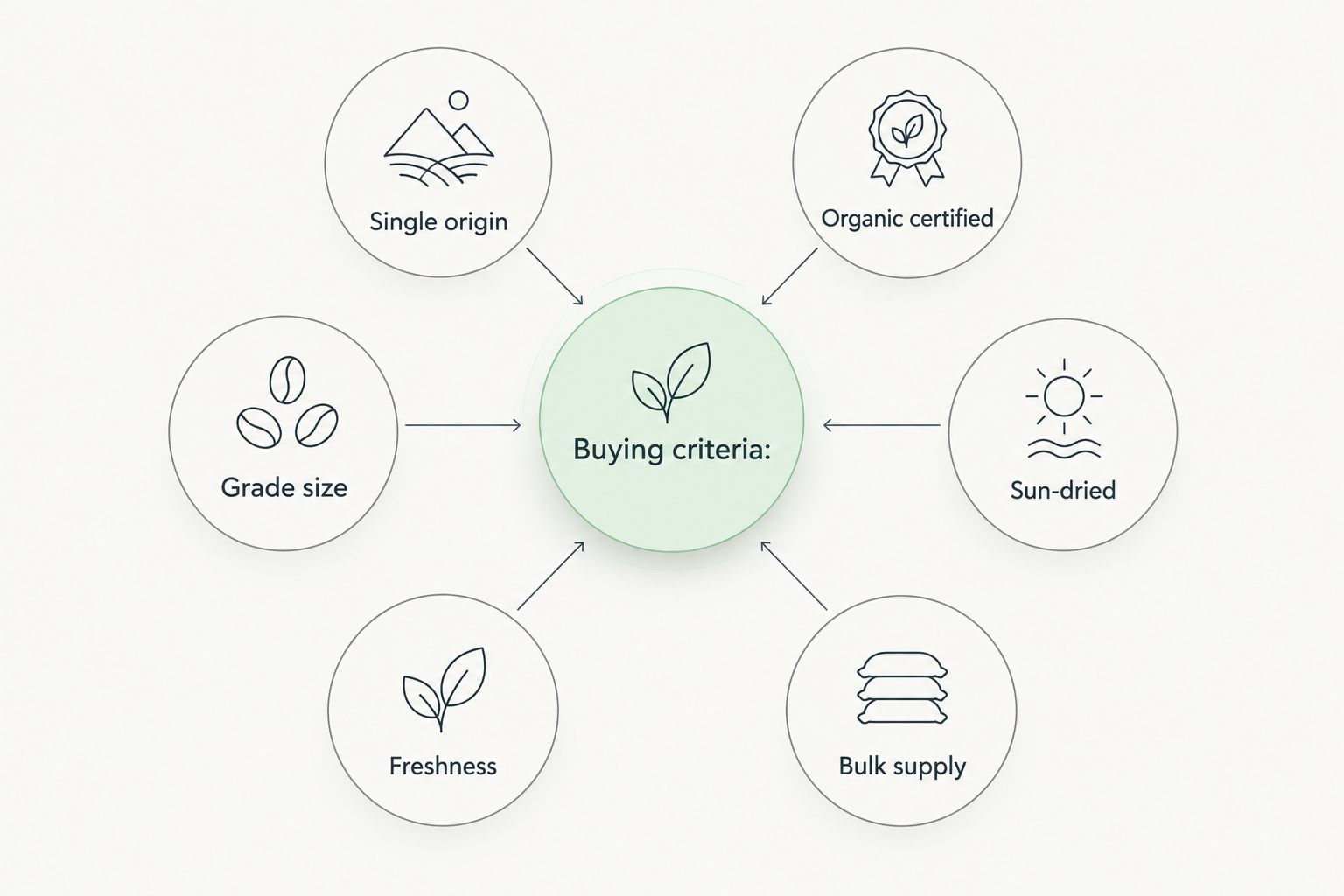
What makes the best organic spices for cafés and hotels
- Verified single-origin sourcing — one named Kerala region, not a blend of unknown lots
- Organic certification with a traceable farm relationship — not just a green label
- Grade and size stated upfront — 8 mm+, bold, or AGEB, not "large" left undefined
- Processing method disclosed — sun-dried, hand-picked, no additives or preservatives
- Freshness at shipping, not warehouse age — aroma fades fast once a pod or pepper corn is cracked
- Bulk-order consistency — the same grade delivered in month six as in month one
At a glance
| Spice | Best For | Standout Feature | Key Limitation |
|---|---|---|---|
| Green Cardamom (Idukki, 8 mm+) | Chai counters and dessert plating | Large pod size, high aroma retention | Highest per-kilo cost of the four |
| Malabar Black Pepper | Tandoori marinades and pepper-forward mains | Sharp, resinous heat that survives grilling | Aroma drops fast once ground, so grind in small batches |
| Turmeric Powder | Turmeric lattes and daily gravies | Consistent colour and mild bitterness at scale | Easy to confuse with dyed or bulked stock if unverified |
| Black Cardamom | Biryani and garam masala blends | Smoky depth green cardamom can't replicate | Overpowers delicate dishes if over-dosed |
1. Green Cardamom (Idukki, 8 mm+): best organic spice for chai and dessert menus
Idukki-grown green cardamom is what most Indian chai counters mean when they say "good elaichi." Muzri's 8 mm+ pods come hand-picked and sun-dried, with no added colour or preservative, and the pod size correlates directly with the volatile oil content that gives chai its aroma. For dessert kitchens plating kheer or phirni, the larger pod also grinds into a finer, more even powder.

Green Cardamom pros:
- Large 8 mm+ pods hold aroma longer once opened
- Organic, single-origin Idukki sourcing with no additive processing
- Grinds finer, which matters for dessert and beverage counters
Green Cardamom cons:
- Costs more per kilo than mixed-grade or 7 mm stock
- Aroma still fades within weeks once the pod is cracked open, so buy to match monthly usage, not a full quarter
Best for: chai stations, dessert kitchens, cafés running a signature cardamom drink. Verdict: Buy for any kitchen where cardamom is a visible flavour, not a background note.
2. Malabar Black Pepper: best organic spice for tandoori and pepper-forward mains
Malabar Black Pepper carries a sharper, more resinous heat than the flatter pepper found in generic blends, and it holds that character through a tandoor's high heat better than pre-ground stock. Hotels running a grill or tandoor station typically buy this whole and grind in small batches, since ground pepper loses pungency within days.
Malabar Black Pepper pros:
- Sharp, layered heat that survives high-heat cooking
- Sold whole, so kitchens control grind size and freshness
- Single-origin Kerala sourcing with no bulking agents
Malabar Black Pepper cons:
- Ground pepper needs weekly restocking to stay pungent
- Whole peppercorns need a grinder on the line, which not every kitchen has set up
Best for: tandoori and grill stations, pepper-forward continental dishes, any kitchen that grinds to order. Verdict: Buy if your line already grinds fresh; Hold if you're stuck with pre-ground stock for now and switch when you can.
3. Turmeric Powder: best organic spice for turmeric lattes and daily gravies
Turmeric is the highest-volume spice in most Indian kitchens, used in everything from base gravies to the turmeric lattes now standard on café menus. Muzri's turmeric powder is sun-dried and ground with no synthetic colour added, which matters because turmeric is one of the most commonly adulterated spices in the Indian market — dyed with metanil yellow or lead chromate to fake a deeper colour.
Turmeric Powder pros:
- Consistent colour batch to batch without added dye
- Lowest cost of the four spices per kilo, suited to daily-use volumes
- Works across gravies, lattes, and marination without overpowering
Turmeric Powder cons:
- Colour alone doesn't prove purity — check the seller's sourcing claims, not just the shade
- Mild flavour means it can't carry a dish on its own
Best for: high-volume kitchens running turmeric through gravies and beverages daily. Verdict: Buy, and treat it as the staple you reorder most often, not the spice you upgrade last.
4. Black Cardamom: best organic spice for biryani and garam masala blends
Black cardamom brings a smoky, camphor-like depth that green cardamom cannot replicate, which is why biryani and garam masala recipes call for both, not one or the other. It's used in far smaller quantities per dish, so a kitchen's monthly volume is usually a fraction of what it buys in green cardamom or pepper.
Black Cardamom pros:
- Smoky depth that's essential to biryani and slow-cooked masalas
- Used sparingly, so a kilo lasts longer than the volume figure suggests
- Single-origin Kerala sourcing, organic, no additives
Black Cardamom cons:
- Easy to over-dose in delicate dishes, where it turns bitter fast
- Not a substitute for green cardamom in chai or desserts — the flavour profile is entirely different
Best for: biryani kitchens and any menu built around a house garam masala blend. Verdict: Buy as a supporting spice; don't treat it as a green cardamom swap.
How we ranked these organic spices for cafés and hotels
Each spice was judged against the six criteria above: single-origin traceability, organic certification, disclosed grade and size, processing method, freshness at shipping, and bulk-order consistency. None of the four wins on every criterion — the ranking reflects which use case each spice serves best, not a single winner across the board. A kitchen buying green cardamom for cafés has different volume and grind needs than a hotel sourcing green cardamom for banquet kitchens, and the buying guides for each spend more time on those specifics than a ranked list can.
“If the cardamom pods aren't at least 8 mm, they won't deliver the aroma a chai blend is built around.”
Get a bulk spice quote
Compare grades and place a café or hotel order for 2026 stock.
Which organic spice should you stock first?
If a kitchen can only fix one spice line in 2026, start with green cardamom — it's the most visible flavour on a menu and the most tolerant of a small price bump for real Idukki-grade quality. Pepper and turmeric follow close behind because of the volume they move; black cardamom stays a supporting player bought in smaller lots. Muzri's organic spices for cafés and hotels cover all four, sourced single-origin from Kerala with grade and processing disclosed upfront rather than hidden behind a generic "premium" label.
FAQ
What are the best organic spices for cafés and hotels in 2026?
Idukki Green Cardamom (8 mm+) leads for chai and desserts, Malabar Black Pepper for tandoori and grilled mains, Turmeric Powder as the daily staple, and Black Cardamom for biryani and garam masala. Each covers a different section of the kitchen rather than competing for the same dish.
Is organic cardamom worth the extra cost for a café?
Organic, single-origin cardamom generally holds aroma longer and carries no additive residue, which matters when the spice is a visible flavour in a signature drink or dessert. Whether the price premium makes sense depends on order volume and menu positioning.
How much cardamom does a café need per month?
Order volume depends on how many cardamom-forward drinks and desserts a menu runs daily, and buying to match roughly a month of use keeps the pod fresh rather than sitting cracked open in storage.
Is 8 mm cardamom better than 7 mm for hotel kitchens?
Larger 8 mm+ pods generally hold more volatile oil, which translates to stronger aroma per pod, making them better suited to visible-flavour dishes than smaller mixed-grade stock.
Do cardamom pods stay fresher than ground cardamom powder?
Whole pods hold their aroma far longer than pre-ground powder, since grinding exposes the volatile oils to air. Kitchens that grind to order get more consistent flavour than those buying pre-ground stock.
How can a hotel kitchen check if turmeric powder is adulterated?
Turmeric is commonly bulked with starch or dyed with synthetic colour to deepen its shade, so colour alone isn't proof of purity. Sourcing from a seller who discloses origin and processing method reduces that risk more than a visual check can.
Can black cardamom replace green cardamom in a recipe?
No, the two have entirely different flavour profiles: green cardamom is floral and sweet, black cardamom is smoky and resinous. Recipes that call for one specifically won't work with the substitution.
Do café and hotel spice orders need different sourcing than home cooking?
Bulk kitchen orders need grade consistency across every delivery, since a menu built around one flavour profile breaks if the grade shifts month to month, which matters less for a home cook buying occasionally.
One last thing
Grade and pod size tell you more about a spice's kitchen performance than the word "organic" ever will on its own — a certified-organic 7 mm cardamom pod still underperforms a well-processed 8 mm+ pod in a chai counter's daily grind. Ask any supplier for the grade in writing before the bulk order goes out, not after the first batch reaches the pass line.