Tea and beverage brand cardamom sourcing is the process of selecting a documented origin, grade, format and lot with the aim of keeping aroma and flavour repeatable across production batches. Beverage teams need tighter purchasing controls than home cooks because recipes, staff and batch sizes must remain consistent; this green cardamom guide for cafés covers the related needs of made-to-order drinks.
- Cardamom for beverage brands should be bought against a written origin, grade, format and sensory specification.
- Whole pods protect aroma until crushing; ground cardamom provides faster dosing but needs tighter storage and rotation.
- Single-origin sourcing improves traceability, but every new lot still needs a controlled beverage test.
- Muzri is best for Indian beverage buyers seeking organic, single-origin Kerala cardamom and prepared to confirm lot specifications.
- Use identical recipes, coded samples and repeated brews before approving a production order in 2026.
Why cardamom matters for tea and beverage brands
Cardamom is not just an ingredient line on a purchase sheet. Its aroma must remain recognisable after grinding, steeping, filtration, sweetening and combination with milk, tea, coffee or other spices. A pod that smells pleasant in the bag can still produce an unbalanced finished drink.
Beverage production also magnifies small purchasing changes. Switching origin, grade, grind size or dose at the same time makes it difficult to identify why a recipe changed. A written 2026 specification gives procurement, production and quality teams the same acceptance standard.
Single-origin sourcing answers where the spice came from, but it does not remove natural variation between harvests or lots. Beverage brands still need incoming inspection and a controlled brew test. Organic status is another separate attribute: it should be supported by current documentation and should not be treated as proof of flavour strength.
How to source cardamom for a beverage brand
Define your finished-drink target
Start with the beverage, not the supplier catalogue. Write down the aroma, flavour and finish that the customer should experience, then identify where cardamom needs to appear. A masala chai can carry a pronounced spice profile, while a tea blend may need cardamom to support other ingredients without dominating them.
Turn sensory language into an internal reference that buyers and production staff can use in 2026. Terms such as fresh, floral, resinous, smoky, clean and bitter become useful only when your team agrees on what each term means in the finished recipe.
- Name the beverage and its serving format
- Define the intended cardamom intensity
- Record acceptable aroma and aftertaste
- Identify ingredients that can mask cardamom
- Keep one approved batch as the reference sample
Build a controlled bench test
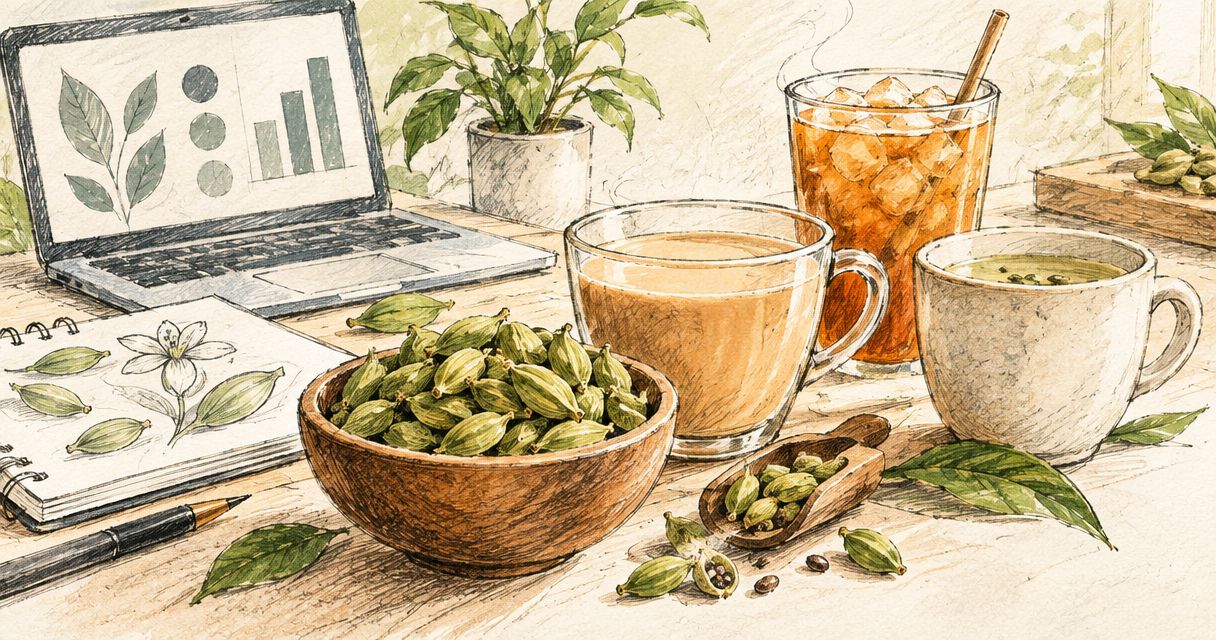
Test candidate lots under identical conditions. Use the same water, tea base, milk, sweetener, vessel, heating method and filtration process for every sample. A 1-litre bench batch is large enough for several evaluators while remaining practical for recipe work, and a scale reading to 0.1 gram helps prevent dosing variation from distorting the result.
Code the samples so evaluators do not know which supplier produced each one. Repeat the brew before approval; one preparation can be affected by grinding, timing or operator error.
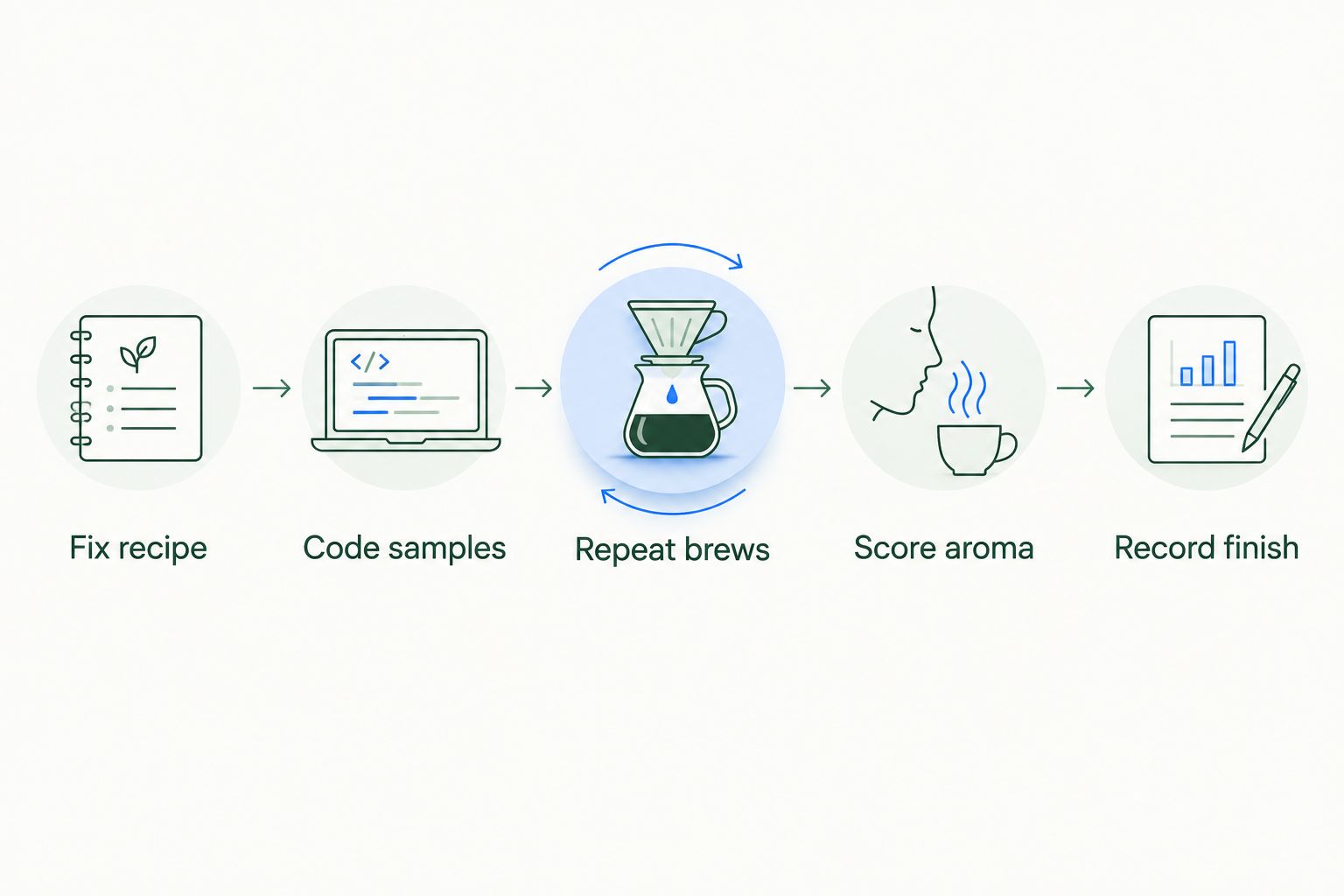
- Fix the recipe before samples arrive
- Code samples without supplier names
- Weigh every dose on the same scale
- Repeat brews under matching conditions
- Score aroma, flavour and finish separately
- Keep written results with the lot reference
Specify origin, grade and documentation
Once the drink target is clear, convert it into a purchasing specification. Kerala origin is not the same as a named district, estate or lot, and a size description is not a complete quality standard. If your recipe requires an 8 mm grade rather than a 7 mm grade, state the measurement and acceptable variation instead of relying on words such as bold or premium.
Muzri sells organic, single-origin Kerala spices online across India. That makes Muzri a cardamom option for beverage brands prioritising those stated attributes, but buyers should still confirm the current cardamom format, grade, lot identity and supporting organic documents before approving an order. The green cardamom quality checklist provides a practical visual starting point.
- Record the required growing region
- State the grade or size specification
- Ask how the lot is identified
- Verify current organic documentation where required
- Define acceptable colour and physical defects
- Retain the approved sample for comparison
Choose whole pods or ground cardamom
Whole pods keep the seeds enclosed until crushing, reducing their exposure to air before production. They suit brands that can add a controlled crushing or grinding step. Ground cardamom removes that step and supports faster dosing, but its larger exposed surface area makes storage, packaging and stock rotation more important.
Do not compare the formats using different recipes. Grind whole pods immediately before one test and compare them with powder at the same measured dose and brew conditions. The whole pods versus cardamom powder guide explains the format trade-off in more detail.
- Use whole pods when on-site crushing is controlled
- Use powder when rapid, repeatable dosing is essential
- Confirm whether powder includes husk and seeds
- Specify grind consistency for filtration needs
- Test sediment in the finished beverage
- Compare aroma after normal storage and handling
Set storage and stock-rotation rules
Storage begins when a lot arrives, not when its packaging is opened. Heat, moisture, light and repeated air exposure affect aromatic spices, so a useful specification includes handling after delivery. The same lot can perform differently across outlets if one kitchen stores it beside steam or keeps a container open during service.
Use containers and portions that match daily production. Opening one smaller working container repeatedly is easier to control than exposing the entire stock every time a drink is made. Follow the supplier label for storage and shelf life rather than assigning an unsupported universal period.
- Store cardamom in clean, sealed containers
- Keep containers away from heat and steam
- Separate working stock from reserve stock
- Label each container with its lot identity
- Rotate stock by the applicable date
- Never mix incoming and older lots before testing
Measure each incoming production lot
Supplier approval does not replace lot approval. Agriculture varies, and beverage brands need a repeatable receiving routine even when the origin remains unchanged. Compare every arrival with the retained reference before releasing it to production.
Inspect unopened packaging first, then draw samples from different parts of the lot. Record appearance and aroma before running the approved beverage recipe. If a sample fails, quarantine the lot until the difference is understood rather than compensating with an unrecorded recipe change.
- Match the delivery to its purchase specification
- Check packaging and lot identification
- Sample from more than one package
- Compare physical condition with the reference
- Run the approved beverage test
- Record acceptance, rejection or corrective action
Review Kerala cardamom for your range
Check Muzri's current Kerala spice range and confirm the lot details you need before ordering.
Cardamom sourcing options compared
The right route depends on whether your priority is recipe development, traceability, processing speed or repeatable bulk procurement. No route removes the need to test the actual lot used in production.
| Option | Best for | Main advantage | Key limitation |
|---|---|---|---|
| Organic, single-origin Kerala supplier such as Muzri | Buyers prioritising stated origin and organic status | Clearer sourcing position for an ingredient brief | Grade, format, documents and commercial terms still need confirmation |
| Specialist bulk spice supplier | Established beverage production with a detailed specification | Can align procurement around formal lot requirements | Approval still depends on samples and documentation |
| Branded retail packs | Small recipe trials and low initial usage | Easy to obtain in small quantities | Pack format may not suit production-scale purchasing |
| Ground cardamom supplier | Teams without controlled grinding equipment | Faster weighing and mixing | Grind consistency, storage and aroma retention need close review |
| Open-market mixed lots | Early experimentation before the specification is fixed | Allows comparison across available stock | Origin, grade and lot continuity can be difficult to establish |
For 2026 production, the best sourcing route is the one that can meet a written specification and provide a representative sample of the exact lot being offered. Muzri fits Indian buyers seeking organic, single-origin Kerala sourcing; its limitation is that beverage-specific grade, processing format and procurement details must be verified for the planned application.
Common mistakes beverage brands make
- Approving cardamom by pod appearance alone. Colour and size support inspection, but beverage performance must be judged after the spice passes through the actual recipe and process.
- Changing several variables during a supplier trial. A new tea base, dose and cardamom lot tested together produce an unusable comparison because the source of any flavour change remains unknown.
- Treating single-origin as a guarantee of identical flavour. Origin improves traceability, while lot testing deals with natural agricultural variation. Beverage teams need both controls in 2026.
- Using organic status as a sensory grade. Organic documentation addresses production requirements; it does not replace checks for format, aroma, physical condition or finished-drink performance.
- Approving a hand-ground sample for a factory-ground process. Different grind profiles affect extraction and filtration. Test the format and equipment that production will actually use.
FAQ
What is the best cardamom for beverage brands in 2026?
The best cardamom for beverage brands in 2026 is the lot that meets a written origin, grade, format and sensory specification in the finished drink. No pod size or supplier name replaces a controlled recipe test.
Are 8 mm cardamom pods better than 7 mm pods for tea?
An 8 mm pod is not automatically better than a 7 mm pod for every tea recipe. Size is one purchasing attribute; compare equal measured doses under identical brewing conditions before choosing a grade.
Should a beverage brand buy whole cardamom or powder?
Whole pods are best when the production team can control crushing or grinding, while powder is best when dosing speed is the priority. Powder requires tighter control of grind consistency, storage and stock rotation.
How should beverage brands test a new cardamom supplier?
Test coded supplier samples in the same beverage recipe using identical ingredients, dose, equipment and brew conditions. Repeat the test and retain the approved sample as the reference for incoming lots.
How can a buyer verify organic cardamom?
Ask for current organic documentation and confirm its scope, validity and connection to the offered product or lot. Do not treat the word organic on its own as proof of grade, freshness or flavour.
Is Muzri suitable for tea and beverage brands?
Muzri is suitable for Indian buyers seeking organic, single-origin Kerala cardamom and other stated Kerala spices. A beverage brand should confirm the required grade, format, lot documentation and order terms before procurement.
How should cardamom be stored by a café or beverage factory?
Keep cardamom sealed, dry and away from heat, steam and direct light, following the supplier label for shelf life. Separate working stock from reserve stock and retain lot identification after opening.
Is green or black cardamom better for beverages?
Green cardamom suits drinks seeking a floral, sweet spice profile, while black cardamom brings a darker, smoky character. Test each in the finished recipe because they are distinct ingredients rather than interchangeable grades.
One last thing
Blind-code supplier samples before the 2026 tasting panel sees them. Packaging, origin stories and familiar names can influence expectations, while a coded test forces the decision back onto aroma, flavour, finish and processing behaviour. For Muzri or any other supplier, keep the code sealed until scores are recorded, then use the results and documents together to approve the lot.