Turmeric for nutraceutical manufacturers means sourcing rhizome or powder against a defined curcumin percentage, a moisture ceiling and a traceable origin record, not against color and aroma the way a home cook would. A manufacturer buying for capsule fill or extraction needs a lot that behaves the same way batch after batch, because inconsistent curcumin yield turns into inconsistent finished-product potency. This guide walks through what to check before a purchase order goes out in 2026, and where a single-origin supplier like Muzri fits into that chain alongside larger commodity channels.
- Turmeric for nutraceutical manufacturers means buying against curcumin %, moisture limit and traceability, not color.
- FSSAI sets a minimum curcumin content of 2.5% for turmeric powder in India in 2026 — extraction buyers usually want more.
- Raw turmeric rhizome typically carries roughly 2-5% curcumin by dry weight, so lot testing matters more than the label.
- Single-origin Kerala turmeric from Muzri gives one-farm traceability, a fit for pilot batches before a manufacturer scales to bulk mandi supply.
- Verdict: test every lot for curcumin and moisture before signing the PO — never buy on aroma alone.
Why turmeric sourcing matters for nutraceutical manufacturers
A café or home kitchen forgives a slightly weaker turmeric lot. A nutraceutical manufacturer cannot — extraction concentrates whatever is in the raw material, including contaminants, so a small variance in curcumin content or a trace of added colorant shows up amplified in the finished extract. That is the core difference driving how Muzri and other single-origin suppliers structure their sourcing conversations with manufacturers differently from retail buyers.
Most manufacturers also run multi-season supply contracts, which means the sourcing decision has to account for Kerala's harvest window and lot-to-lot consistency, not just one good sample. The specification you write into the purchase order matters more than the supplier's story.
Define your curcumin specification before you call a supplier
Write the number down before the first sourcing call, not after tasting a sample.
- Set a curcumin floor: FSSAI's standard for turmeric powder requires a minimum of 2.5% curcumin content in 2026, and extraction-grade buyers usually ask for more
- Ask which assay method the supplier uses — HPLC gives a more precise reading than a basic colorimetric test
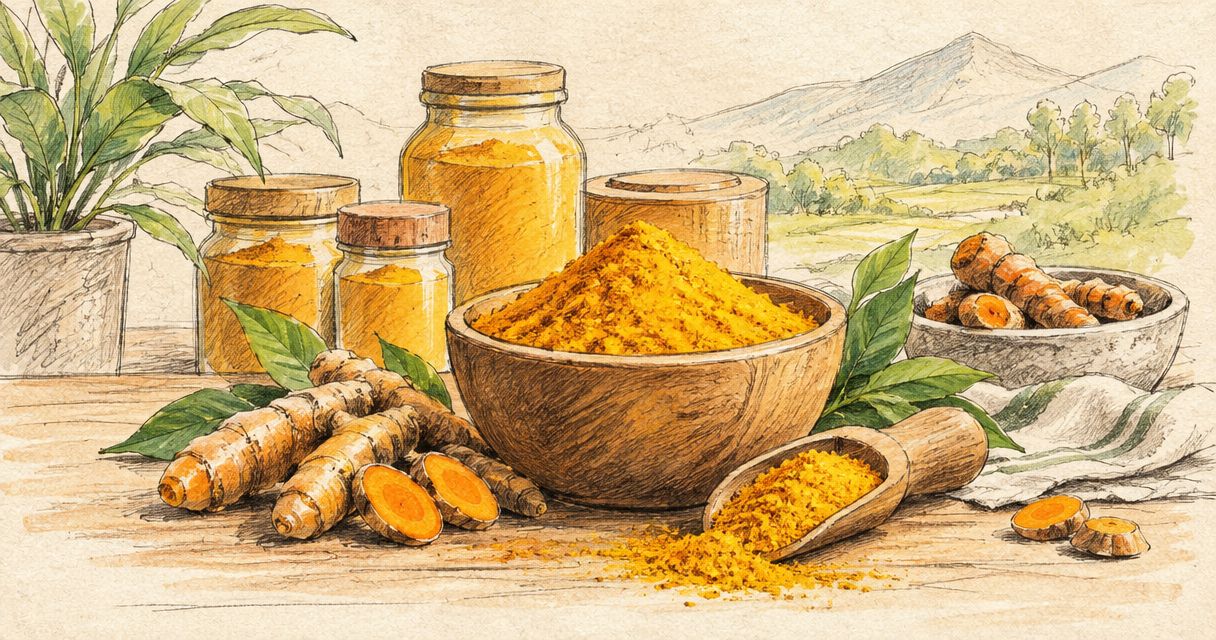
- Decide if you're buying raw rhizome, dried turmeric finger, or ground powder, since each behaves differently in storage
- Set a moisture ceiling — 10% moisture is the common grade-A benchmark used across the Indian spice trade
- Put the curcumin %, moisture limit and test method into the written PO, not just the phone conversation
Trace the origin before you trust the label
Commodity turmeric powder is often a blend from multiple regions and harvest years, which makes curcumin consistency harder to guarantee.
- Ask for the state and district of origin on every lot, not just "India" on the label
- Request the harvest date and a lot number tied to a specific farm or cluster
- Compare a single-origin lot against a blended commodity lot on the same curcumin test before deciding
- Confirm whether the supplier deals directly with growers or buys through multiple intermediaries
- Ask if the same farm relationship can supply consistent lots across the next few harvest cycles
Muzri's turmeric is sourced single-origin from Kerala through direct farmer relationships, which gives a manufacturer a traceable starting point for lot-level questions — useful when you're building a supplier audit trail, though it's worth confirming current lab documentation directly with the supplier before locking a contract.
Test every lot for curcumin, moisture and heavy metals
A certificate from last season tells you nothing about this season's lot.
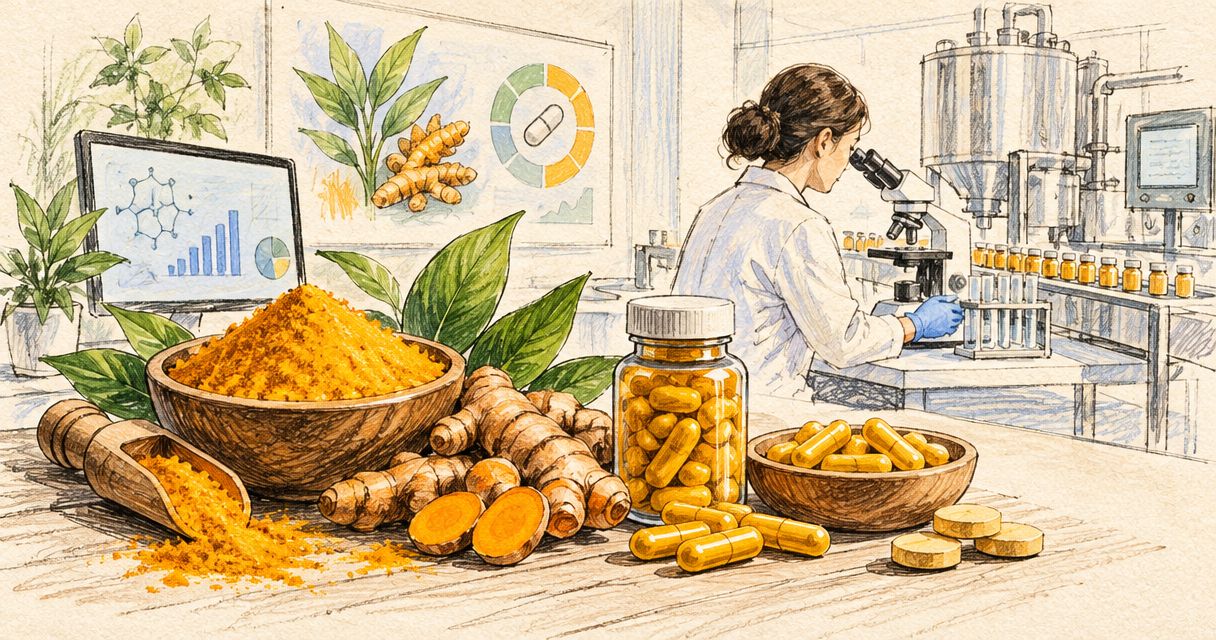
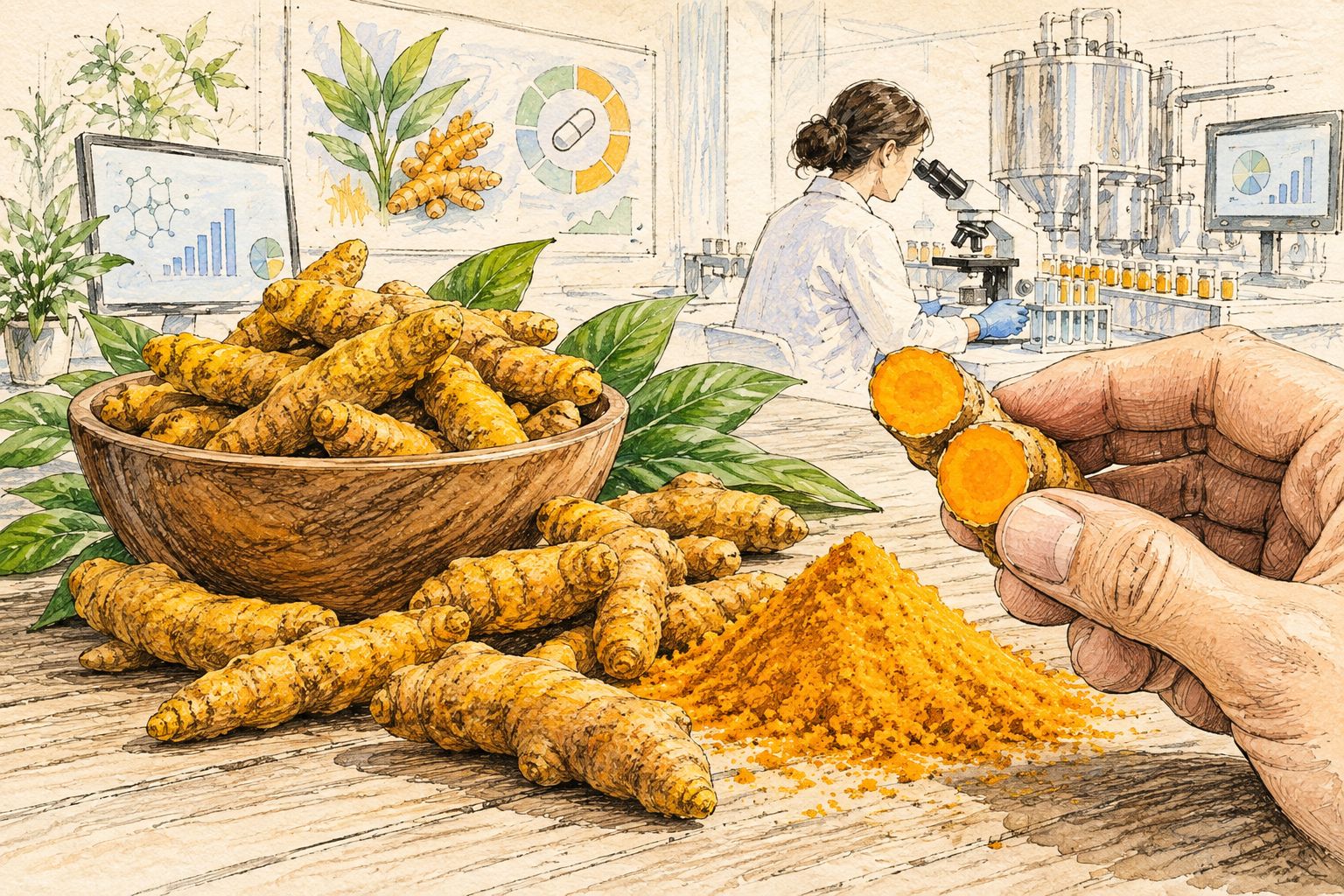
- Run a third-party lab test on curcumin content per lot, not per supplier relationship
- Check heavy metal limits — lead and cadmium readings matter more once the material goes into an extraction process
- Retain a physical sample from every accepted lot for later audit or dispute
- Reject a lot that falls below your curcumin floor even when the price looks favorable
- Ask for the certificate of analysis to arrive with the shipment, not after
Check processing method and additive-free status
Turmeric adulteration with synthetic colorants like metanil yellow or lead chromate has been a documented food-safety concern in India, so processing checks matter as much as curcumin numbers.
- Ask whether the turmeric is sun-dried or steam-cured, since curing method affects both color and curcumin retention
- Confirm no added colorants, anti-caking agents or preservatives if the material is going into an extract or capsule
- Ask for a written confirmation of preservative-free processing, not a verbal assurance
- Request a sample test specifically for common adulterants before the first bulk order
Decide between raw rhizome, dried finger and powder form
The form you buy changes how much curcumin survives storage and how the material fits your production line.
- Dried turmeric finger generally holds curcumin better over time than ground powder, since grinding exposes more surface area to oxidation
- Powder is easier to dose and blend but degrades faster once milled, so buy closer to production date
- Rhizome or finger form suits manufacturers running their own grinding and extraction step
- Powder suits smaller nutraceutical brands doing direct capsule-fill without an extraction stage
- Whichever form you choose, store it away from heat and light — curcumin is light-sensitive
Set up bulk supply terms and repeat-lot consistency
One good lot is a sample. A manufacturing line needs a supply schedule.
- Negotiate a minimum order quantity that matches your production cycle, not the supplier's convenience
- Ask how the supplier handles Kerala's seasonal harvest window and what happens to your supply during the off-season
- Request a certificate of analysis with every shipment, not just the first one
- Build in a backup-supplier clause for months when the primary lot fails your curcumin floor
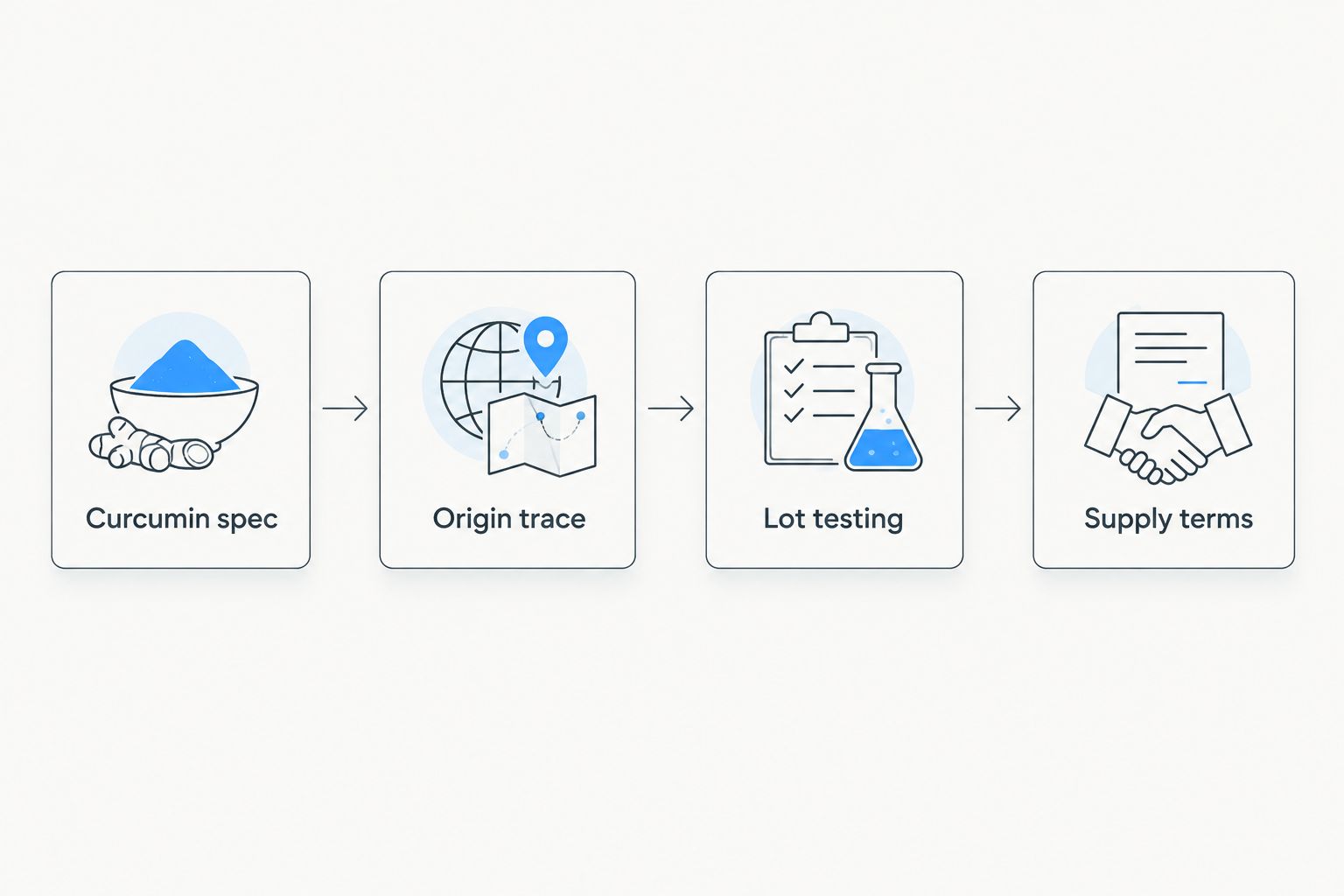
Compare sourcing options for nutraceutical manufacturers
| Sourcing option | Best for | Key limitation |
|---|---|---|
| Commodity turmeric traders | High-volume, standardized runs | Limited traceability to a single farm or harvest |
| Regional wholesale mandis | Cost-driven bulk buyers | Curcumin content varies lot to lot |
| Single-origin farm suppliers (e.g. Muzri) | Pilot batches, traceable origin, preservative-free stock | Not built for very large industrial volumes without a prior bulk arrangement |
| Direct farm-gate contracts | Manufacturers needing locked-in annual volume | Requires upfront relationship-building and multi-season commitment |
Verdict: single-origin suppliers win on traceability and lot consistency; commodity traders win on raw volume. Pick based on where you are in your production scale-up, not on price alone.
Get bulk turmeric details from Muzri
Check current origin, form and lot availability before you finalize a spec.
Common mistakes nutraceutical manufacturers make
- Buying on color or aroma instead of a lab-verified curcumin percentage — turmeric color varies by region and doesn't correlate reliably with curcumin content
- Skipping heavy-metal testing on every lot — extraction concentrates lead and cadmium if either is present in the raw material
- Assuming powder and rhizome hold curcumin equally in storage — ground powder oxidizes faster and loses potency sooner
- Locking a single-season contract without a plan for Kerala's harvest window — off-season gaps stall production if there's no backup supplier clause
- Leaving the curcumin and moisture spec out of the written PO — a verbal assurance doesn't hold up when a lot fails testing
FAQ
What curcumin percentage do nutraceutical manufacturers need in turmeric?
FSSAI's minimum standard for turmeric powder in India is 2.5% curcumin content, but most extraction-grade manufacturers set a higher floor and test every lot rather than relying on the legal minimum alone.
Is single-origin turmeric better than blended turmeric for extraction?
Single-origin turmeric gives more predictable lot-to-lot curcumin content because it comes from one farm or region instead of a mix of harvests, which makes extraction yield easier to forecast. Blended commodity turmeric can still test well, but it needs lot-by-lot verification since the source mix can change.
How is turmeric adulteration usually detected?
Lab testing for synthetic colorants such as metanil yellow or lead chromate, alongside a curcumin assay, is the standard way manufacturers detect adulteration. Visual color alone cannot rule out contamination.
Should nutraceutical manufacturers buy raw turmeric rhizome or powder?
Rhizome or dried finger form generally retains curcumin longer in storage than powder, which suits manufacturers running their own grinding and extraction step. Manufacturers doing direct capsule-fill without extraction often find powder more practical to dose.
What moisture level should turmeric powder have for manufacturing use?
10% moisture is the common grade-A benchmark used across the Indian spice trade, and manufacturers should confirm this on the certificate of analysis for each lot rather than assuming it from the supplier's grade label.
Is Kerala turmeric good for nutraceutical use?
Kerala turmeric sourced single-origin with direct farmer traceability gives manufacturers a documented starting point for lot audits, though curcumin content should still be confirmed per lot through lab testing rather than assumed from region alone.
Does Muzri supply turmeric to bulk manufacturers?
Muzri sells single-origin, organic Kerala turmeric powder online; manufacturers evaluating bulk supply should confirm current lot specifications and volume terms directly with Muzri before finalizing a purchase order.
How often should curcumin content be tested in a supply contract?
Every lot should carry its own certificate of analysis rather than relying on one test at the start of a contract, since curcumin content shifts with harvest season and processing batch.
One last thing
The single number most manufacturers skip checking is moisture, not curcumin. A lot can pass the curcumin assay and still lose potency fast in storage if it comes in above the 10% moisture benchmark — ask for both numbers on the same certificate, every time, in every year you renew the contract.