Running out of cardamom mid-service and firing off a panic text to three suppliers at once is not a sourcing strategy — it's a fire drill. Instead of re-explaining your grade, quantity and delivery address every time you message a spice vendor, set up a standing WhatsApp ordering rhythm so cardamom, Malabar pepper and turmeric restock on a schedule your kitchen controls, not one dictated by whoever answers first.
- Whatsapp spice ordering for restaurants works only as a recurring cycle, not one-off panic texts.
- Lock the grade once — 8mm bold cardamom, Malabar pepper — so every reorder matches the last batch's aroma.
- Hotel chains with multiple outlets need one centralized WhatsApp thread, not per-property chaos.
- Recurring spice supply fixes the two failures that hit kitchens most: wrong grade and running out mid-service.
Why this matters
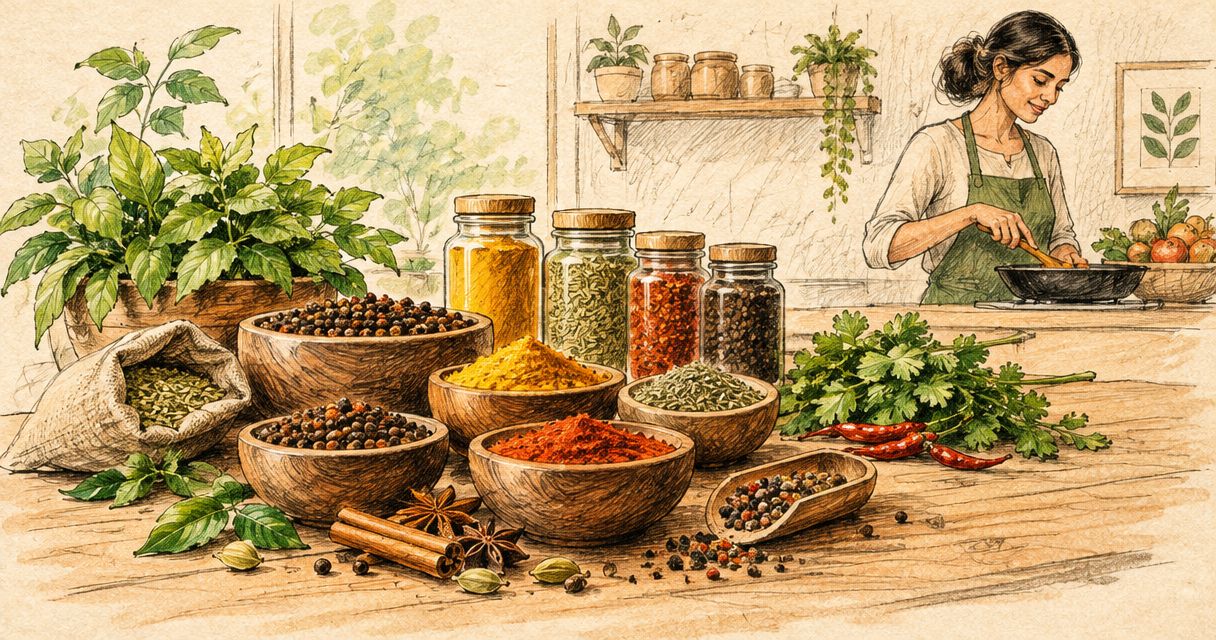
A café or restaurant kitchen in 2026 burns through cardamom for chai, Malabar pepper for tempering, and turmeric for daily curries at a predictable weekly rate — but most kitchens still buy reactively, texting a supplier only after the tin is empty. That gap between when you notice the shortage and when the next batch arrives is where service quality drops and staff start substituting whatever's on hand.
Muzri sells single-origin Kerala cardamom, Malabar black pepper and turmeric powder directly to home cooks and to chefs, cafés and hotels, and the ordering channel most kitchen managers already use — WhatsApp — can be turned into a scheduled supply line instead of a string of ad hoc messages. The setup takes one conversation to establish and pays back every week after.
Before you start
- A WhatsApp number your kitchen manager actually checks daily — not a shared staff phone that changes hands every shift, since a missed reorder message is how kitchens run dry.
- A written monthly usage estimate per spice — kilograms of green cardamom, Malabar pepper and turmeric powder, pulled from your last two to three months of kitchen consumption, not a guess made on the spot.
- The gotcha that bites most kitchens: reordering by weight alone, without naming the grade, means pod size and aroma can shift batch to batch even from the same supplier. Decide your grade — 8mm versus 7mm cardamom, for instance — before the first message, not after the first inconsistent batch lands in your kitchen.
Build your kitchen's spice profile
This is the spec sheet you'll hand to any supplier, and it's what makes the WhatsApp thread useful instead of another back-and-forth.
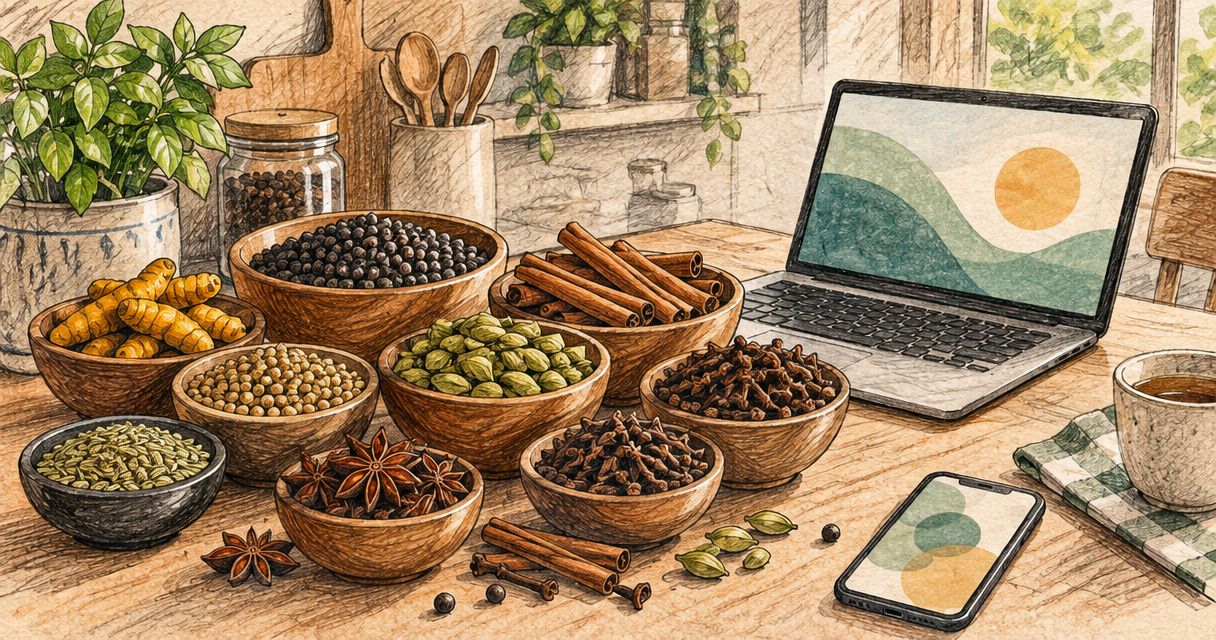
- List every dish that depends on cardamom, pepper or turmeric and separate them by use case — chai and desserts usually want a specific pod size, biryani and curries want consistent heat from the pepper, daily gravies just need reliable turmeric colour and freshness.
- Decide grade per use case. Bold 8mm-plus cardamom is generally the pick for chai and garnishing where pod appearance and aroma carry the dish; a mixed or smaller grade can work in ground preparations. The cardamom buying guide for cafés breaks down which grade suits which kitchen use.
- Convert weekly usage into a monthly order size. Round up, not down — a kitchen that runs short mid-week loses more (substitutions, rushed reorders) than one that carries three extra days of stock.
Expected result: a one-page spec — spice, grade, monthly kilograms, delivery address — you can paste into WhatsApp without retyping it every month.
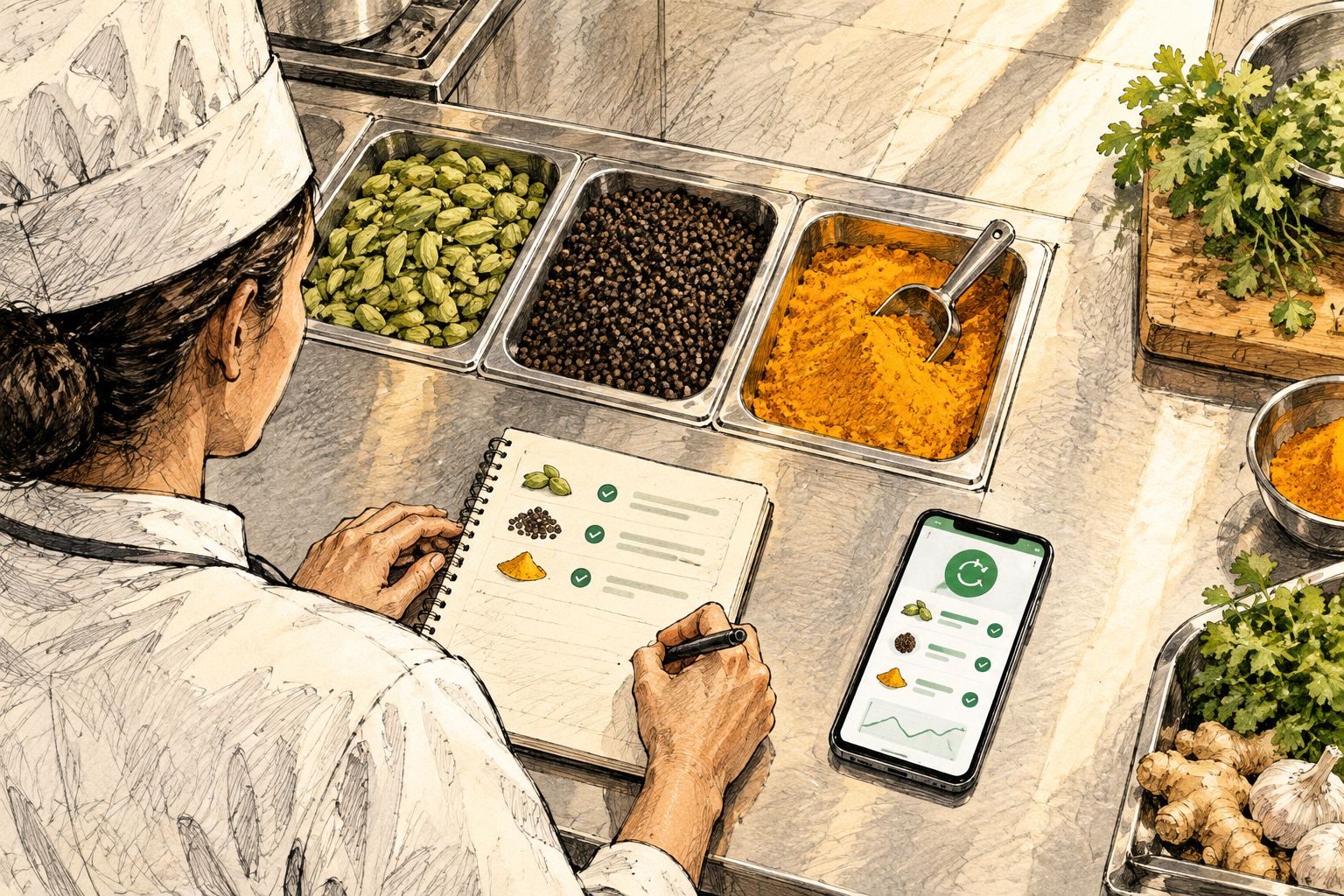
Set up the WhatsApp ordering rhythm
With the spec sheet ready, the ordering thread itself takes one setup message and then runs on autopilot.
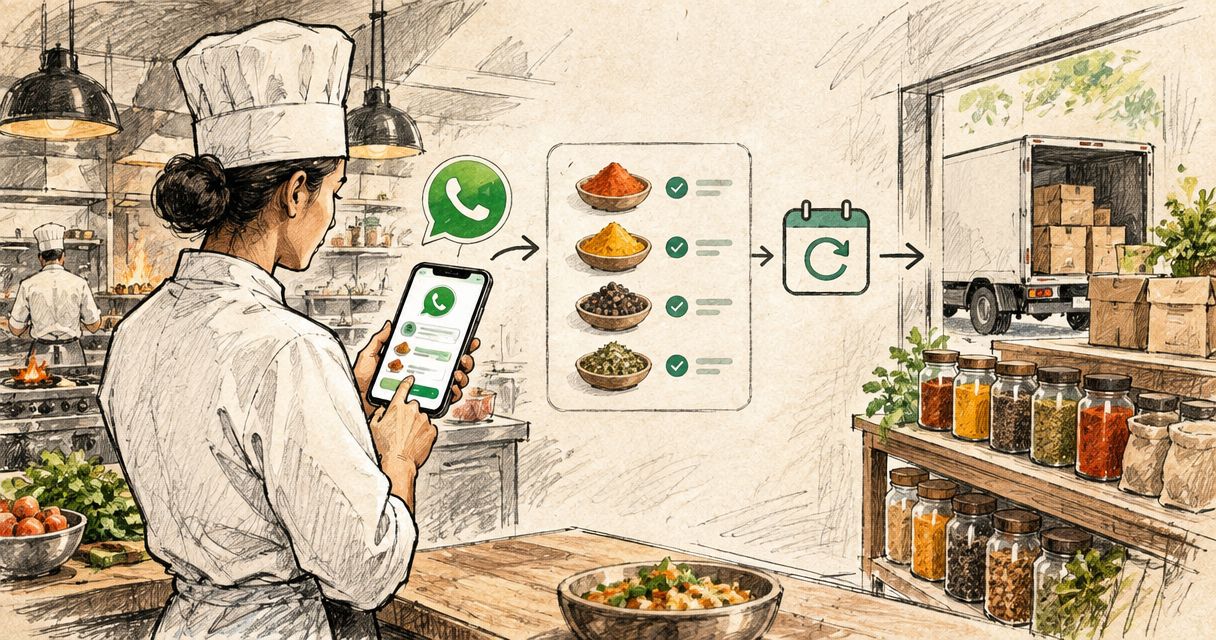
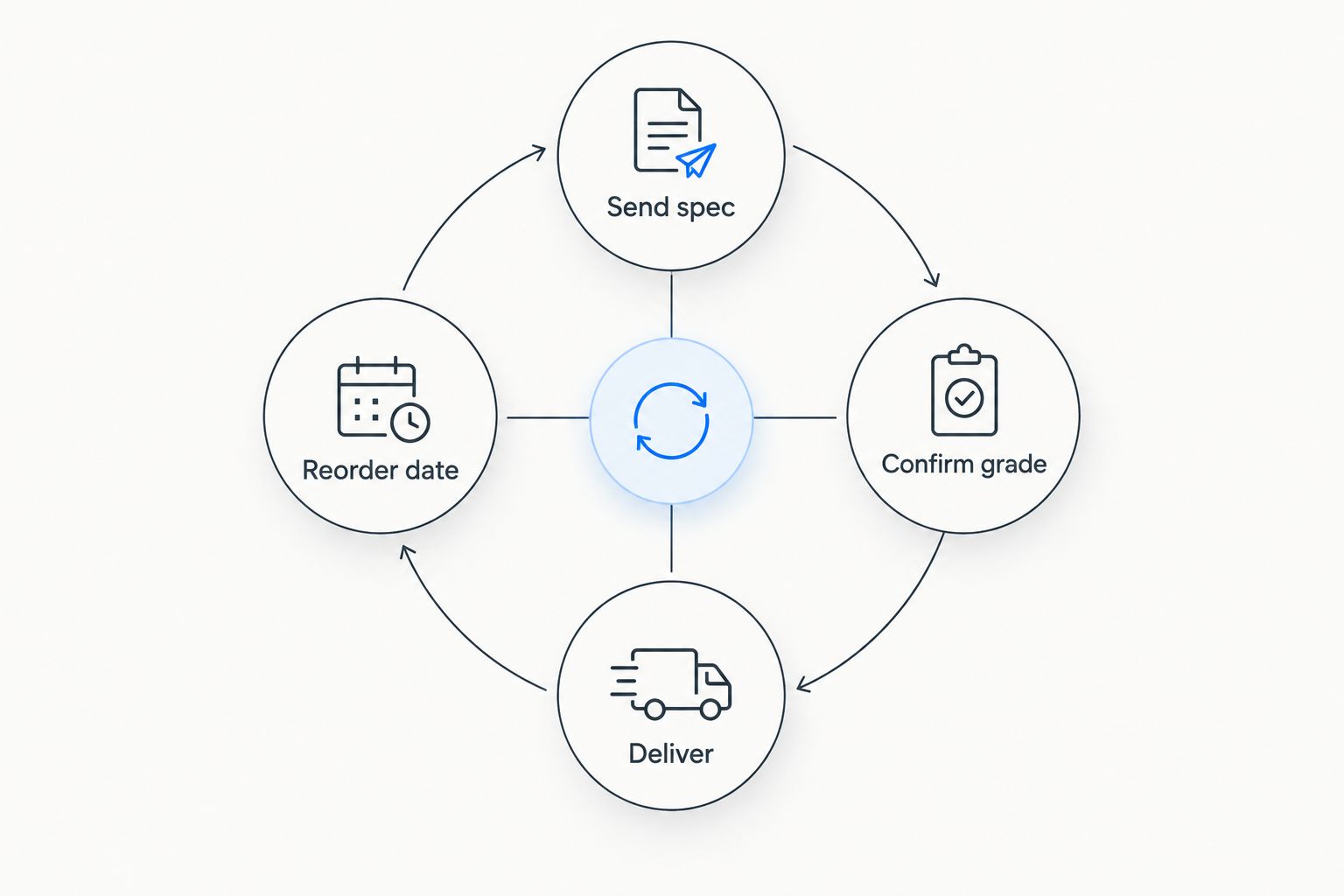
- Send your kitchen profile as the opening message. State spice, grade, monthly quantity, and your standard delivery window. This becomes the reference message you and Muzri both scroll back to for every future order.
- Confirm grade and pack format in the reply. Bulk café and hotel orders are handled differently from single retail packs — get this settled once so you're not renegotiating pack size every reorder.
- Pin a repeat date in the chat. WhatsApp lets you pin a message — pin the confirmed order spec and set a recurring calendar reminder (weekly, biweekly or monthly, matched to your usage) to resend it with only the quantity adjusted.
- Track each delivery against the pinned spec. If a batch arrives lighter on aroma or a different pod size than the pinned reference, flag it immediately in the same thread rather than waiting for the next order — early flags mean the correction happens before you're two orders deep into a mismatch.
Expected result: a standing order with a fixed cadence, a pinned reference message, and a next-reorder date both sides already know — no re-explaining the kitchen's needs from scratch each time.
Do this instead for multi-outlet hotel chains
A single café thread breaks down fast once you're running three or five properties off the same kitchen brand. Adjust the workflow instead of forcing every outlet manager to message separately:
- Centralize into one master thread run by procurement or a head chef, with each outlet reporting its monthly figure into that thread rather than opening its own conversation.
- Assign one point of contact on your side who consolidates quantities before sending the combined order — this is also who fields any grade or delivery flags, so issues don't get lost across five different chats.
- Stagger delivery windows per property if outlets are geographically spread, so one order doesn't try to cover cities with different transit times in a single shipment request.
The green cardamom sourcing guide for hotels covers grade selection and volume planning specific to multi-property kitchens if your consolidated order is large enough to need its own spec sheet.
Troubleshooting
- A delivered batch doesn't match the pinned reference grade. Flag it in the same thread with the pinned message as reference, not a new conversation — mismatches get resolved faster when both sides are looking at the same confirmed spec.
- Stock runs low before the scheduled reorder date. This usually means your monthly estimate was set too tight. Revisit the usage figures from your last full month and pad the next cycle rather than sending an emergency mid-cycle text.
- Festival-season demand spikes throw off your usual quantity. Send an early heads-up message a week ahead of the usual reorder date rather than waiting for the pinned date to arrive — Kerala spice dispatch, like most B2B food supply, runs tighter around peak demand periods.
- Powder and whole-pod orders get confused in a mixed kitchen. Keep pods and powder as two separate lines in your spec sheet, even if they're ordered on the same date — a single combined line item is where quantity mix-ups start.
- A new kitchen staff member sends a vague reorder message. Train whoever manages restocking to always reference the pinned spec message rather than typing a fresh request from memory.
Customize your workflow
Once the WhatsApp cadence is running, the next lever is price and grade optimization rather than the ordering mechanics themselves. The cardamom price benchmarks by grade guide is worth checking against your current spend before your next quarterly reorder — grade and origin both move the number, and knowing where your kitchen's grade sits against the benchmark tells you whether it's time to renegotiate pack size or hold steady.
If your kitchen is still deciding between whole pods and pre-ground turmeric or cardamom powder for shelf life reasons, settle that before locking your recurring spec — switching formats mid-cycle resets the comparison point for every future delivery.
Set up recurring spice supply for your kitchen
Start the WhatsApp thread with your kitchen's spice profile and grade preference.
FAQ
Can restaurants order spices directly through WhatsApp in 2026?
Yes, WhatsApp spice ordering for restaurants is a standard channel in 2026 once the kitchen sends a fixed spec (spice, grade, monthly quantity) rather than ad hoc messages each time.
How do I set up a recurring spice order for my café?
Send a spec message covering spice, grade and monthly quantity, pin it in the WhatsApp thread, and set a recurring reminder to resend it on a fixed date with only the quantity updated.
What's the difference between ordering cardamom pods versus powder for a kitchen?
Pods generally hold their aroma longer in storage than ground powder, so kitchens with slower turnover often stock pods and grind or crush closer to service.
Why does cardamom grade matter for restaurant reordering?
Grade determines pod size and aroma consistency batch to batch — reordering by weight alone without naming a grade like 8mm can produce a noticeably different pod mix in your next delivery.
How should a hotel chain with multiple outlets order spices?
Run one master WhatsApp thread through a single point of contact who consolidates each outlet's monthly figure, rather than letting every property message the supplier separately.
What causes kitchens to run out of cardamom or pepper mid-cycle?
Usually the monthly estimate was set too tight against actual consumption. Reviewing the last full month's usage and padding the next order fixes this without needing an emergency reorder.
Is single-origin Kerala cardamom different from blended cardamom for restaurant use?
Single-origin cardamom comes from one known growing region rather than a mixed batch, which generally means more consistent pod size and aroma order to order — a useful trait when a kitchen is trying to standardize a recurring spec.
One last thing
The kitchens that get the most out of a WhatsApp ordering rhythm aren't the ones with the biggest volume — they're the ones that pin the spec message and actually reference it every single time, instead of trusting memory for grade and quantity. That one habit is what turns a chat thread into a supply line in 2026, and it costs nothing to set up on day one.